
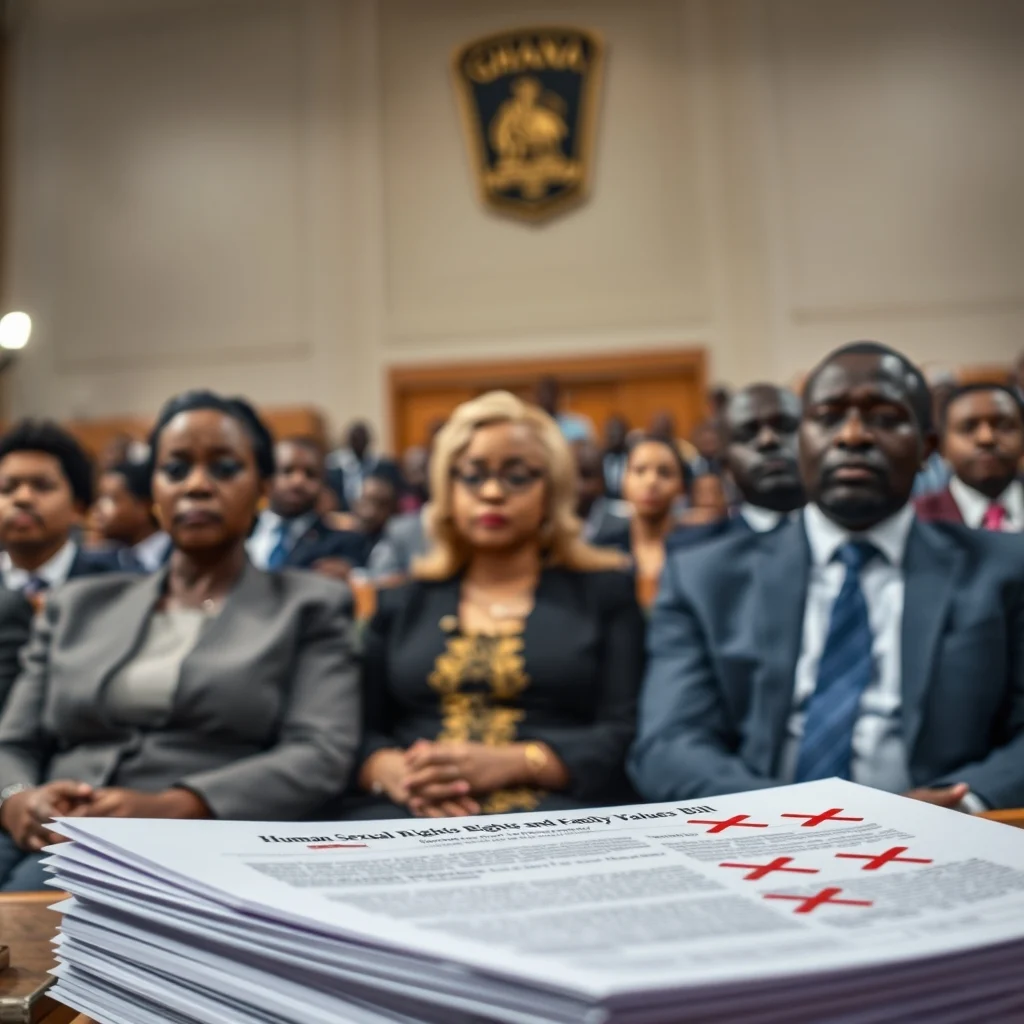
Accra, Ghana – June 4, 2026 – The New Patriotic Party (NPP) Minority Caucus has accused the governing National Democratic Congress (NDC) of significantly weakening Ghana’s Human Sexual Rights and Family Values Bill, commonly known as the Anti-LGBTQ+ Bill. The Minority alleges that the NDC, after assuming office, introduced 31 amendments that fundamentally alter the legislation originally passed unanimously by Ghana’s 8th Parliament in 2024.
Background of the Bill
The Human Sexual Rights and Family Values Bill garnered widespread support during its passage in 2024, reflecting what was described as a broad political consensus on issues of human sexuality and family values in Ghana. Both the NDC and the NPP, then in opposition and government respectively, publicly backed the Bill, framing it as an embodiment of the nation’s cultural beliefs and societal norms.
During the parliamentary debates leading up to the Bill’s initial passage, members of the NDC, who were then in opposition, reportedly resisted proposed amendments. Their stance at the time was that any changes could undermine the Bill’s core intent and purpose. This earlier position has become a focal point for the current accusations.
Minority’s Allegations of Dilution
In a statement released on June 4, 2026, the NPP Minority Caucus asserted that the NDC’s current support for numerous amendments directly contradicts their previous stance. The Minority characterized the NDC’s unanimous vote in favor of the original 2024 Bill not as genuine support, but as a “calculated political statement of convenience and deceit.”.
While the specific details of the 31 amendments were not outlined in the Minority’s statement, the sheer volume suggests substantial revisions rather than minor technical adjustments. The NPP contends that these changes dilute the original intent and prohibitive measures of the Bill.
The Minority has called for the original, unamended version of the Bill to be presented for presidential assent. They argue that proceeding with the current amended version would betray the expectations of Ghanaians who supported the initial legislation and undermine the values it was intended to uphold.
Political Ramifications
The accusations highlight a significant political rift over a socially sensitive issue. The NPP’s claims suggest a strategic political maneuver by the NDC to appease different factions or international pressures while appearing to maintain the spirit of the original Bill. This move could alienate social conservatives who championed the original legislation.
Conversely, the NDC may argue that the amendments are necessary to align the Bill with constitutional requirements or to address practical implementation challenges. Without a detailed breakdown of the amendments, it remains unclear how they alter the Bill’s enforceability or its impact on LGBTQ+ individuals and their allies.
Looking Ahead
The coming weeks will be crucial in determining the fate of the Human Sexual Rights and Family Values Bill. Public discourse is expected to intensify as Ghanaians await further clarification on the nature of the amendments and the government’s rationale behind them. The NPP’s challenge sets the stage for a potential political showdown, with the opposition group likely to mobilize public opinion against what they perceive as a watered-down piece of legislation. Observers will be watching closely to see if the President assents to the amended Bill or if further parliamentary debate and revisions are necessitated by the growing controversy.









Leave a Reply