
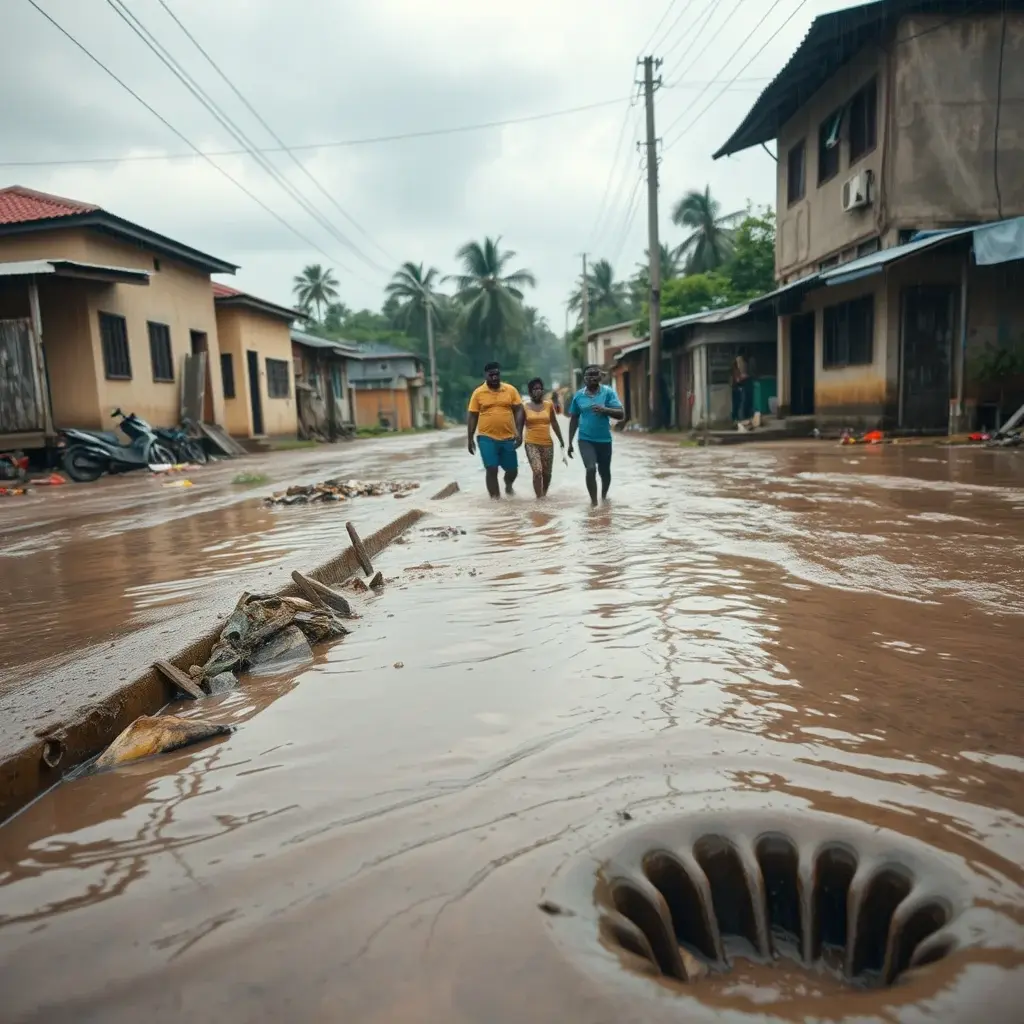
Andrew Dari Chiwitey, Member of Parliament for Sawla/Tuna/Kalba and Vice Chairman of Parliament’s Roads and Transportation Committee, has identified widespread corruption, inadequate urban planning, and a critical lack of coordination among government agencies as the primary drivers of Ghana’s recurrent flooding crises. Speaking on Joy FM’s Super Morning Show on June 5, Chiwitey asserted that the nation’s existing drainage infrastructure is fundamentally incapable of handling the intensity of rainfall.
Fragmented Governance Fuels Infrastructure Failures
A significant challenge highlighted by the MP is the absence of synergy between key government bodies responsible for national development. Ministries overseeing roads, local government, energy, and water resources frequently operate in silos, hindering comprehensive planning for infrastructure projects.
Chiwitey explained that a collaborative approach is essential for effective infrastructure development. “If road construction, local government, the energy ministry, and water resources were coming together to ensure that we plan our road systems properly, we would have very good drainage systems,” he stated.
Inadequate Drainage and Urban Sprawl Exacerbate Risk
The MP drew attention to the prevalence of small, shallow drains along many Ghanaian roads, which are insufficient even for moderate rainfall. These outdated systems are a stark contrast to the challenges posed by modern urban development.
Poor urban planning further complicates the issue, with many roads constructed decades ago lacking provisions for adequate drainage. The proximity of residential buildings to these roads, coupled with extensive paving of compounds, prevents natural rainwater absorption.
“The little drops of rain, the water has no place to go. So the water is compelled to go onto our roads,” Chiwitey observed, illustrating how paved surfaces redirect water flow directly onto transportation networks.
Citizen Complicity and Attitudinal Barriers
Beyond governmental shortcomings, Chiwitey emphasized the role of public behavior in exacerbating flood conditions. He accused some residents of actively obstructing drainage channels by disposing of waste and debris, further diminishing the capacity of already inadequate systems.
“We all see these things, and we overlook them. When it’s raining, they push out their materials into that small gutter that cannot even contain the water,” he lamented.
The MP suggested that while covered drainage systems are common solutions elsewhere, public attitudes in Ghana could pose a barrier to their effectiveness. “But in Ghana, if you do it, people will push materials under them, and the water cannot flow,” he warned.
Corruption Undermines Enforcement and Planning
Chiwitey directly linked systemic corruption to the persistence of illegal and unsafe developments that contribute to flooding. He defended demolition exercises, such as those seen in the Greater Accra region, noting that officials often face public backlash for enforcing regulations.
“The system is corrupt. That is the only thing. The system is very, very corrupt,” he stated emphatically.
Allegations of corruption extended to officials responsible for issuing permits and even traditional authorities. Chiwitey claimed that permits are granted in exchange for bribes, allowing construction in flood-prone areas.
“The man who gave out the permit is a corrupt person. Just because he took some money from the developer, he issued the permit for the person to go and build,” he alleged. Similarly, he suggested some chiefs approve developments in inappropriate locations for financial gain.
A Call for Systemic Overhaul and Collective Action
The MP concluded by calling for a comprehensive national re-evaluation of governance structures and public attitudes. He stressed that addressing Ghana’s flooding problem requires a unified, national effort rather than placing blame solely on Parliament or the government.
“We have a problem as a people, not just as government or Members of Parliament. The whole country has a problem that we all have to sit down and see how we can fix,” Chiwitey urged.
The ongoing issues with flooding in Ghana underscore the urgent need for integrated urban planning, robust infrastructure investment, and stringent anti-corruption measures. Future efforts will likely focus on improving inter-agency coordination, enforcing building regulations, and fostering greater public awareness and responsibility.





Leave a Reply