
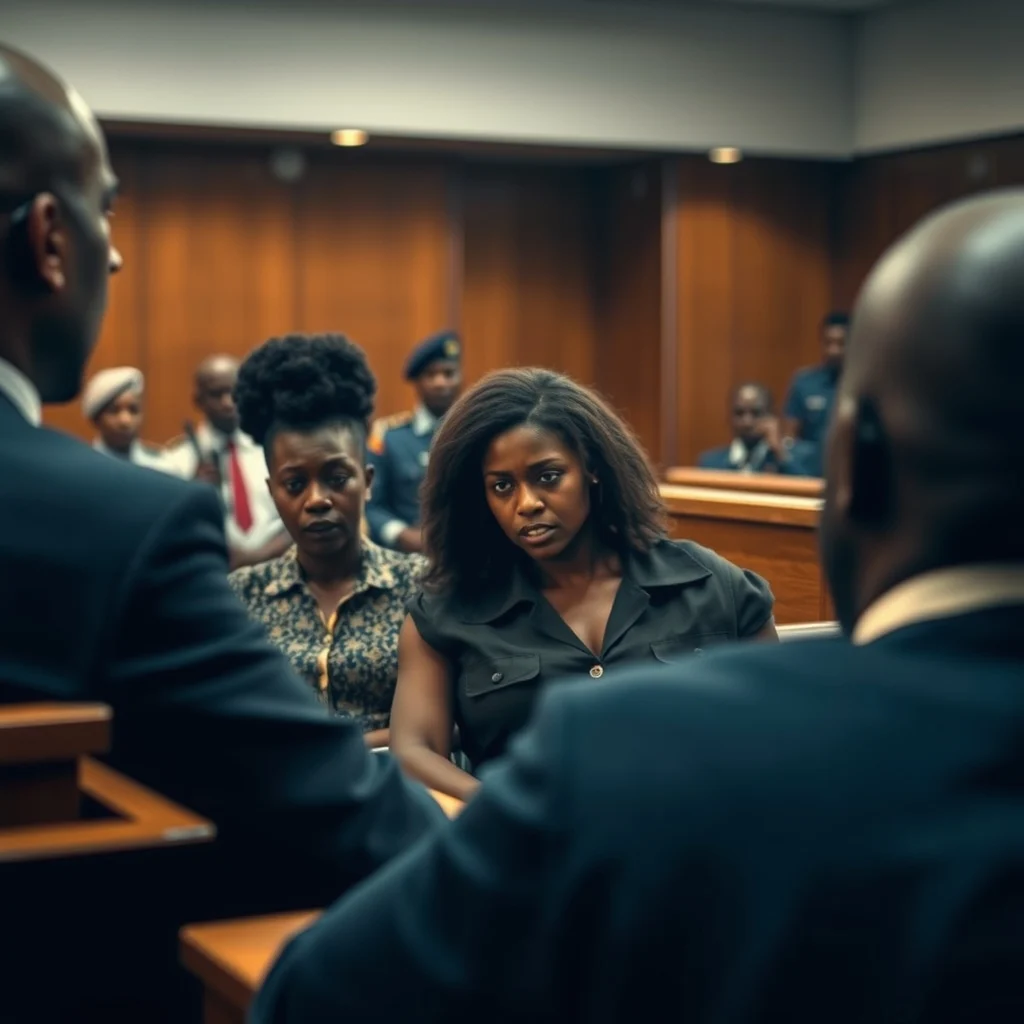
A High Court in Accra has ruled that the Ghana Police Service unlawfully violated the fundamental human rights of three citizens, including two broadcast journalists, during the #OccupyJulorbiHouse demonstration in September 2023. The court ordered the Inspector General of Police to pay GHC150,000 in damages and issue a formal apology for the ‘unprofessional’ conduct during the arrests.
Justice Nana Brew, presiding over the Human Rights Division of the High Court, declared the arrest and detention of the applicants unconstitutional, finding that the police had breached constitutional guarantees including personal liberty, human dignity, freedom of assembly, and media independence.
The applicants, identified as broadcast journalists Bridget Otoo and Vanessa Edotom Boateng, and chartered accountant and democracy activist George Gyening Anyang, attended the #OccupyJulorbiHouse protest on September 21, 2023. The demonstration, organized by the civil society group Democracy Hub, aimed to voice grievances over harsh economic conditions.
Context of the Demonstration and Arrests
The #OccupyJulorbiHouse protest, held from September 21 to 23, 2023, gained significant public attention as a major expression of discontent over Ghana’s economic challenges and governance issues. The organizers had notified the police as required by the Public Order Act, 1994 (Act 491).
However, the police attempted to secure a court order to prohibit the demonstration, citing concerns about its proximity to Jubilee House, a designated security zone. This application was ultimately dismissed by the court due to improper service of the originating process on the organizers, a procedural flaw the court later highlighted.
Despite the initial heavy-handed response by the police on the first day, the protest continued for two subsequent days. The police eventually established peaceful security cordons around Jubilee House, allowing the demonstration to proceed without further major incident.
Court Details Allegations of Assault and Humiliation
During the court proceedings, the applicants presented evidence detailing alleged assault, unlawful detention, humiliation, and the seizure of mobile phones at the Greater Accra Regional Police Headquarters. According to their testimony, the second and third applicants faced unlawful detention.
Mr. Anyang, the third applicant, reportedly endured physical assault, including slaps, punches, and blows from a baton and a metallic belt buckle. Ms. Boateng, the second applicant, who was filming the events, was allegedly set upon by more than six officers, had her phone confiscated, and was threatened with detention if she did not delete the footage.
The court also heard that legal representatives attempting to assist the applicants were mistreated, with one lawyer reportedly pushed aside and another subjected to physical assault and detention. Ms. Otoo, the first applicant, also reported being assaulted, with her blouse torn during the incident.
Police Defence Rejected by the Court
The Ghana Police Service argued that the demonstration was unlawful due to the organizers’ refusal to change the venue from the front of Jubilee House and their defiance of the police’s attempt to prohibit the protest. They also claimed the applicants were not among the officially listed 49 arrested individuals and that any force used was minimal and reasonable.
Furthermore, the police contended that the applicants failed to provide medical reports to substantiate their injury claims and had not reported the alleged misconduct to independent bodies like the Commission on Human Rights and Administrative Justice (CHRAJ) or the Police Professional Standards Bureau.
Justice Nana Brew dismissed these arguments, finding no lawful justification for the police’s actions. The court noted inconsistencies in the police’s own records, specifically a discrepancy between the number of arrested suspects publicly stated (49) and the number later reported to the court (46).
The court also pointed out that the sole witness presented by the police admitted to not being present during the events and relied on hearsay evidence. The absence of medical reports was not deemed fatal to the applicants’ case, especially given the availability of video evidence, photographic exhibits, and sworn testimonies from witnesses, including former MP Inusah Fuseini and lawyer Richmond Rockson.
Court Orders and Damages Awarded
The High Court issued a declaration that the arrest and detention of the applicants were unlawful and constituted a violation of their fundamental human rights. An order for compensation was granted to address the unlawful deprivation of liberty and interference with journalistic duties.
Additionally, the court directed the respondents (the Ghana Police Service) to issue a written apology to the applicants. The total compensation awarded was GHC150,000, comprising GHC100,000 in compensatory damages and GHC50,000 in general damages.
In explaining the quantum of damages, Justice Brew stated that a higher award could cripple the institution, emphasizing the need for the Ghana Police Service to continue functioning to ensure public safety. The court also acknowledged that a different Inspector General of Police was in office at the time of the incident.
Judicial Rebuke and Constitutional Reminder
Justice Brew delivered a strong rebuke of the police conduct, stating,







Leave a Reply