
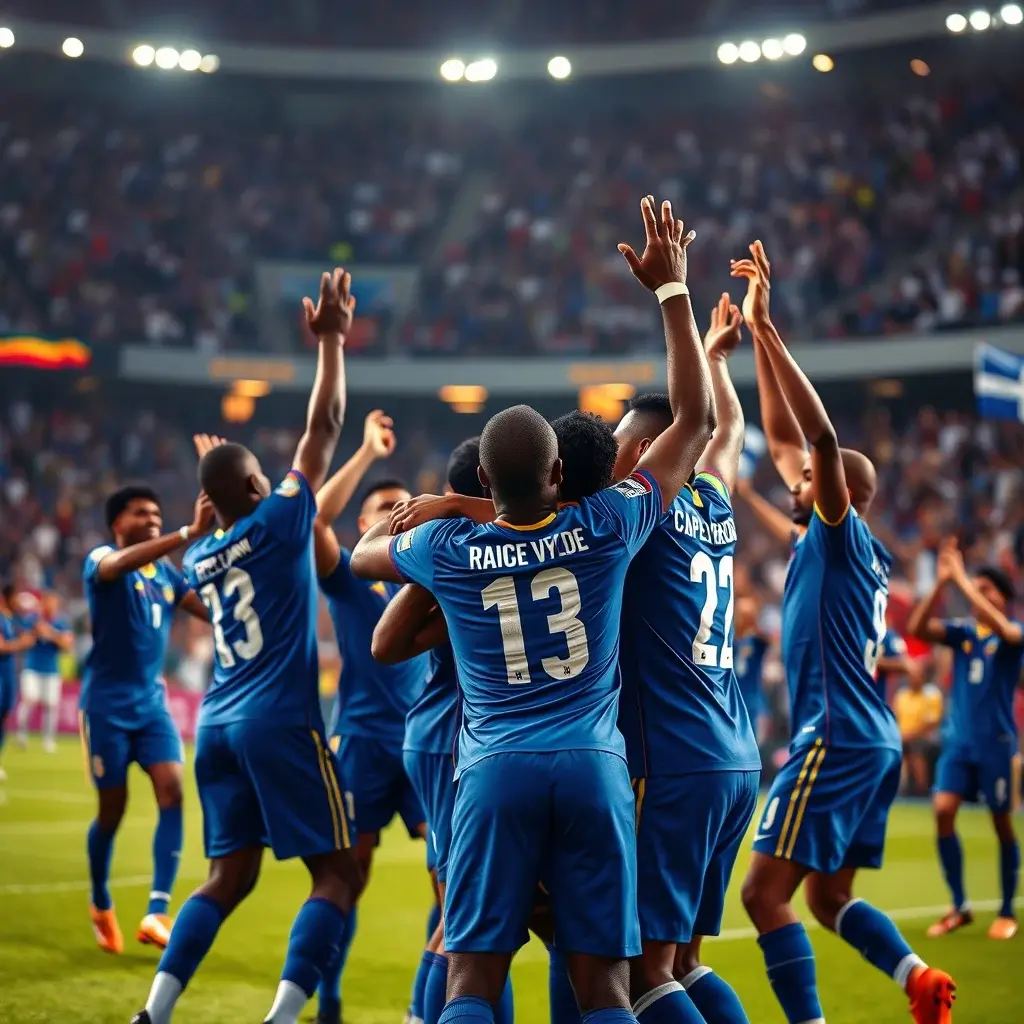
The Blue Sharks of Cape Verde are set to make their maiden appearance at the FIFA World Cup 2026, embarking on a journey that has captured the imagination of their nation and the footballing world. The tiny archipelago, which only began participating in World Cup qualifiers in 2003, will face formidable opponents Spain, Uruguay, and Saudi Arabia in Group H. This unprecedented achievement is a testament to the team’s rapid ascent and the unique cultural identity they bring to the tournament, embodying their national slogan, “morabeza,” which translates to “no stress.” The squad, assembled by coach Pedro Leitão Brito, known as Bubista, is a diverse collection representing 25 clubs across 14 countries, with a notable contingent of players born in Rotterdam, Netherlands, more than in the Cape Verdean capital, Praia. This blend of backgrounds reflects the nation’s history of immigration, a characteristic that Bubista highlights as a source of strength and unity.
A United Front Amidst Diversity
Coach Bubista emphasizes that unity is forged through respecting the individual uniqueness of each player. This philosophy has guided the team through its remarkable qualification campaign. The “Blue Sharks” have cultivated a cohesive unit over the past five years, characterized by their physical presence and strong defensive organization. However, they also embrace an “island-inspired” style of play, featuring technically gifted forwards like Ryan Mendes, Willy Semedo, and Jovane Cabral. As defender Pico Lopes noted, the team doesn’t shy away from possession, maintaining a “quality and sort of killer instinct we want in the attacking areas.” A potential concern for the squad is the fitness of centre-back Logan Costa, considered by many to be the team’s sole elite player. The Villarreal defender has yet to feature this season after sustaining an ACL tear last summer.
The Coach’s Iron Will
Bubista’s journey to the World Cup helm is rooted in a humble upbringing on Boa Vista island. Despite his family’s emphasis on education, his passion for football led him to a playing career across Portugal, Spain, and Angola, where he captained the Blue Sharks for nearly a decade. Known as “the silent captain” during his playing days, Bubista has transitioned into a coach with an iron will and a no-nonsense approach. For the past six years, he has instilled discipline and a strong sense of national identity, famously insisting that players speak only Creole during international duty to “keep our Cape Verdean identity intact.”
Star Power and Emerging Talent
Ryan Mendes stands as a pivotal figure for Cape Verde, poised to earn his 100th cap at the World Cup. Discovered by Leicester scout Steve Walsh years ago, Mendes joined Lille as a successor to Eden Hazard. Despite an ankle injury that hampered his club career, he remains the nation’s arguably greatest player. As captain, top scorer, and most-capped player, Mendes is set to become the first centurion in Cape Verdean football history. At 36, though his prime may be past, he continues to be central to the team’s performance, a reliable presence who “shows up and he scores goals,” according to Pico Lopes.
Another player making a significant impact is Dailon Livramento. In just over two years, the centre-forward has become a legend, scoring four crucial goals during qualifying, including the match-winner against Cameroon and a brace in Angola. Livramento has provided the missing central attacking presence for a team rich in talented wide players. His mother, Marizia, is a renowned Cape Verdean singer, and his brother Jerzy is part of the successful Dutch hip-hop group Broederliefde, highlighting the family’s artistic background.
The Unsung Engine Room
Kevin Pina has emerged as an unsung hero in midfield. Having made Russia his home and leading Krasnodar to their first league title, Pina, who signed from the Portuguese second tier, is a less familiar name outside of Cape Verde. Alongside Deroy Duarte, Pina forms the team’s midfield engine, undertaking crucial defensive work that allows the attacking talents to flourish. He is adept at progressing the ball and, while not a prolific scorer, is known for his spectacular long-range goals.
Fanatic Support and Musical Vibrations
Despite initial hurdles with visa requirements for the United States, Cape Verdean fans are expected to be a vibrant presence. With over 500,000 Cape Verdeans residing in the US, a significant diaspora will rally behind the Blue Sharks. Attendees can anticipate a sea of blue shirts, flags, and shark-themed accessories, accompanied by an infectious atmosphere fueled by Cape Verde’s renowned music. The national music genre, morna, with its themes of emigration and representation, perfectly complements the team’s World Cup journey. Songs like Soraia Ramos’ “Nha Terra” have become unofficial anthems for the tournament.
Looking Ahead
Cape Verde’s World Cup debut presents a compelling narrative of a small nation achieving global recognition through talent, unity, and a unique cultural spirit. Their performance in Group H will be closely watched, not just for their results against established footballing powers, but for the way they embody their “morabeza” ethos on the world stage. The team’s ability to blend diverse backgrounds into a cohesive unit, coupled with the tactical acumen of coach Bubista and the individual brilliance of players like Mendes and Livramento, suggests they are capable of causing upsets. The extent to which Logan Costa’s fitness impacts the squad’s defensive solidity will be a key factor. Furthermore, the passionate support from their diaspora and the infectious rhythm of Cape Verdean music promise to make their matches a unique spectacle. The world will be watching to see if this “no stress” mentality can translate into sustained success against the planet’s best.



Leave a Reply