
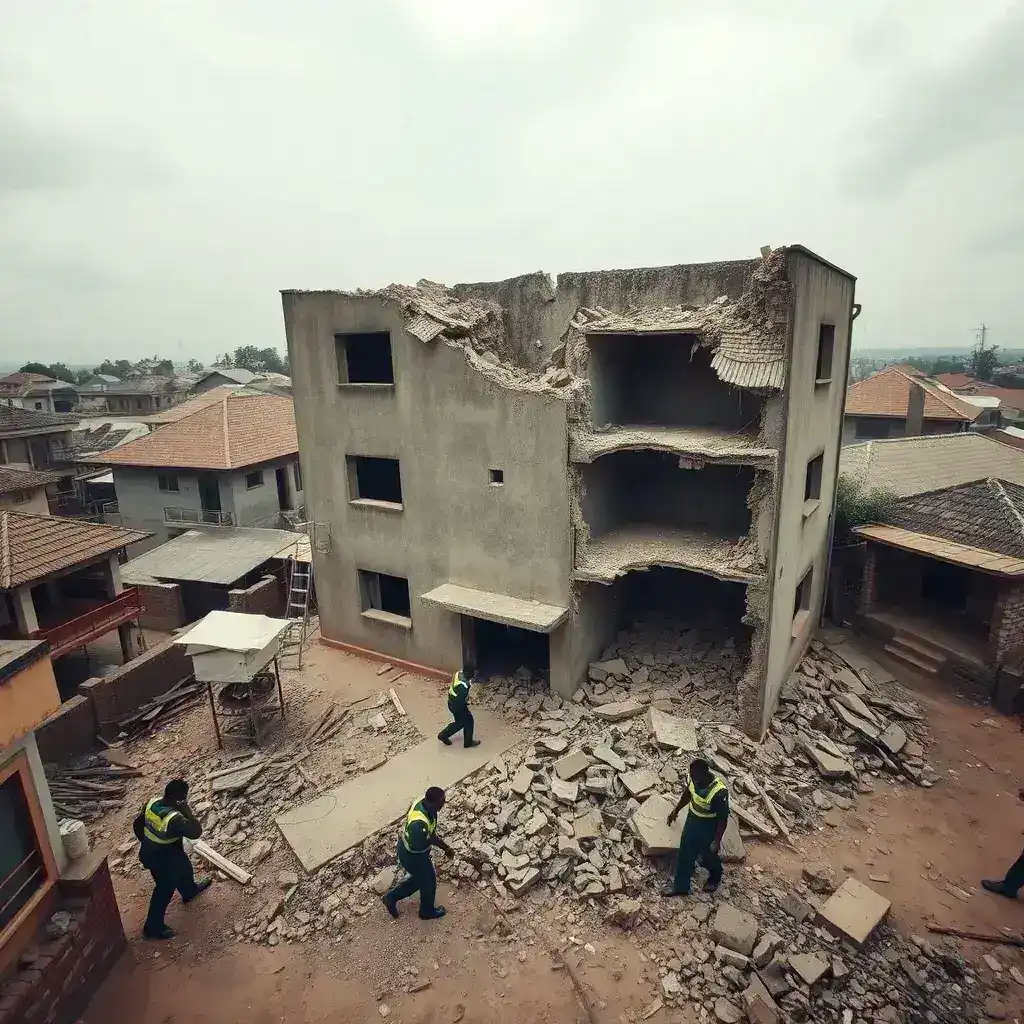
The Accra Metropolitan Assembly (AMA) has confirmed that the three-storey building that collapsed in Avenor on Sunday, June 7, lacked a valid building permit, deepening concerns about regulatory compliance within the capital’s construction sector. The incident, which claimed two lives and injured three others, has prompted an investigation into potential fraudulent permit practices and a renewed push for stricter enforcement of building codes.
Regulatory Void and Investigation Underway
Public Relations Officer for the AMA, Gilbert Nii Ankrah, revealed on Joy FM’s Super Morning Show that preliminary checks of the Assembly’s records show no permitting regulations for the collapsed structure. This discovery raises serious questions about how such a building could have been erected without official approval.
Mr. Ankrah suggested that some developers might be circumventing established procedures by using falsified documents. The AMA has initiated a thorough investigation to ascertain the exact circumstances surrounding the tragedy, including whether any fraudulent permits were presented during the construction phase.
“Per our records, there are no permitting regulations for this particular building. But investigations are going to begin to look into it,” Mr. Ankrah stated.
He further explained that such constructions can sometimes proceed unnoticed by the Assembly. However, the Mayor has directed a comprehensive review of the entire permitting process, with assurances that those found responsible for breaching building regulations will be held accountable through sanctions.
Persistent Concerns Over Construction Compliance
The collapse occurred in the early hours of Sunday within the Avenor area, part of the North Kaneshie enclave. The tragic loss of life and injuries underscore long-standing anxieties regarding the integrity of construction projects in Accra. Reports of unapproved structures and weak oversight have been a recurring issue in the city for years.
This incident adds to a growing chorus of calls for more robust enforcement of building codes. Critics argue that lax adherence to safety standards and permitting requirements puts lives at risk and compromises urban development.
The AMA’s confirmation of the lack of a permit amplifies the urgency for decisive action. It suggests a systemic failure in monitoring and enforcement, potentially involving complicity or negligence within the regulatory framework.
Expert Perspectives and Data
While specific expert opinions on this particular collapse were not immediately available, urban planning analysts have repeatedly highlighted the dangers of substandard construction. Data from various municipal bodies globally often correlates a lack of proper permits and inspections with increased structural failures and safety hazards.
In Ghana, past incidents of building collapses have often been attributed to poor supervision, use of substandard materials, and the absence of necessary permits. The AMA’s statement aligns with these historical patterns, indicating that the problem of unpermitted construction remains a critical challenge.
Implications for the Capital and Beyond
The Avenor building collapse and the AMA’s subsequent confirmation of a lack of permit have significant implications. For residents, it highlights a tangible risk associated with the built environment and raises questions about the safety of other structures in the city.
For the construction industry, it signals a potential crackdown on non-compliant developers and a strengthening of regulatory oversight. This could lead to increased costs and longer timelines for projects, as developers are compelled to adhere strictly to permitting and inspection protocols.
The AMA’s commitment to holding individuals accountable and investigating the permitting process suggests a move towards greater transparency and stricter governance. The focus now shifts to the effectiveness of these investigations and the implementation of remedial measures to prevent future tragedies.
What remains to be seen is the extent of the fraudulent activities potentially involved and how robustly the AMA will enforce sanctions. The incident serves as a stark reminder of the critical need for diligent oversight in urban development to safeguard public safety.










Leave a Reply