
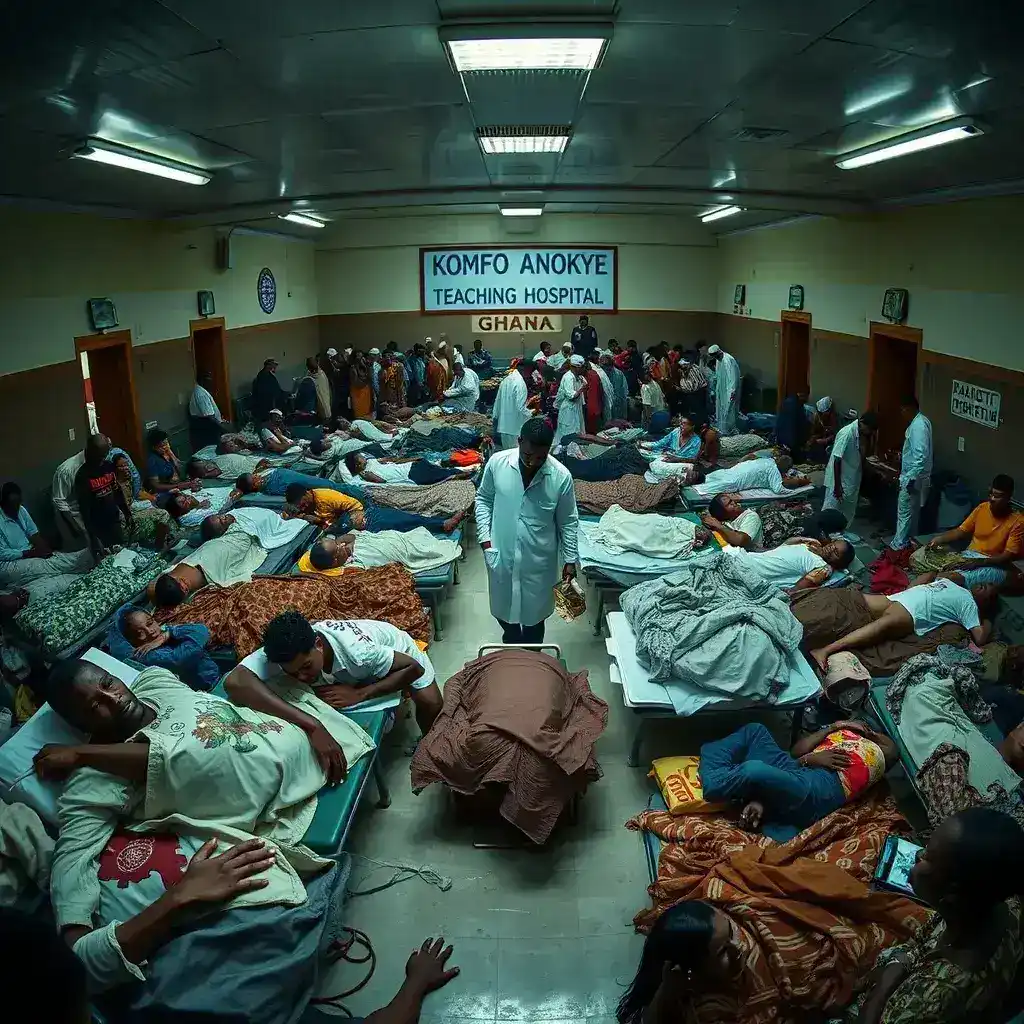
Ghana is grappling with a severe healthcare management crisis, characterized by a critical “no bed syndrome,” inadequate infrastructure, and a concerning loss of lives. This situation is exacerbated by the recent suspension of a key hospital administrator, sparking widespread concern among healthcare professionals and potentially impacting national security and economic productivity.
The current healthcare challenges in Ghana are not new but have reached a critical juncture. Reports indicate that the lack of hospital beds and poor infrastructure are directly contributing to preventable deaths, a situation described as “country-killing” and unsustainable, especially when compounded by road traffic accidents.
This healthcare crisis poses a significant threat to Ghana’s economic security and the productivity of its workforce. Experts warn that a robust healthcare system is foundational to a strong, productive, and financially viable nation capable of commanding respect on the global stage.
Recent decisions by the Ministry of Health, particularly the suspension of leaders in healthcare settings, are drawing criticism. Critics argue that these actions are often taken without sufficient examination of the complex systemic issues at play, leading to unintended consequences for healthcare delivery.
The suspension of the Chief Executive of the Komfo Anokye Teaching Hospital (KATH) is cited as a prime example of a poorly judged decision. This move has been met with calls for reversal, with some suggesting it exacerbates existing tensions between healthcare professionals and administrative leadership.
Healthcare professionals emphasize the principle of “first, do no harm.” They argue that when facilities are under immense pressure, lacking beds or appropriate safe working environments, any intervention must be carefully considered to avoid further harm to both patients and clinicians.
There is a growing call for a re-evaluation of the checks and balances within the Ministry of Health. The aim is to foster a more collaborative environment, allowing for objective assessments of situations, decisions, and measures taken by major hospitals like Tamale, Ridge, Korle Bu, and KATH.
The suspension of the KATH CEO is perceived by many as a hasty decision, made without a thorough understanding of the on-the-ground realities. Concerns for patient safety, clinical team well-being, and the severe congestion in emergency departments are being highlighted as critical factors that were not adequately considered.
While acknowledging the Minister’s authority, healthcare advocates question the manner in which this power is being exercised. They stress that the systemic issues leading to congestion at KATH, for instance, should be the focus of investigation, not solely the actions of individual leaders.
The tendency to attribute systemic failures to individuals is a pattern that needs to cease. Reversing the suspension of the KATH CEO is seen as a crucial step towards de-escalating the situation and potentially reversing strike actions by healthcare professionals. The government is urged to address the root causes of the crisis rather than assigning blame to those working diligently within the system.
One proposed solution involves allowing major hospitals to adopt and manage four of the government’s Agenda 111 projects. This initiative could potentially extend the reach of these established institutions into underserved communities.
The current health crisis is increasingly being viewed as a national security issue. Questions are being raised about why commissioned hospitals are not fully operational, further straining the existing infrastructure.
There is a palpable sense of public frustration, with citizens potentially organizing to demand adequate hospital beds, equipment, and infrastructure. The situation suggests a growing impatience with the current state of healthcare delivery in Ghana.
Moving forward, the focus must shift towards sustainable solutions that address the systemic inefficiencies plaguing Ghana’s healthcare sector. The effectiveness of leadership decisions and their impact on the frontline delivery of care will be critical to monitor, alongside the government’s commitment to improving infrastructure and resource allocation. The potential for further public action and the response from the Ministry of Health will shape the immediate future of healthcare access and quality in the nation.










Leave a Reply