
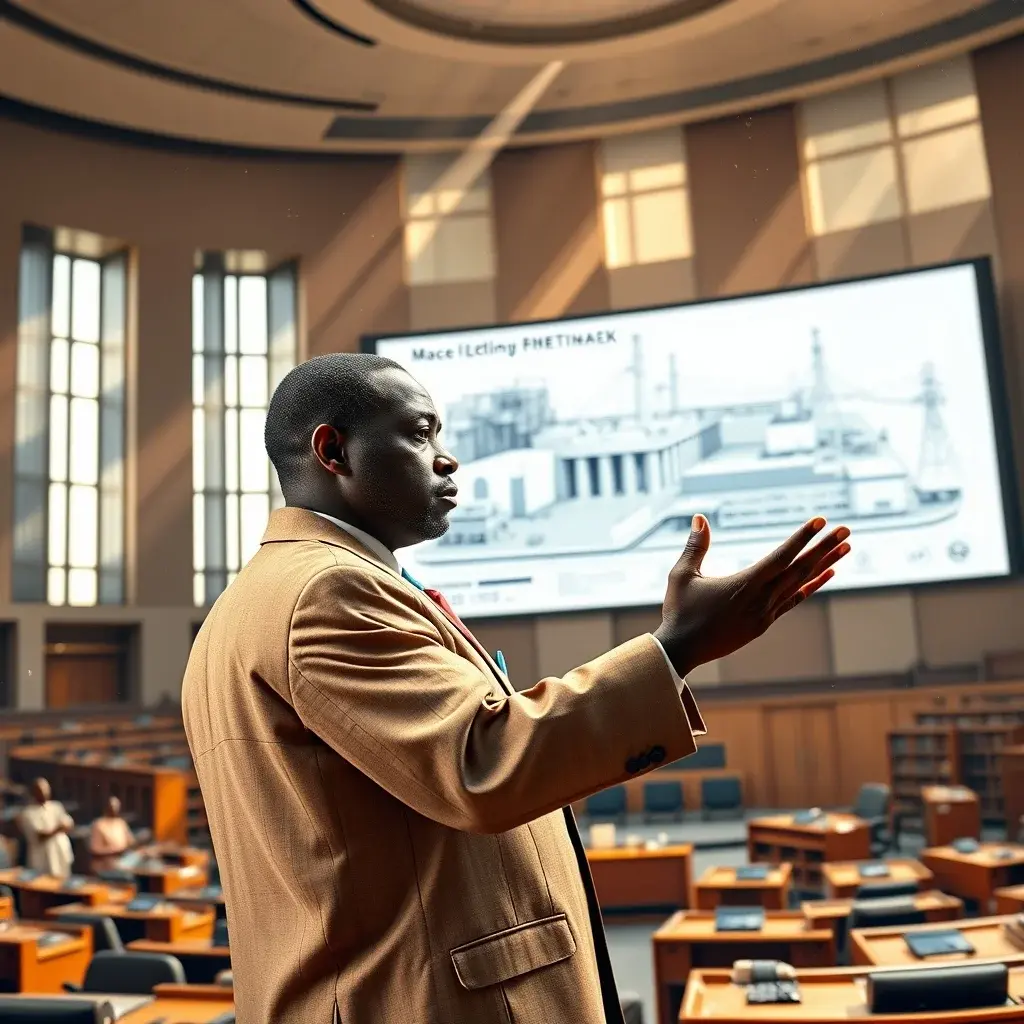
Accra, Ghana – Collins Adomako-Mensah, Deputy Ranking Member on Parliament’s Energy Committee, has expressed skepticism regarding President John Dramani Mahama’s recent announcement of plans to commence construction on a 1,200-megawatt power plant. The announcement, made during the Resetting Ghana Citizen Engagement programme on Saturday, May 2, was presented as a key initiative to bolster Ghana’s electricity generation capacity and ensure supply reliability. However, Adomako-Mensah argues the project is not a new proposal and questions its current developmental stage.
Project Origins and Budgetary Context
President Mahama stated that the government would break ground on the significant power project within the current year. This plant is intended to be a cornerstone of a broader strategy aimed at expanding the nation’s energy infrastructure to meet increasing electricity demands from both residential and commercial sectors.
Countering the President’s remarks, Adomako-Mensah asserted that the 1,200MW power plant project was already incorporated into the national budget presented the previous year. He indicated that, based on its inclusion in the budget, the project should have advanced considerably beyond the initial planning phases by now.
“The plan to cut sod this year for the commencement of the construction of a 1,200-megawatt electricity generation plant is nothing new. It was in the budget, which was read last year. We were hoping that by now, they would have gone far with it,” Adomako-Mensah stated in an interview with Channel One TV on Saturday, May 2.
Concerns Over Transparency and Parliamentary Briefing
The lawmaker voiced surprise that the President was still describing the project as being in the pipeline, especially several months after its fiscal plan announcement. He highlighted a perceived lack of formal engagement with Parliament and its Energy Committee regarding the project’s implementation framework.
“As we speak, Parliament has not been served, nor has the Energy Committee been briefed on the plan or how they are going to roll out this programme. So hearing the President saying it is in the pipeline, I am not too sure the kind of pipeline,” he added.
This absence of formal briefing raises questions about the project’s readiness and the government’s communication strategy. For a project of this magnitude, which requires significant investment and impacts national infrastructure, parliamentary oversight and public awareness are considered crucial by opposition members.
Potential Implications for Energy Security
Ghana has historically faced challenges with electricity supply, experiencing periods of load shedding and power outages that affect economic activities and daily life. Initiatives to increase generation capacity are therefore critical for sustainable development and investor confidence.
The government’s commitment to expanding energy infrastructure is a recognized necessity. However, the opposition’s concerns point to potential delays or a lack of clarity in execution, which could impact the timely delivery of much-needed power generation capacity.
Looking Ahead
As Ghana navigates its energy needs, the public and parliamentary bodies will be watching closely for further details on the 1,200MW power plant. Clarity on the project’s timeline, funding sources, and implementation strategy will be essential to gauge its viability and its contribution to the nation’s energy security. Future parliamentary sessions and official government statements will likely shed more light on whether this project moves beyond the announcement stage into tangible construction, and how it aligns with Ghana’s broader energy development goals.





Leave a Reply