
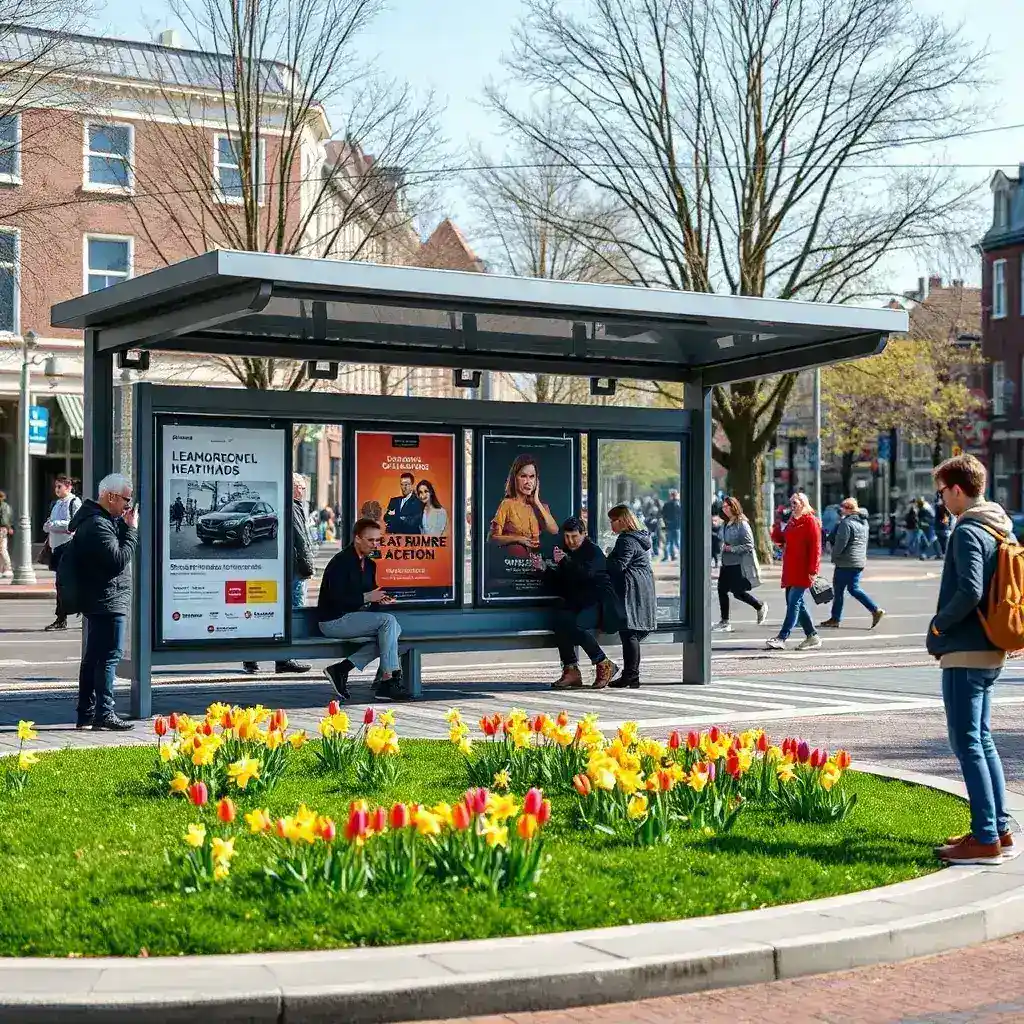
Amsterdam officially banned public advertisements for meat and fossil fuel products starting May 1st, making it the first capital city globally to implement such restrictions. The move aims to align the city’s visual landscape with its ambitious environmental targets, including achieving carbon neutrality by 2050 and halving meat consumption within the same timeframe.
Aligning Streetscape with Climate Goals
The decision means that billboards, tram shelters, and metro stations across Amsterdam will no longer feature promotions for products like burgers, SUVs, or airline travel. Instead, public spaces are now showcasing cultural events and local attractions, reflecting a shift in the city’s advertising priorities.
Politicians behind the ban emphasize that it is a crucial step in demonstrating genuine commitment to climate policies. Anneke Veenhoff of the GreenLeft Party stated, “If you want to be leading in climate policies and you rent out your walls to exactly the opposite, then what are you doing?” The municipality aims to avoid profiting from advertising that contradicts its stated environmental aims.
Challenging Consumer Norms
Anke Bakker, the Amsterdam group leader for the Party for the Animals, which champions animal rights, was instrumental in instigating the restrictions. She refutes claims of a “nanny state” approach, arguing that the ban empowers individuals by reducing the constant influence of large corporations on consumer choices. “In a way, we’re giving people more freedom because they can make their own choice, right?” she commented.
By removing the visual cues that normalize high-carbon consumption, the city hopes to diminish impulse purchases and signal that meat-heavy diets and fossil-fuel-intensive travel are no longer aspirational lifestyle choices. While meat accounted for a small portion (0.1%) of Amsterdam’s outdoor advertising market, fossil-fuel-related products represented approximately 4%. The ban, however, carries significant political weight by framing meat consumption as a climate issue, on par with fossil fuels.
Industry Reactions and Activist Support
The Dutch Meat Association criticized the ban as an “undesirable way to influence consumer behaviour,” asserting that meat provides essential nutrients and should remain visible. Similarly, the Dutch Association of Travel Agents and Tour Operators deemed the restriction on air travel advertising a disproportionate curb on commercial freedom.
Conversely, activists like lawyer Hannah Prins from Advocates for the Future see the ban as a pivotal moment. Her organization, alongside Fossil-Free Advertising, views the restriction on meat ads as an effort to create a “tobacco moment” for high-carbon foods. Prins drew parallels to historical acceptance of smoking, stating, “That you were allowed to smoke on the train, on restaurants. For me, that’s like, whoa, why did people do that?” She believes that normalizing such advertising in public spaces reflects societal acceptance, and the removal of meat advertisements signals a necessary change in what is considered normal.
A Growing Global Trend
Amsterdam’s initiative builds upon similar actions taken by other Dutch cities. Haarlem became the first city globally in 2022 to announce a broad ban on meat advertising in public spaces, which came into effect in 2024 alongside a prohibition on fossil fuel adverts. Utrecht and Nijmegen have since implemented restrictions on meat and dairy advertising on municipal billboards, complementing existing bans on fossil fuel and flying advertisements.
Globally, numerous cities, including Edinburgh, Sheffield, Stockholm, and Florence, are enacting or moving towards bans on fossil-fuel advertising, with France implementing a nationwide ban. Campaigners hope that Amsterdam’s integrated approach, linking meat and fossil fuels, will serve as a replicable model.
Impact and Future Outlook
While the ban targets physical advertising, its effectiveness in influencing consumer habits is debated, especially with the continued presence of online promotions. “So far, there is no direct evidence that removing meat advertising from public spaces leads to a shift toward more plant-based societies,” the article notes.
However, experts like epidemiologist Prof Joreintje Mackenbach from the Amsterdam University Medical Centre view the ban as a “fantastic natural experiment.” She suggests that removing environmental cues that normalize consumption, such as fast-food advertisements, can indeed impact social norms and consumption patterns. She references a study indicating that the London Underground’s 2019 ban on junk food adverts correlated with reduced purchases of such products.
Prins also anticipates benefits for local businesses, such as festivals, cheese shops, and florists, whose products are often discovered through community channels rather than large-scale advertising. “I think local businesses will be able to thrive because of this,” she stated.
The ban’s long-term impact remains to be seen, but it represents a significant step in challenging the advertising of products deemed harmful to the environment. “I think, and I hope, that big polluting companies will be extra scared. And maybe will rethink the kind of products they are selling. I think you can really see that change is possible,” Prins concluded.








Leave a Reply