
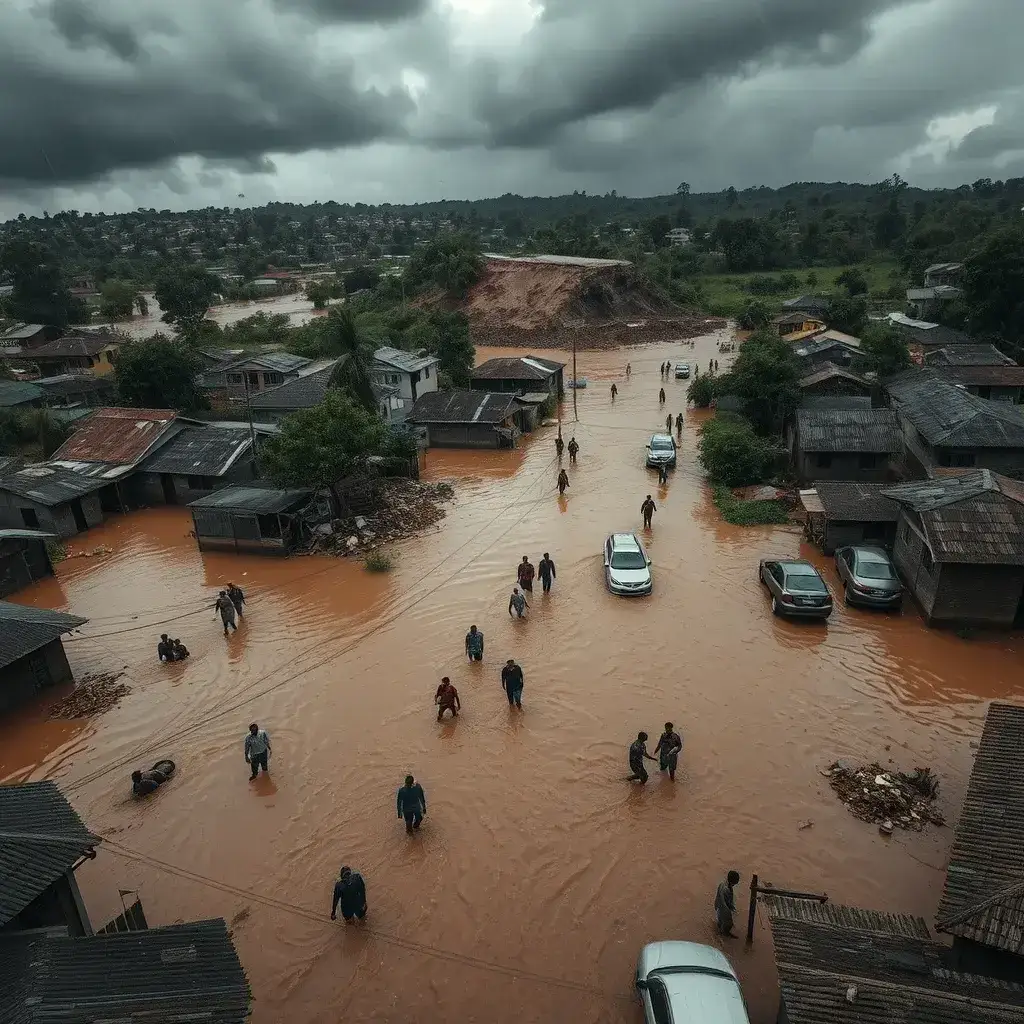
Torrential rains and devastating landslides have claimed at least 18 lives across multiple regions of Kenya over the past week, with the National Police Service confirming the fatalities on Sunday. The majority of deaths resulted from drowning as the seasonal March-to-May downpours intensified, triggering deadly mudslides in Tharaka Nithi, Elgeyo-Marakwet, and Kiambu counties. Authorities have urged extreme caution as the weather crisis escalates, with the Ministry of Interior and National Administration reporting the Eastern region as the hardest hit, recording nine deaths. Additional fatalities occurred in the Central, Coast, and Rift Valley regions, as well as the capital city, Nairobi.
Displacement and Infrastructure Collapse
The rising waters have impacted over 54,000 households nationwide. In Nairobi, around 6,000 families have been affected, particularly in low-lying areas and informal settlements. The floods have submerged numerous schools and hospitals, and severed access to 17 major roads. In Tharaka Nithi, Elgeyo-Marakwet, and Kiambu counties, landslides have ravaged communities, displacing families and causing extensive damage to property and infrastructure. Many residents were forced to evacuate their homes due to the geological shifts.
Civil Unrest and Health Hazards
The severe flooding has led to localized civil unrest in Nairobi. Traders in the Makongeni and Ruai neighborhoods protested on Sunday, citing crippled local commerce due to the deteriorating road conditions. As streets become impassable waterways, weather authorities have issued a critical warning about the immediate health risks posed by stagnant floodwaters, including the potential for waterborne diseases. The sustained rainfall is also expected to cause widespread damage to crops and farmland across the country.
Rising Dam Levels Spark Evacuation Warnings
Urgent warnings have been issued to residents living downstream of the Tana and Athi rivers as water levels in national hydroelectric dams rise alarmingly. The government has identified 59 flood-prone areas in Tana River County to pinpoint the highest-risk zones. Officials highlighted that river levels along the Seven Forks Dam system are a primary concern for the Ministry of Interior and National Administration, prompting immediate calls for evacuation to higher ground.
Emergency Response and Public Safety Calls
Search and rescue operations are underway in the most severely affected regions. The National Police Service emphasized the grave danger posed by the ongoing weather conditions, confirming the 18 fatalities and urging citizens to exercise extreme caution. While emergency aid is being provided, authorities stressed that continuous cooperation between the public and response agencies is crucial to prevent further casualties and ensure community safety.
Extended Forecast Points to Continued Hardship
The Kenya Meteorological Department forecasts that enhanced rainfall and thunderstorms will likely continue through the first two weeks of May. Regions including the Lake Victoria basin and the northeast may experience wind gusts up to 46 kilometers per hour. This current period of intense weather follows a destructive pattern that began in March, during which floods alone claimed at least 37 lives in Nairobi, signaling a particularly lethal seasonal cycle.
Humanitarian Challenges and Climate Resilience
As the death toll mounts, the national government’s focus is increasingly turning towards long-term recovery efforts. Fruzsina Straus, Head of Disaster Risk Reduction for the United Nations Environment Programme (UNEP), noted the broader continental challenge. “Across African cities, water extremes—too much during intense rains and too little during droughts—are driving increasingly severe impacts,” Straus stated, emphasizing the need for cities to “adapt rapidly to this new water volatility.” The recurring nature of these floods highlights a growing challenge for the region in balancing immediate disaster response with the imperative for resilient urban planning.
Shared African Vulnerabilities
Kenya’s current crisis mirrors a growing trend of extreme weather events across Africa, from the Sahel to the Gulf of Guinea. For many across the continent, scenes of submerged neighborhoods and overwhelmed drainage systems are becoming increasingly common. This situation underscores a shared continental struggle with rapid urbanization and the lagging development of climate-resilient infrastructure. As African nations confront these “new normals,” Kenya’s experience serves as a stark reminder of the urgent need for coordinated regional strategies to mitigate the impacts of unpredictable seasonal shifts and safeguard vulnerable populations in expanding urban centers.









Leave a Reply