
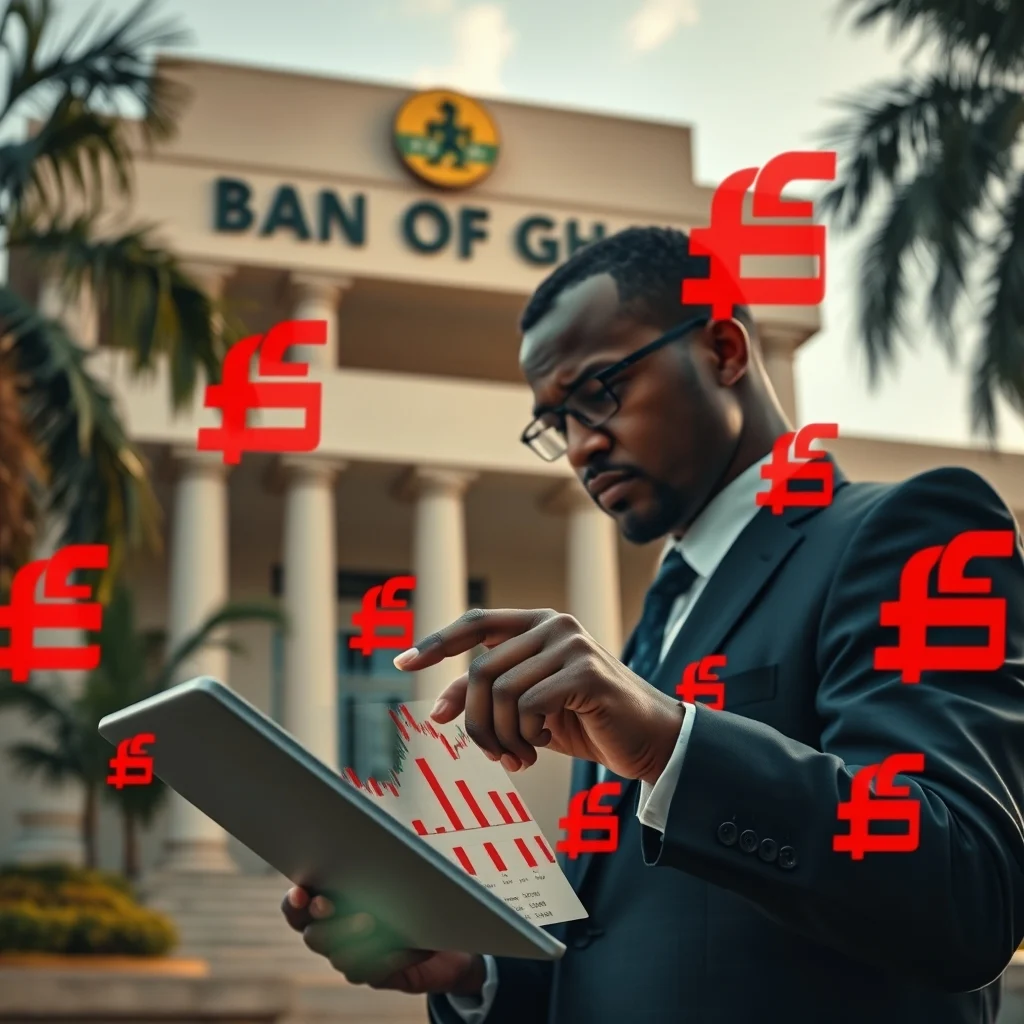
Accra, Ghana – The Institute of Economic Research and Public Policy (IERPP) has publicly called on the International Monetary Fund (IMF) to provide transparency regarding significant losses incurred by the Bank of Ghana, amounting to GHC 15.6 billion in its 2025 audited financial statements. The demand comes after the central bank revealed the substantial deficit last week, prompting the IERPP to question the IMF’s oversight within its ongoing economic support program for Ghana.
IMF Oversight Under Scrutiny
The IERPP highlighted that Ghana is currently under an IMF-supported program, making the Fund’s role in recent central bank developments a critical point of inquiry. The economic think tank stated that accountability from the IMF is expected, particularly concerning the substantial losses recorded during this period.
“Given that Ghana is currently under a programme with the International Monetary Fund (IMF), it is reasonable to expect some level of accountability from the Fund regarding developments at the Central Bank during this period,” the IERPP stated in a release.
The institute further questioned the IMF’s potential involvement, asking for clarity on the Fund’s role, if any, in these losses occurring under its watch.
Key Questions Raised by IERPP
The IERPP has posed several critical questions that they believe both the IMF and the Bank of Ghana must address to the Ghanaian public. These questions aim to understand the circumstances surrounding the loss and the broader implications for central banking under IMF programs.
A primary concern is whether IMF-supported programs typically lead to significant central bank losses in other nations. The IERPP seeks to understand the conditions under which such losses might occur internationally.
Furthermore, the think tank is asking what specific factors contributed to Ghana’s situation in 2025. This is particularly pertinent as the year in question was not marked by major crises like the 2017 banking sector cleanup or the global COVID-19 pandemic, events that could otherwise explain financial strain.
The IERPP also wants to know what accountability mechanisms are in place for central banks when policy decisions result in substantial financial deficits. This points to a need for clear responsibility and consequence frameworks.
Demand for Transparency and Accountability
The IERPP emphasized the public’s right to clear and honest answers regarding the Bank of Ghana’s financial performance. The institute warned that a lack of accountability could undermine the very economic stability the IMF program aims to defend.
“Ghanaians deserve clear, consistent, and honest answers. Without accountability, the very stability being defended risks becoming unsustainable,” the IERPP concluded in its statement.
Broader Economic Context
The Bank of Ghana’s reported loss comes at a sensitive time for Ghana’s economy, which has been seeking to regain stability and investor confidence. The country secured a $3 billion loan from the IMF in 2023, tied to a reform agenda aimed at fiscal consolidation and macroeconomic stability.
Central bank losses, especially of this magnitude, can raise concerns about monetary policy effectiveness, the management of foreign exchange reserves, and the overall health of the financial system. These issues can impact inflation, interest rates, and the government’s borrowing costs.
While the Bank of Ghana has not yet provided a detailed public explanation for the 2025 loss, central banks globally can incur losses due to various factors. These can include interventions in the foreign exchange market, interest rate differentials on assets and liabilities, and accounting adjustments related to asset valuations.
Looking Ahead
The IERPP’s call for transparency puts pressure on both the Bank of Ghana and the IMF to provide a detailed breakdown of the factors contributing to the GHC 15.6 billion loss. Observers will be watching for the Bank of Ghana’s response and any statements from the IMF regarding its oversight role and the implications of these losses for the ongoing economic program. The clarity provided will be crucial for maintaining public trust and ensuring the long-term sustainability of Ghana’s economic recovery efforts.








Leave a Reply