
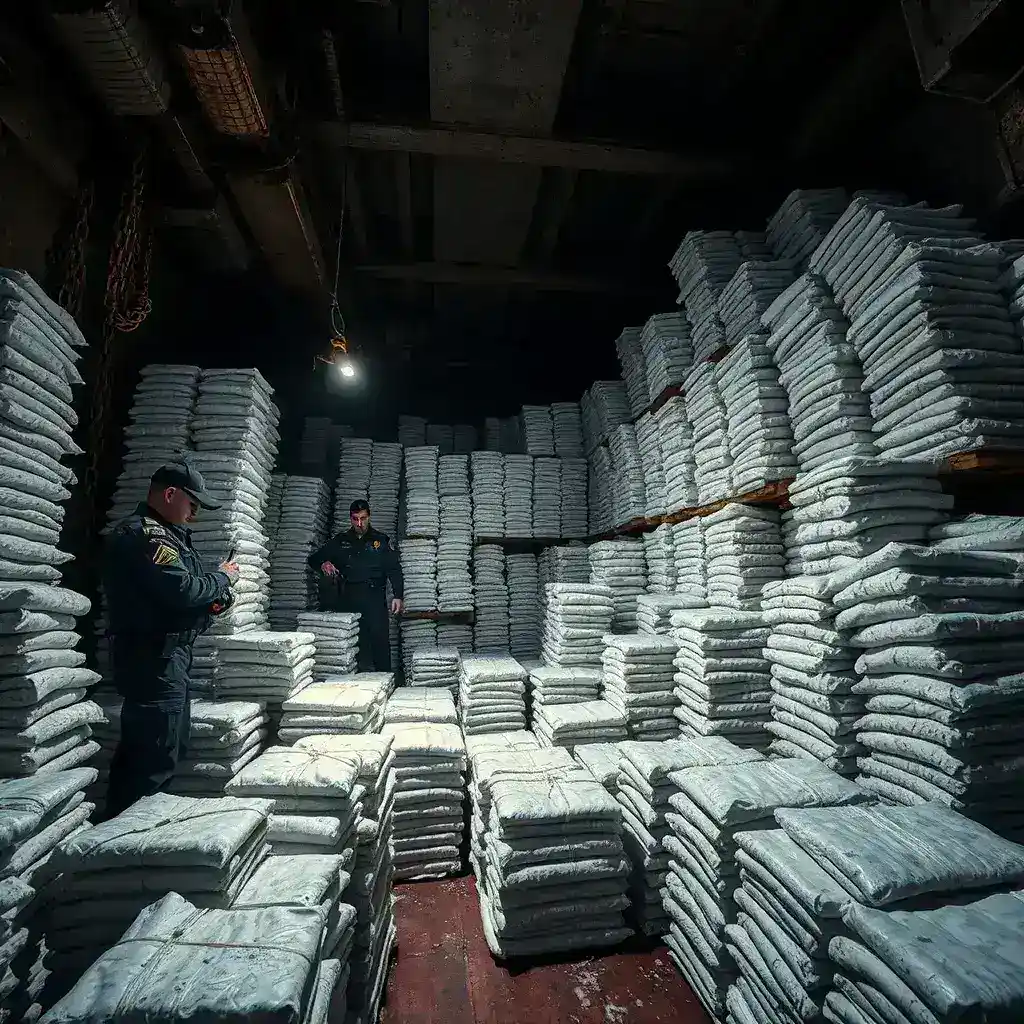
Spanish authorities have intercepted a record amount of cocaine, estimated between 30,000 and 45,000 kilograms, from a freighter in the Atlantic Ocean. The Civil Guard made the historic seizure off the Canary Islands on Friday, arresting approximately 20 individuals and dealing a significant blow to international drug trafficking operations, according to the AUGC, the Civil Guard’s main union.
Historic Interception in International Waters
The operation, which occurred in international waters, targeted a freighter that had departed from Sierra Leone and was en route to Libya. While the stated destination was North Africa, authorities suspect the ultimate goal was to distribute the illicit cargo across Europe.
The Civil Guard announced the achievement on their X account, sharing an image of the massive drug haul packed into the ship’s hold. They declared, “Today history is being written in the Maritime Service of the Civil Guard. Intercepted in international waters the largest known seizure: between 30,000 and 45,000 kg of cocaine on board a freighter.”
A Significant Blow to Drug Trafficking
Interior Minister Fernando Grande-Marlaska described the seizure as “one of the biggest, not only nationally but internationally,” underscoring its magnitude. The AUGC hailed the move as a “historic blow to drug trafficking,” emphasizing the impact on criminal organizations.
This latest interception surpasses a previous record set in January of this year, when Spanish authorities seized nearly 10 tonnes of cocaine from a ship at sea. The consistent success of Spanish law enforcement in intercepting large drug shipments highlights the persistent challenge of maritime drug trafficking routes.
Sophisticated Trafficking Networks
The route from Sierra Leone to Libya, with an apparent diversion for European distribution, suggests a sophisticated and transnational criminal network. Such organizations often utilize freighters to transport large quantities of drugs, employing complex logistics to evade detection.
The method of offloading the drugs onto smaller vessels for distribution within Europe is a common tactic. This allows traffickers to bring the cocaine closer to consumer markets while minimizing the risk associated with transporting the entire shipment directly to a European port.
Legal Restraints and Ongoing Investigations
Details of the ongoing investigation have been limited by the Civil Guard due to legal reasons. However, the scale of the seizure indicates a significant intelligence operation preceded the interception.
The 20 arrests made during the operation are crucial for dismantling the network. Further investigations will likely focus on identifying the individuals involved, their roles within the organization, and the broader implications for drug supply chains into Europe.
Implications for European Drug Markets and Law Enforcement
The seizure of such a colossal amount of cocaine will undoubtedly disrupt the supply available in European markets, potentially leading to temporary price fluctuations and shifts in distribution patterns. It also serves as a stark reminder of the immense profits drug cartels continue to generate.
For law enforcement agencies, this success validates increased maritime surveillance and international cooperation. The challenge remains to adapt to the evolving tactics of drug traffickers and to secure the vast expanses of the ocean against illicit trade. The focus will likely remain on intelligence gathering, inter-agency collaboration, and the strategic deployment of resources to intercept future shipments.
What remains to be seen is how quickly trafficking organizations will attempt to replenish their supply and whether this significant seizure will prompt a reassessment of their routes and methods. The ongoing efforts to combat this persistent global threat will continue to be a critical area of focus for national and international security bodies.










Leave a Reply