
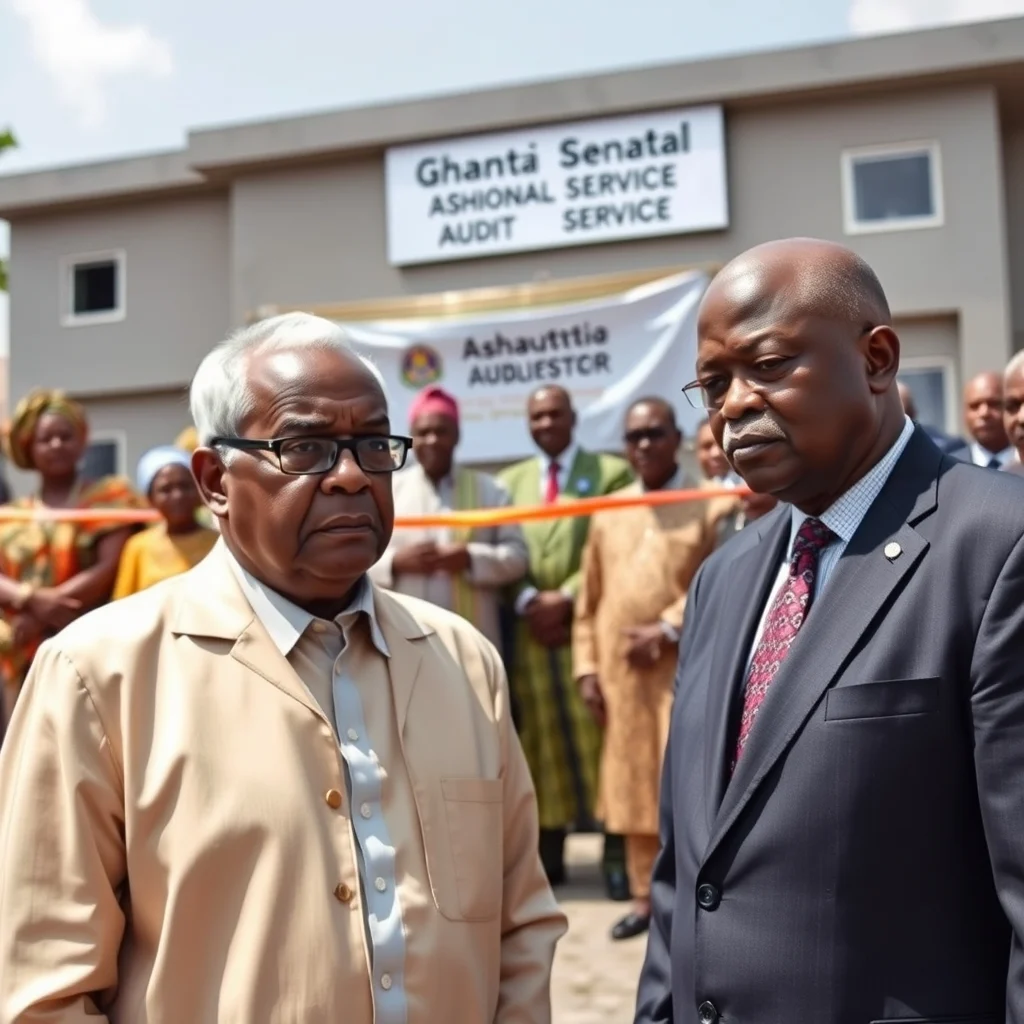
Concerns over the independence of auditors are escalating across Ghana as a significant majority of audit service officials operate from accommodation provided by the very district assemblies they are tasked to scrutinize. This situation, where only 30% of audit operations are conducted from independent offices, was highlighted by Auditor-General Johnson Akuamoah Asiedu during the commissioning of a new Ghana Audit Service regional office complex in Kumasi, Ashanti Region.
Context: The Challenge of Auditor Independence
The independence of an audit service is crucial for maintaining public trust and ensuring accountability in the management of public funds. Auditors must be free from undue influence or pressure from the entities they examine to provide objective assessments. In Ghana, a persistent challenge has been the lack of adequate independent office and residential facilities for audit staff, particularly in the districts.
Historically, the Ghana Audit Service has faced difficulties in securing separate accommodation for its personnel. This has often led to auditors being housed in facilities managed by the Metropolitan, Municipal, and District Assemblies (MMDAs) that they are responsible for auditing. This reliance on auditees for basic amenities like accommodation creates a potential conflict of interest.
New Kumasi Office Offers Hope, But Systemic Issues Remain
The newly commissioned Ashanti regional office complex in Kumasi, designed to house technical audit departments and service support units, represents a significant investment in infrastructure for the Audit Service. The project, which began in 2011, faced over a decade of abandonment before its completion. Its inauguration, attended by traditional leaders and dignitaries, signals a commitment to bolstering the institutional capacity in the region.
Despite this infrastructural progress, Auditor-General Asiedu used the occasion to reiterate the pressing issue of auditors residing in accommodation provided by the assemblies. He explained that this arrangement fosters an “undue familiarity” that can compromise objectivity. “Imagining an audit service staff going to the assembly to ask for furniture, sometimes we go and ask for ice water and imagine how our independence is likely to be impaired because of the familiarisation of our auditees,” he stated.
This reliance on auditees for housing and other resources can subtly influence the rigor and findings of audits, potentially weakening the oversight function and the safeguarding of public funds. Asiedu urged the government to prioritize the provision of independent office facilities nationwide to enable auditors to perform their duties with integrity and efficiency.
Government Commitment to Accountability
The Auditor-General’s concerns are voiced at a time when the government has reasserted its dedication to combating corruption and enhancing accountability within state institutions. Presidential Advisor on the National Anti-Corruption Programme, Prof. Francis Duodu, affirmed the administration’s commitment to the judicious use of public funds and stressed the importance of the Auditor-General’s independence.
Prof. Duodu emphasized that effective auditing is a bulwark against mismanagement, waste, and corruption. He pledged the government’s commitment to upholding Article 187 of the Constitution, which governs the Audit Service, and ensuring that audit reports are presented to Parliament promptly, debated publicly, and that recommendations lead to concrete actions.
Continuity and Legacy Projects
The Ashanti Regional Minister, Dr. Frank Amoakohene, highlighted the importance of governmental continuity, noting that the completion of the Kumasi office complex is a testament to the efforts of successive administrations. He praised the Auditor-General’s leadership and acknowledged the collaborative spirit that brought the project to fruition.
“This is a testament to our resolve as a government to prioritise the completion of legacy projects that serve the people,” Dr. Amoakohene remarked. He also stressed the need for a strong maintenance culture to preserve such investments and ensure their long-term value.
Implications and Future Outlook
The commissioning of the new regional office is a positive step, but the core issue of auditor accommodation remains a significant impediment to the Audit Service’s functional independence. For citizens, this directly impacts the assurance that public funds are being managed effectively and ethically. Without true independence, the effectiveness of audits in curbing corruption and waste is fundamentally undermined.
Moving forward, the focus will be on whether the government will translate its stated commitment to accountability into tangible policies and budgetary allocations that address the critical need for independent housing and office facilities for audit staff across the country. The success of anti-corruption efforts and the protection of the public purse hinge on the Audit Service’s ability to operate free from any perceived or actual influence.








Leave a Reply