
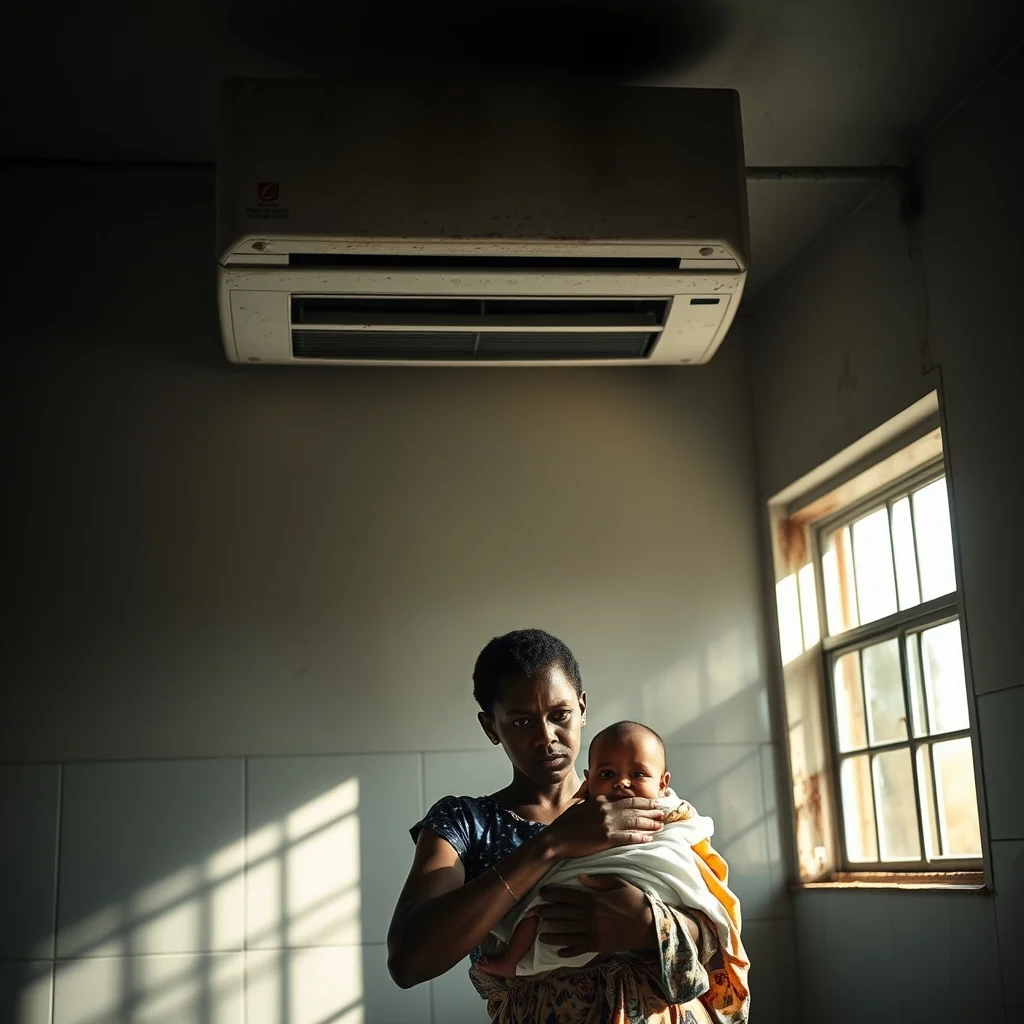
Accra, Ghana – Concerns are escalating over the air quality within Ghana’s hospital wards, where malfunctioning air conditioning systems are recirculating stale air and elevating carbon dioxide levels beyond acceptable health standards, potentially exacerbating the spread of infections. This revelation comes from Professor Ebenezer Amankwaa, a senior lecturer and researcher at the University of Ghana, who warns that many healthcare facilities are ill-equipped to handle the challenges posed by a changing climate and inadequate maintenance.
Ventilation Systems Under Scrutiny
Air-conditioning, long considered a hallmark of modern healthcare environments, is now facing intense scrutiny. Research indicates that in numerous hospital wards, these systems may be contributing to, rather than mitigating, health risks by circulating pathogens and heat.
Professor Amankwaa highlighted that in many instances, air conditioners are left running but are not effectively ventilating the space. “They leave the AC on, thinking it’s blowing, but it’s not blowing anything. It’s just the air that is recirculating in there,” he stated.
The findings reveal that specific areas, including Outpatient Departments (OPD), children’s wards, and paediatric units, have recorded significantly high concentrations of carbon dioxide. These levels exceed the established safe limits for indoor air quality, creating environments detrimental to healing.
Stagnant Air and Recirculated Pathogens
The core of the problem lies in sealed, air-conditioned wards where air circulation is minimal, leading to stagnant conditions. This stagnation allows bacteria, viruses, and heat to accumulate.
A stark contrast emerged between wards with natural ventilation, such as those with open windows allowing for cross-breezes, and enclosed, air-conditioned spaces. The former demonstrated significantly better air quality, while the latter trapped stale, potentially contaminated air.
Professor Amankwaa noted a common issue: “We realised that in most of the wards, the air conditioners were not working. That creates humid conditions. If someone has an infection, the air simply recirculates pathogens and bacteria.”
Patient and Parent Concerns
These findings have serious implications, potentially contributing to the public’s fear of contracting infections within hospitals, a sentiment amplified during the COVID-19 pandemic.
For patients and their families, the quality of the air their loved ones breathe is a significant concern. Mothers, in particular, express worry about the air quality in paediatric wards.
“As for us adults, we can manage, but what about the children?” questioned one mother, Akosua. “In the past, we were told that too much air was not good for newborn babies. Now the ward has AC.”
Some patients advocate for a balanced approach, suggesting that while air-conditioning offers comfort, it must be coupled with stringent infection control measures.
“I prefer air-conditioning in wards because some people are used to it at home,” said one patient. “But there should be protocols, like wearing nose masks, so infections don’t spread.”
Climate Fragility of Healthcare Infrastructure
As global temperatures rise and heatwaves become more frequent, the discussion is shifting from comfort to the fundamental resilience of healthcare infrastructure. Professor Amankwaa bluntly described Ghana’s hospitals as “climate fragile” rather than climate-resilient.
He argues that the focus on modern machinery like air conditioners overlooks fundamental architectural principles. “We need to go back to the old architecture,” he advised. “Many older hospital buildings had vents designed to release warm air, while windows allowed cool air in. Today, those vents are blocked. Everything is sealed, and we are unable to maintain the AC systems we depend on.”
Deterioration and Undermined Healing
The lack of proper maintenance and monitoring is leading to the deterioration of facilities. Professor Amankwaa warned that without consistent upkeep, conditions within hospital wards will continue to decline.
“After two years, you begin to see facilities deteriorate because we are not maintaining them,” he stated. “Patients are left in conditions that do not contribute to their healing.”
The current situation suggests that air-conditioning, when not properly managed, risks transforming hospital wards into enclosed spaces that trap heat, humidity, and infections, thereby hindering patient recovery. In an era defined by climate change, the future of effective healthcare may hinge on a crucial shift towards prioritizing natural ventilation and ensuring the proper functioning and maintenance of all climate control systems.










Leave a Reply