
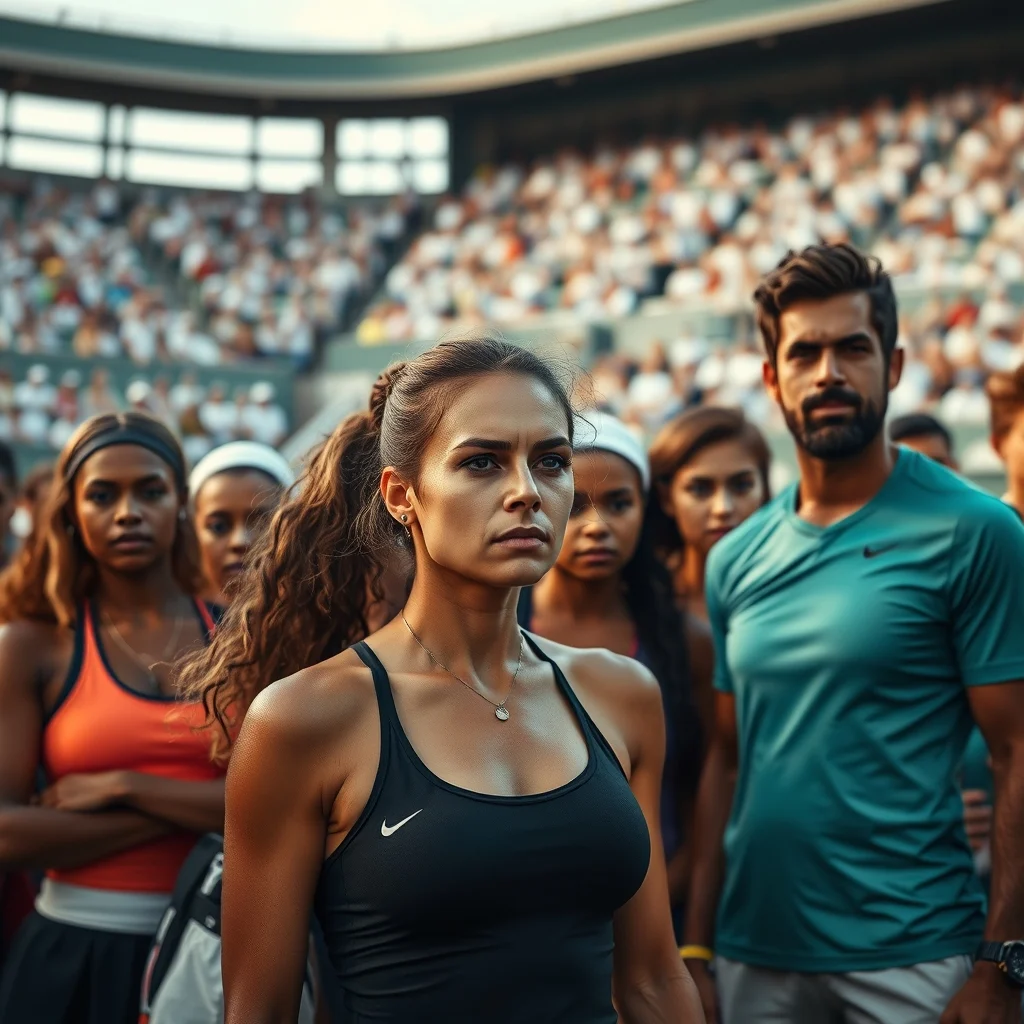
World number one Aryna Sabalenka has stated that a Grand Slam boycott by players is a distinct possibility in the ongoing dispute over prize money, revenue sharing, and player benefits. The sentiment was voiced in Rome ahead of the Italian Open, signaling a potential escalation in player demands.
Escalating Tensions Over Revenue Share
The core of the conflict lies in the players’ demand for a larger percentage of the revenue generated by the four Grand Slam tournaments. Top-ranked male and female players feel their contribution to the events’ success warrants a greater financial return and more influence over tournament operations, including scheduling.
Sabalenka articulated this frustration, suggesting that a collective strike action may be the only effective method to secure player rights. “I think at some point we will boycott it. I feel like that’s going to be the only way to kind of fight for our rights,” she told reporters.
She emphasized the players’ central role in the spectacle: “I feel like the show is on us. I feel like without us, there wouldn’t be a tournament and there wouldn’t be that entertainment.”
Divergent Views on Strike Action
While Sabalenka’s stance indicates a growing willingness among top players to consider drastic measures, opinions on a boycott remain divided. Fourth-ranked Coco Gauff expressed strong support for the idea, stating she could “100%” see herself participating in a boycott if the player contingent united. “If we all collectively agree, then yes,” Gauff commented, adding that a unified front, possibly through unionization, is key to achieving significant progress.
However, not all leading players share this view. World number three Iga Swiatek acknowledged the validity of the call for increased prize money but deemed a boycott “a bit extreme.” She advocated for continued dialogue and negotiation with the tournament organizers. “I think the most important thing is to have proper communication and discussions with the governing bodies so we have some space to talk and maybe negotiate,” Swiatek stated.
British player Emma Raducanu also distanced herself from the boycott concept, emphasizing her personal value for participating in Grand Slams. “To me, they are tennis… It gives you something that money can’t and that is what is the most important to me,” Raducanu said, asserting she “would not be a part” of any strike.
Prize Money Increases Fall Short of Player Expectations
The current dispute follows recent prize money announcements. The French Open saw a 9.5% increase in its prize fund, which players argue falls significantly short of the 22% of tournament revenue they believe they are entitled to. This contrasts with the Australian Open’s nearly 16% increase and the US Open’s 20% rise last year.
World number five Jessica Pegula, a vocal advocate for the players’ campaign, has previously downplayed the likelihood of a strike. “I don’t think anyone’s going to strike against the Slams,” she remarked in March, preferring to focus on pushing for what players deem their deserved share of revenue.
Player Unity and Future Implications
The potential for a Grand Slam boycott hinges on player unity. While some, like Gauff and Sabalenka, see it as a necessary tool, others, such as Swiatek, prefer diplomatic solutions. Elena Rybakina, ranked world number two, indicated a willingness to follow the majority decision if a boycott were to be organized.
The differing perspectives highlight the complex dynamics within professional tennis. The players’ collective bargaining power, particularly in the face of perceived revenue inequities, remains a significant factor in the sport’s governance.
Looking ahead, the focus will be on whether players can forge a unified stance and the response from Grand Slam organizers to these escalating demands. The upcoming Wimbledon tournament’s prize money announcement will be closely watched for any signals of compromise or continued adherence to current structures.




Leave a Reply