
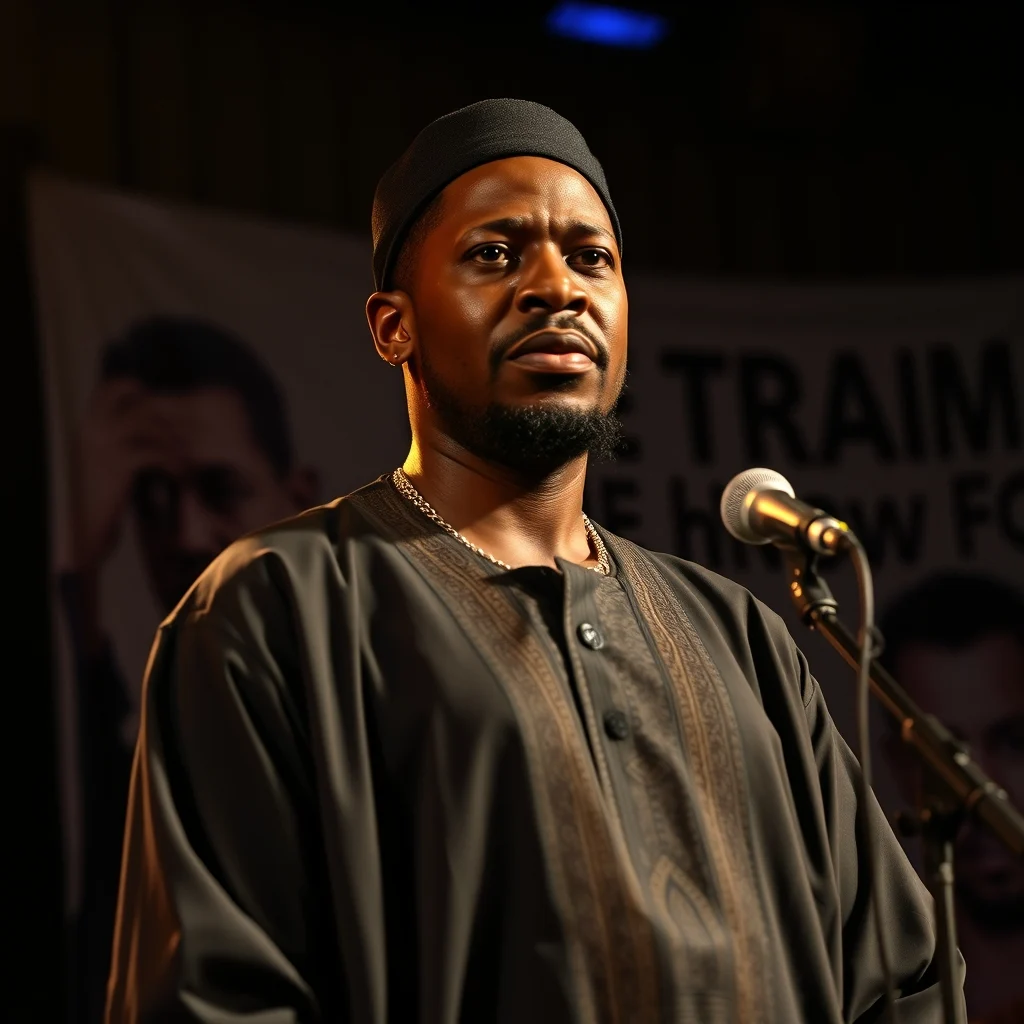
Grammy-nominated Afrobeat artist Seun Kuti has asserted that he has been effectively blacklisted within the Nigerian music industry for approximately 13 years, attributing this exclusion to his politically charged and conscious music. Kuti made these claims during a recent appearance on the Saleh Meditate podcast, explaining his belief that historical government efforts to suppress dissenting voices through music have shaped the landscape of contemporary Nigerian artistry.
Government Interference and Music’s Role
Kuti detailed how the government, wary of the protest power wielded by his late father, Fela Anikulapo-Kuti, and his contemporaries, allegedly shifted its support. Instead of promoting artists who addressed societal issues, the government, he claims, invested heavily in musicians who shied away from critical commentary. This strategy, according to Kuti, has diluted the quality and impact of modern Nigerian music by discouraging artists from engaging with pressing realities.
“The impact of Fela and his contemporaries who spoke truth to power scared the government,” Kuti stated on the podcast. “They made the government realise the power of artistry. So, the government invested more in artists who don’t make conscious music than in artists who sing about realities.”
Personal Experience of Blacklisting
The musician recounted a specific incident, performing conscious music at an event hosted by a former Lagos State Governor, Ambode, as a turning point. He stated that even before this event, his music faced significant restrictions. Kuti, however, projects an image of resilience, suggesting that this alleged blacklisting does not significantly hinder his career.
“When I am in Nigeria, I don’t fear to say whatever I want to say. That is a lot of people are saying that I should be cancelled. I have been cancelled for about 13 years now, ever since I performed conscious music at a former Lagos State Governor Ambode’s event. Even before then, my music was heavily restricted,” he explained.
Market Reach and Artist Fear
Kuti elaborated that his ability to withstand the alleged blacklisting stems from his international reach, with Nigeria representing only a small portion of his global fanbase. He suggested that artists who fear being blacklisted are primarily concerned because their careers are heavily reliant on the Nigerian market.
“I have been cancelled for a long time. People think I am not cancelled because I am doing well. Nigeria has cancelled me for a long time, but Nigeria is just like a really small percentage of my market. So, being cancelled doesn’t really affect me,” Kuti added.
Broader Implications for the Industry
The artist’s claims highlight a recurring debate within the Nigerian music scene regarding artistic freedom and the influence of external pressures, including government and commercial interests. His perspective suggests a potential chilling effect on socially conscious music, where artists might self-censor to avoid professional repercussions.
This situation raises questions about the responsibility of artists to engage with societal issues versus the commercial demands of the music industry. It also prompts consideration of whether governmental or corporate entities exert undue influence over artistic expression in Nigeria, potentially stifling critical voices.
Future Outlook
Kuti’s statements invite further scrutiny into the dynamics of power and influence within the Nigerian music ecosystem. As the industry continues to grow and gain international recognition, the balance between commercial success and the preservation of artistic integrity, particularly concerning politically and socially relevant themes, will remain a critical area to monitor. The extent to which artists feel empowered to address challenging topics without fear of reprisal will shape the future narrative and impact of Nigerian music on a global scale.






Leave a Reply