
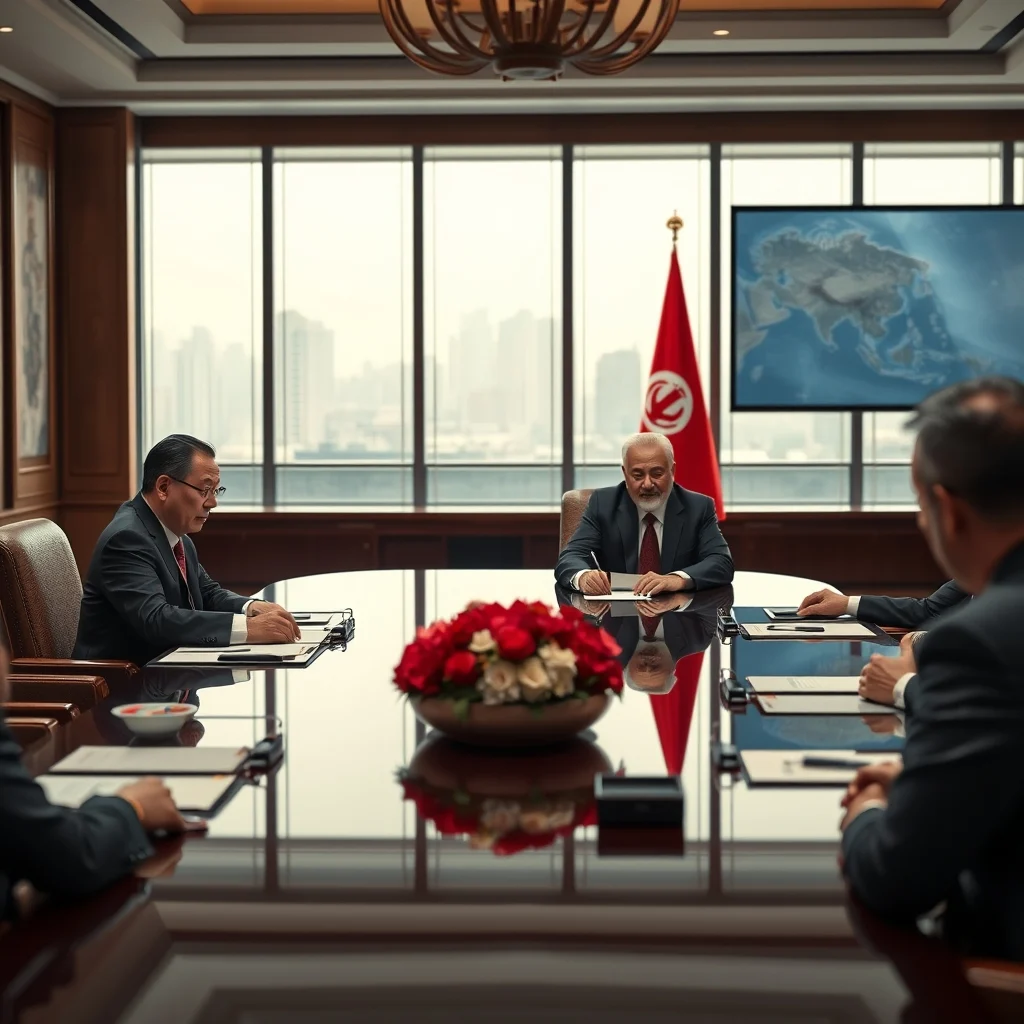
Chinese Foreign Minister Wang Yi urged the reopening of the Strait of Hormuz “as soon as possible” during talks with his Iranian counterpart, Abbas Araqchi, in Beijing on Wednesday. The meeting, Araqchi’s first to China since the Iran war began, also saw Wang Yi emphasize the “urgent priority” of achieving a lasting ceasefire and express Beijing’s readiness to help de-escalate tensions.
Context of the Conflict and Strait’s Importance
The Strait of Hormuz, a critical global oil transit route, has been largely impassable since the onset of the Iran war due to blockades imposed by both Iran and the United States. This disruption significantly impacts global energy supplies and international trade.
China has been a substantial importer of Iranian oil, with the U.S. sanctions complicating these transactions. According to the Center on Global Energy Policy, China imported approximately 1.38 million barrels of crude oil per day from Iran in 2025, constituting about 12% of its total crude oil imports. Beijing has previously condemned the U.S. naval blockade of Iranian ports as “irresponsible and dangerous,” warning it could undermine the fragile ceasefire agreement.
Diplomatic Efforts and Upcoming Summit
The discussions between Wang Yi and Araqchi occur just a week before a planned summit between U.S. President Donald Trump and Chinese leader Xi Jinping. This high-level meeting is anticipated to address the Iran war and the contentious issue of reopening the Strait of Hormuz.
Wang Yi stated, according to state media, that “China believes that achieving a comprehensive ceasefire is an urgent priority, while reopening hostilities would be even more undesirable.” He further added that “the international community shares a common concern over restoring normal and secure navigation through the Strait, and China hopes relevant parties will respond as soon as possible to the strong call from the international community.”
Beijing has consistently advocated for negotiations between the U.S. and Iran, positioning itself as a mediator while seeking to avoid direct entanglement in the conflict. Both the Trump administration and Iranian officials have previously credited China with facilitating their acceptance of a Pakistan-brokered ceasefire in April.
Iranian state media reported that Araqchi conveyed to Wang Yi that cooperation between China and Iran is expected to strengthen. Wang Yi also acknowledged Iran’s commitment to not developing nuclear weapons during the meeting.
U.S. Perspective and Shifting Dynamics
Despite China’s significant reliance on the Strait of Hormuz for its oil supply, President Trump has reportedly found Chinese President Xi Jinping to be “very respectful” regarding the situation. Trump indicated that China has not challenged U.S. actions in the region.
The upcoming summit between Trump and Xi, initially scheduled for March, was postponed following wide-ranging strikes launched by the U.S. and Israel on Iran. If the meeting proceeds next week, it would mark the first visit by a U.S. president to China in nearly a decade.
Implications and Future Outlook
The renewed diplomatic focus on the Strait of Hormuz highlights its strategic importance in global energy security. China’s active role in urging its reopening signals its increasing influence in regional and international affairs. The upcoming Trump-Xi summit presents a critical opportunity to address the ongoing conflict and its impact on maritime trade routes. Observers will be watching closely to see if these high-level discussions can lead to a tangible de-escalation of tensions and the restoration of secure passage through this vital waterway.









Leave a Reply