
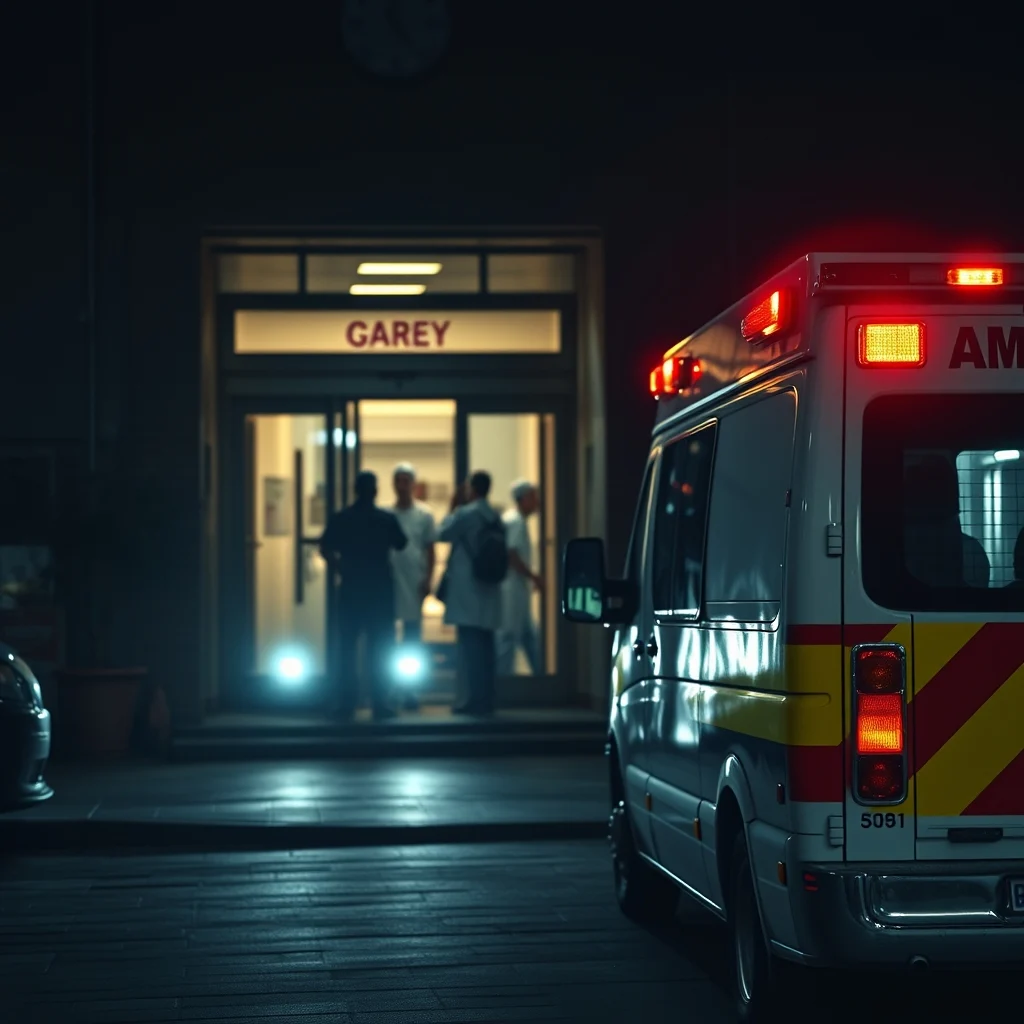
A 29-year-old engineer, Charles Amissah, died on February 6, 2026, after being involved in a hit-and-run incident near Accra’s Kwame Nkrumah Circle Overpass. An investigative committee has determined that Amissah remained alive through four hospital transfers and over an hour of attempts to secure definitive medical care, highlighting significant failures in the emergency response and healthcare access chain.
Timeline Reveals Critical Delays in Care
The Akosa Committee, tasked with investigating the circumstances surrounding Amissah’s death, meticulously reconstructed a timeline of events. This timeline illustrates a continuous movement of the patient from the accident scene through various medical facilities, with repeated instances where stabilization efforts were insufficient.
The incident occurred around midnight on February 6. The National Ambulance Service arrived at the scene approximately 11 minutes later. The patient was then transported to the Police Hospital, arriving at 22:32.
However, the committee found that the patient was not stabilized at the Police Hospital. Subsequently, a transfer was initiated to the Greater Accra Regional Hospital, where they arrived at 22:58.
Further complications arose at the Greater Accra Regional Hospital, leading to another transfer, this time to the Korle-Bu Teaching Hospital. The patient arrived at Korle-Bu at 23:20.
Professor Agyeman Badu Akosa, chair of the committee, emphasized that at every stage of these transfers, the patient was still alive. Despite this, definitive medical intervention remained elusive.
Refusal of Final Transfer Raises Concerns
The investigation uncovered a critical juncture at Korle-Bu Teaching Hospital. A referral to the University of Ghana Medical Centre (UGMC) was considered for the patient.
Despite the need for advanced care, the ambulance crew reportedly declined to proceed with this final transfer to UGMC.
Charles Amissah was ultimately pronounced dead at approximately 00:30, nearly two hours after the initial incident. This prolonged period without critical care underscores the systemic issues highlighted by the committee.
Broader Implications for Emergency Healthcare
The findings of the Akosa Committee point to critical weaknesses within the emergency medical services and referral system. The repeated failures to stabilize a patient and the reported refusal of a final transfer suggest potential issues with hospital capacity, inter-facility communication, and ambulance crew protocols.
Such incidents can have devastating consequences for patients and erode public trust in the healthcare system’s ability to respond effectively to emergencies.
The case of Charles Amissah serves as a stark reminder of the vital importance of a seamless and efficient emergency response network. It calls for a thorough review of existing protocols and potential investments in training and resources to prevent similar tragedies.
Moving forward, the focus will likely be on implementing the committee’s recommendations to improve patient outcomes and ensure timely access to life-saving care.








Leave a Reply