
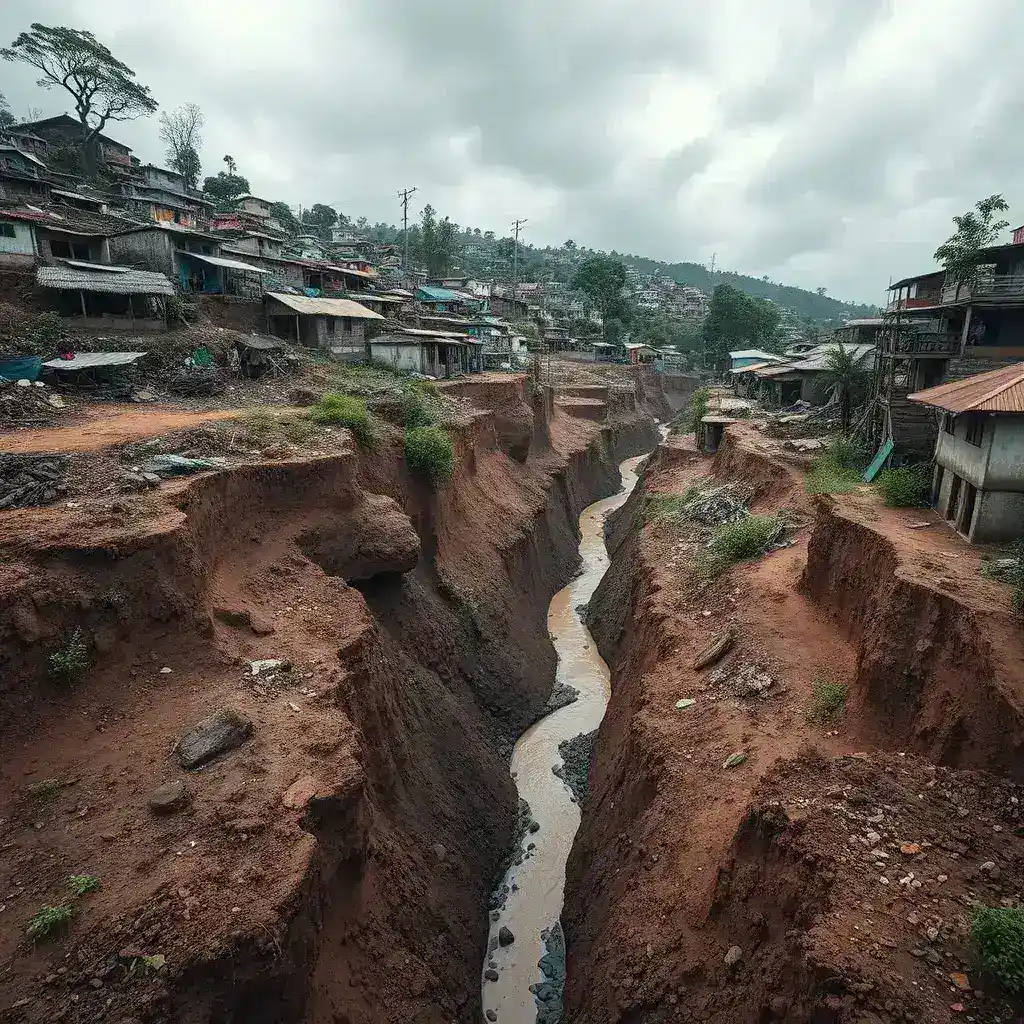
Residents along Kasoa’s hillsides are voicing urgent concerns about escalating soil erosion, driven by increasingly severe and unpredictable rainfall patterns linked to climate change. The intensified downpours are washing away soil, carving deep gullies, and destabilizing building foundations, posing a significant threat to homes and livelihoods in these vulnerable communities. This situation has become acutely worrying in recent years, transforming manageable seasonal rains into destructive events.
Rising Fears Amidst Changing Weather Patterns
For decades, communities in Kasoa have lived with seasonal rains, but a noticeable shift has occurred. Residents report that current rainfall events are far more intense than those experienced in the past. What were once predictable periods of rain have given way to sudden, heavy downpours that overwhelm existing drainage systems and strip away soil at an alarming rate.
Esther, a resident of an affected hillside community for nearly 30 years, described the growing anxiety. “Anytime the rains come heavily, we become scared because the water keeps removing the soil around our houses. We don’t know whether one day the land will collapse,” she stated, reflecting the widespread fear of potential landslides or structural failures.
The Role of Unchecked Development and Deforestation
Compounding the effects of climate change is the rapid and often unregulated construction taking place on Kasoa’s slopes. Houses are increasingly being built uphill, frequently without adequate planning for drainage or erosion control measures. This development trend exacerbates the impact of heavy rainfall, as water runoff is not properly managed.
Environmental experts highlight the critical role of vegetation in mitigating soil erosion. Studies, including those cited by the Intergovernmental Panel on Climate Change (IPCC), demonstrate that trees and plant cover are vital for stabilizing soil. Their root systems bind soil particles together, while their foliage slows down the impact of raindrops and reduces surface water flow. The removal of trees in these areas has therefore significantly weakened the land’s natural resilience.
Local mason Enock Asumadu observed the visible consequences of this environmental degradation. “The water now cuts through the land very fast. Every heavy rain leaves new holes in the ground, and that shows the soil is becoming weaker,” he explained. He further emphasized the loss of natural protection: “When trees were here, the roots helped hold the land. Now many trees are gone, so the water washes the soil away easily. We need to plant more trees again.”
Expert Warnings and Calls for Urgent Intervention
Climate scientists confirm that extreme weather events, including intense rainfall, are becoming more frequent across West Africa. The IPCC’s reports indicate a global trend where even stable annual rainfall totals can be accompanied by storms delivering larger volumes of rain in shorter durations. This intensifies the risks of flooding, erosion, and landslides, particularly in geologically sensitive areas.
Officials from the National Disaster Management Organisation (NADMO) acknowledge the validity of residents’ fears. The organization is intensifying its efforts in awareness creation and community education within vulnerable areas to help mitigate disaster risks. A NADMO official stressed, “Climate change is contributing to stronger rainfall events, and communities living in fragile areas must take precautions to reduce disaster risks.”
The Ghana Hydrological Authority is also advocating for immediate and comprehensive interventions. They emphasize the necessity of robust drainage infrastructure, improved land-use planning, and strict enforcement of building regulations to curb erosion and landslide risks in hillside communities. Furthermore, they support large-scale tree planting initiatives and the restoration of vegetation cover as crucial steps towards stabilizing the soil.
Future Outlook and What to Watch Next
As climate change continues to alter rainfall patterns, communities situated on vulnerable hillsides like those in Kasoa face an increasingly uncertain future. The interplay of heavier rains, inadequate infrastructure, and deforestation creates a precarious environment. Without swift and decisive action from authorities and a concerted effort towards environmental restoration, the risk of significant damage from future rainfall events remains high. The focus will likely shift towards the implementation of these proposed solutions and their effectiveness in safeguarding these communities.







Leave a Reply