
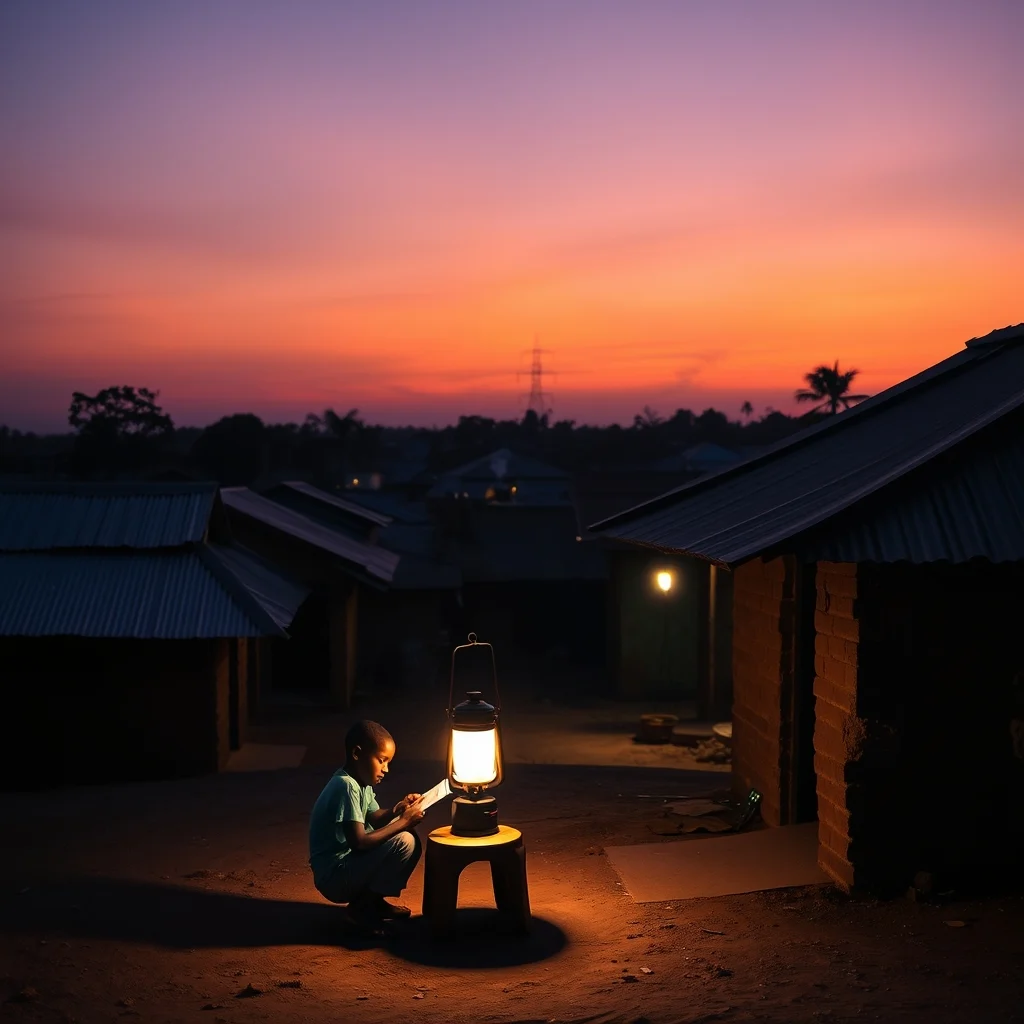
In the remote community of Tadankro, Ghana, residents face a daily reality of darkness after sunset, relying on rented solar lamps for basic illumination and struggling with the escalating impacts of climate change due to their lack of connection to the national electricity grid. This situation, prevalent in the Akuapem North Municipality of the Eastern Region, highlights the critical need for reliable energy access.
The Daily Grind Without Power
As dusk settles over Tadankro, the absence of streetlights and the hum of transformers signifies the onset of deep darkness. Families depend on small, rented solar lamps, a nightly expense of two Ghanaian cedis, to light their homes. For students, these lamps are the sole source of light for studying, a necessity made more challenging by the smoke from firewood used for cooking.
“We rent a solar lamp for two cedis so I can study at night. But when I help my mother cook, the smoke from the firewood often irritates my eyes,” shared a student, illustrating the dual burden of energy poverty and indoor air pollution.
Compounding Challenges of a Warming Climate
The lack of electricity exacerbates the effects of rising global temperatures. Without fans or air conditioning, homes become stiflingly hot, forcing residents like Yaa Asiedua to seek refuge outside. “When the heat becomes too much, our rooms get very warm, so we step outside for a while before going back in to sleep,” she explained. The discomfort is compounded by the increased risk of encountering snakes and scorpions during rainy seasons.
The persistent smoke from firewood and charcoal used for cooking also leads to significant health issues. “Many of us now struggle with poor eyesight, and our children often get heat rashes,” Asiedua added, underscoring the direct link between energy sources and community health.
Impact on Education and Healthcare
Tadankro Basic School faces considerable hurdles in delivering quality education. The headteacher noted the difficulty in conducting Information and Communication Technology (ICT) lessons without electricity, often resorting to using mobile phones for explanations. Charging these devices, however, requires travel to neighboring communities, consuming valuable time and resources.
“Teaching and learning are difficult without electricity, especially when it comes to ICT lessons. Sometimes students struggle to follow what is being taught, and we rely on phones to help explain certain concepts,” he stated. The high temperatures within classrooms also impair student concentration, particularly for younger pupils who are sometimes allowed to take breaks outdoors.
Healthcare services at the local CHPS compound are similarly constrained. A health worker described the challenges of processing claims and storing vital vaccines without a reliable power source. The existing solar system is insufficient to power a freezer, necessitating frequent trips to collect vaccines. “So I ride to the city on my motorbike to collect vaccines before vaccinating children. We see many cases of cough and bronchitis linked to smoke from charcoal and firewood,” the health worker reported.
The Broader Definition of Energy Access
Energy researchers like Baker and colleagues emphasize that true energy access involves power that is reliable, affordable, and usable. In Tadankro, the fundamental issue is the grid’s absence, rendering electrification a distant dream. Community elder Opanyin Kwadwo Asiedu lamented the impact on development, noting that the lack of electricity deters teachers and health workers from staying long-term.
“Our community has a school and a CHIPS compound, but because there is no electricity, teachers and health workers often live in another town. Many teachers request transfers after a few months,” he said. Even basic tasks like charging mobile phones require journeys to nearby towns, a common refrain among residents like Kwaku Danso, who added, “If we want to charge our phones, we have to travel to the next town. Without electricity, even sleeping at night can be difficult.”
Resilience in the Face of Hardship
Despite these profound challenges, life in Tadankro persists. Children study under rented solar lamps, families continue to cook with traditional fuels, and healthcare professionals improvise to provide essential services. This resilience, born of necessity, is increasingly tested by a changing climate.
Rising temperatures, unpredictable rainfall patterns, and the pervasive smoke from indoor fires intensify the hardships faced by communities living in energy poverty. Without dependable electricity, Tadankro remains vulnerable to heat stress, respiratory illnesses, and limited opportunities for education, healthcare, and economic advancement.
The critical question for Tadankro is not about their capacity for resilience, but when reliable electricity will finally reach them. Such an arrival would offer not only illumination but also crucial protection, improved health outcomes, and a vital pathway towards climate resilience.
This article was produced as part of a collaborative project between JoyNews, CDKN Ghana, and the Centre for Climate Change and Sustainability Studies at the University of Ghana, with funding from the CLARE R41 Opportunities Fund.






Leave a Reply