
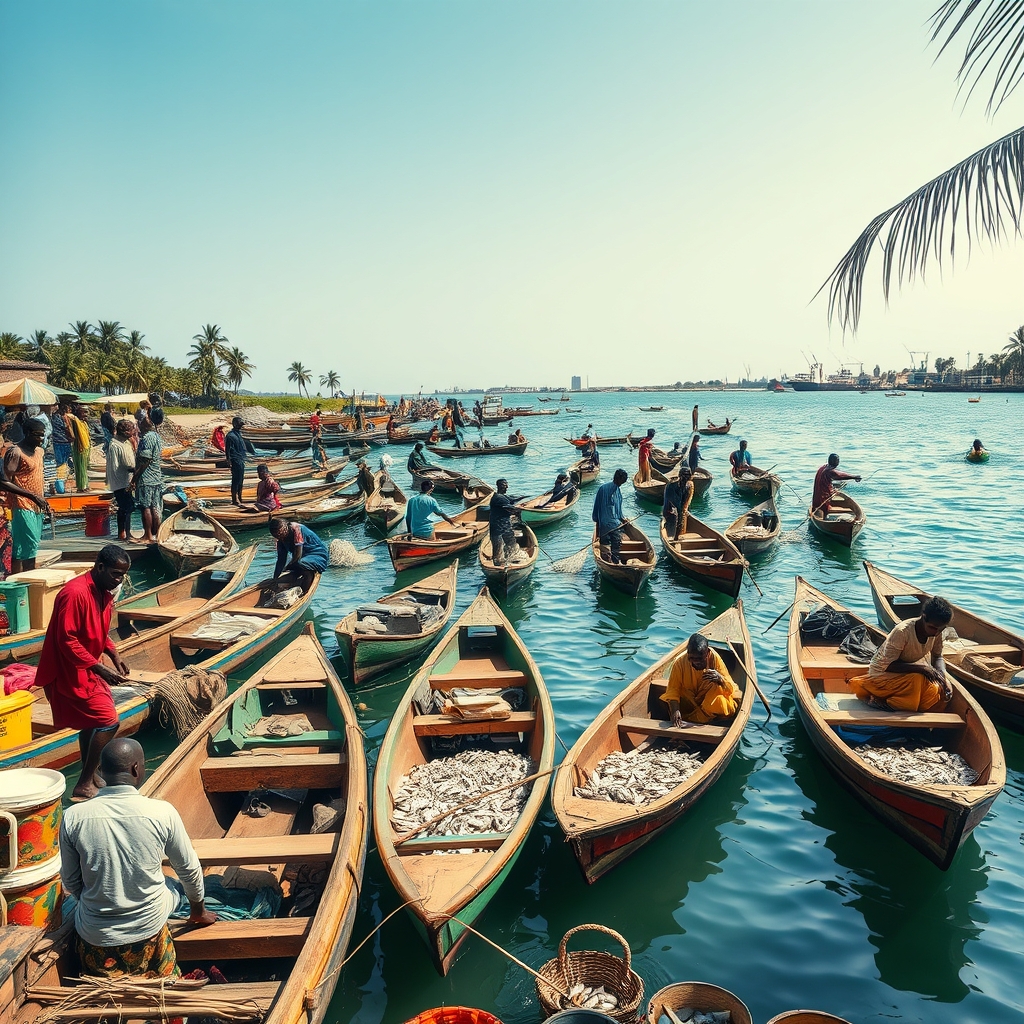
Ghana’s Ministry of Fisheries and Aquaculture has exempted canoe fishing operators from the upcoming 2026 Marine Fisheries Closed Season, a decision announced by Minister Emelia Arthur at the Tema Canoe Basin. This move, aimed at safeguarding national food security and the livelihoods of numerous citizens, comes with the introduction of stringent oversight measures to regulate artisanal fishing activities across the nation.
Context of Ghana’s Fisheries Sector
Canoe fisheries form the backbone of Ghana’s domestic fish supply, contributing approximately 80 percent of locally consumed fish and accounting for about 60 percent of the nation’s animal protein intake. This vital sector supports a significant portion of the population through direct and indirect employment. The practice of implementing closed seasons aims to allow fish stocks to replenish, ensuring long-term sustainability. However, such closures can impose severe economic hardship on artisanal fishers who rely on daily catches for survival.
Previous closed seasons have often faced challenges balancing conservation goals with the immediate economic needs of fishing communities. The Ministry’s current approach seeks to address these complexities by tailoring regulations to specific segments of the fishing industry.
Strategic Exemption and Robust Regulation
Minister Arthur explained that the exemption for canoe fishers prevents potential economic hardship among artisanal communities. It also aims to avoid increased fishing pressure immediately following a closure, which could undermine broader conservation efforts. The Ministry recognizes the integral role of traditional fishing methods in sustainable management, citing the establishment of Ghana’s first marine protected area where designated traditional grounds now operate as regulated zones.
While exempted from the closed season, canoe operators will face enhanced regulation. The Ministry is developing tracking and communication systems to improve real-time contact with fishers at sea, enabling quicker responses to emergencies. A comprehensive fishers’ protection package is also in the works, covering vessel licensing, insurance for fishing assets, social security arrangements, and transparent access to fisheries subsidies, including premix fuel.
In contrast to the canoe sector, other segments of Ghana’s fishing industry will observe their scheduled closed seasons. Industrial tuna vessels commenced their closure from March 17 to April 30, 2026. Industrial trawlers will observe a two-month closed season from July 1 to August 31, 2026, while semi-industrial vessels face a one-month closure from July 1 to July 31, 2026.
Intensified Enforcement and Stakeholder Engagement
The Ministry issued a stern warning to canoe fishers regarding compliance with all fisheries regulations, particularly concerning illegal, unreported, and unregulated (IUU) fishing practices. Light fishing and the use of dynamite, destructive methods that deplete fish stocks, will not be tolerated. Enforcement efforts will intensify through enhanced monitoring, control, and surveillance, with offenders facing prosecution under the Fisheries and Aquaculture Act 2025.
Isaac Ashai Odamtten, Member of Parliament for Tema East, emphasized that these initiatives aim to prevent fish stock depletion while promoting long-term sustainability and abundance in Ghana’s waters. He also noted that the measures would improve the efficient distribution and sale of premix fuel, aligning with government policy.
An open forum held as part of the announcement allowed stakeholders, including trawler operators and artisanal fishers, to voice their concerns. Authorities also directed premix fuel dealers to provide bank statements within 24 hours, warning of suspension for non-compliance, ensuring accountability in the distribution of subsidized fuel.
Implications and Future Outlook
This strategic exemption and accompanying regulatory framework mark a significant shift in Ghana’s fisheries management, attempting to balance economic necessity with ecological sustainability. For Ghana’s artisanal fishing communities, the exemption provides crucial relief, ensuring continued livelihoods and food supply. However, the success of this policy hinges on strict compliance with the new regulations and the effectiveness of enhanced monitoring and enforcement measures.
The implementation of tracking systems, the fishers’ protection package, and the crackdown on IUU fishing will be critical indicators of the Ministry’s commitment to sustainable practices. Stakeholders, including traditional authorities and enforcement agencies, will need to collaborate closely to ensure these measures achieve their intended impact. The coming months will reveal how effectively Ghana can navigate the complex waters of fisheries management, setting a precedent for balancing socio-economic needs with the urgent demands of marine conservation.







Leave a Reply