
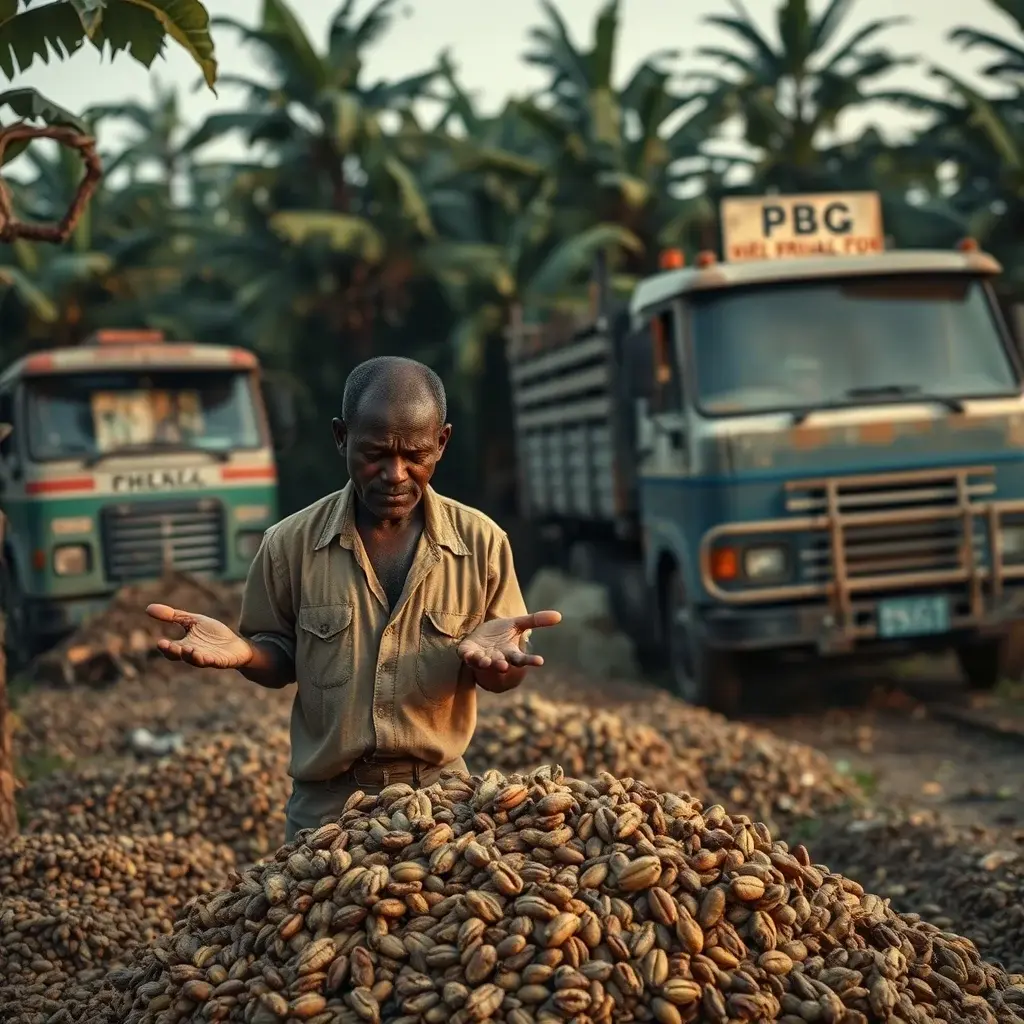
Ghana’s state-owned Producer Buying Company (PBC) is unable to purchase cocoa from farmers due to accumulating debts of 673 million cedis ($60 million), a situation that has led to an impending asset seizure, a company source revealed to Reuters. This financial crisis leaves thousands of smallholder farmers unpaid for beans delivered as early as November 2025, exacerbating hardship in the West African nation’s vital cocoa sector.
PBC’s Financial Straits and Legal Woes
Despite being legally mandated as a buyer of last resort and having government promises of revival in February, PBC currently owes growers 24 million cedis for over 9,000 bags of cocoa already delivered. The company lacks the necessary liquidity to resume its purchasing operations.
Adding to its financial distress, a consortium of Ghanaian banks, to whom PBC owes 257 million cedis, secured a court order in March to seize the company’s assets. This legal action underscores the severity of PBC’s debt burden.
Broader Cocoa Industry Challenges
PBC’s predicament is unfolding against a backdrop of a wider crisis within Ghana’s cocoa industry. Factors such as ample global harvests, declining cocoa prices, and reduced demand from chocolate manufacturers have strained the sector. This has made it difficult for companies, including PBC, to sell beans and consequently pay farmers.
PBC has also suffered a significant loss of market share. Once controlling 30% of the domestic market, it now buys less than 5% of Ghana’s cocoa production. This decline has diminished its revenue streams and capacity to operate effectively.
Government Promises and Lack of Support
In February, Finance Minister Cassiel Ato Forson vowed to restore PBC as a leading cocoa buyer, emphasizing its importance in providing a reliable and fair selling avenue for farmers. However, according to the company source, the minister has not engaged in further discussions regarding PBC’s future since then.
While the cocoa market regulator, COCOBOD, states it has been disbursing funds to buying companies, PBC claims it has not received any financial support. The company source indicated that COCOBOD has yet to reimburse PBC for 800 metric tons of cocoa delivered over two months ago.
Deepening Debt and Shareholder Reluctance
PBC’s total debt extends beyond bank loans and farmer payments. It includes over 24 months of unpaid staff salaries, outstanding vendor payments, and statutory dues. This multifaceted debt profile highlights systemic financial mismanagement.
Two of the five banks in the consortium that obtained the asset seizure order are state-owned, reporting to the finance ministry. Furthermore, SSNIT, the state pension fund and a major PBC shareholder, has been hesitant to inject more capital, having not seen expected dividends from its initial investment.
Potential for Intervention and Reach
A structured intervention from COCOBOD could potentially salvage PBC, according to the company source. Such an intervention could involve directing a portion of international buyers’ contracts towards PBC and releasing funds to facilitate cocoa purchases.
PBC’s extensive operational network across all 127 cocoa-growing districts provides it with a unique reach unmatched by private competitors. This widespread presence could be leveraged if the company’s financial stability is restored.
Implications and Future Outlook
The ongoing financial instability of PBC raises concerns about the sustainability of Ghana’s cocoa sector and the livelihoods of its farmers. The government’s ability to support critical state-owned enterprises like PBC will be closely watched, particularly in light of the pledged revival efforts and the impending asset seizure. The situation demands urgent attention from both the finance ministry and COCOBOD to prevent further economic fallout for thousands of farming families and to uphold Ghana’s reputation as a major global cocoa producer.










Leave a Reply