
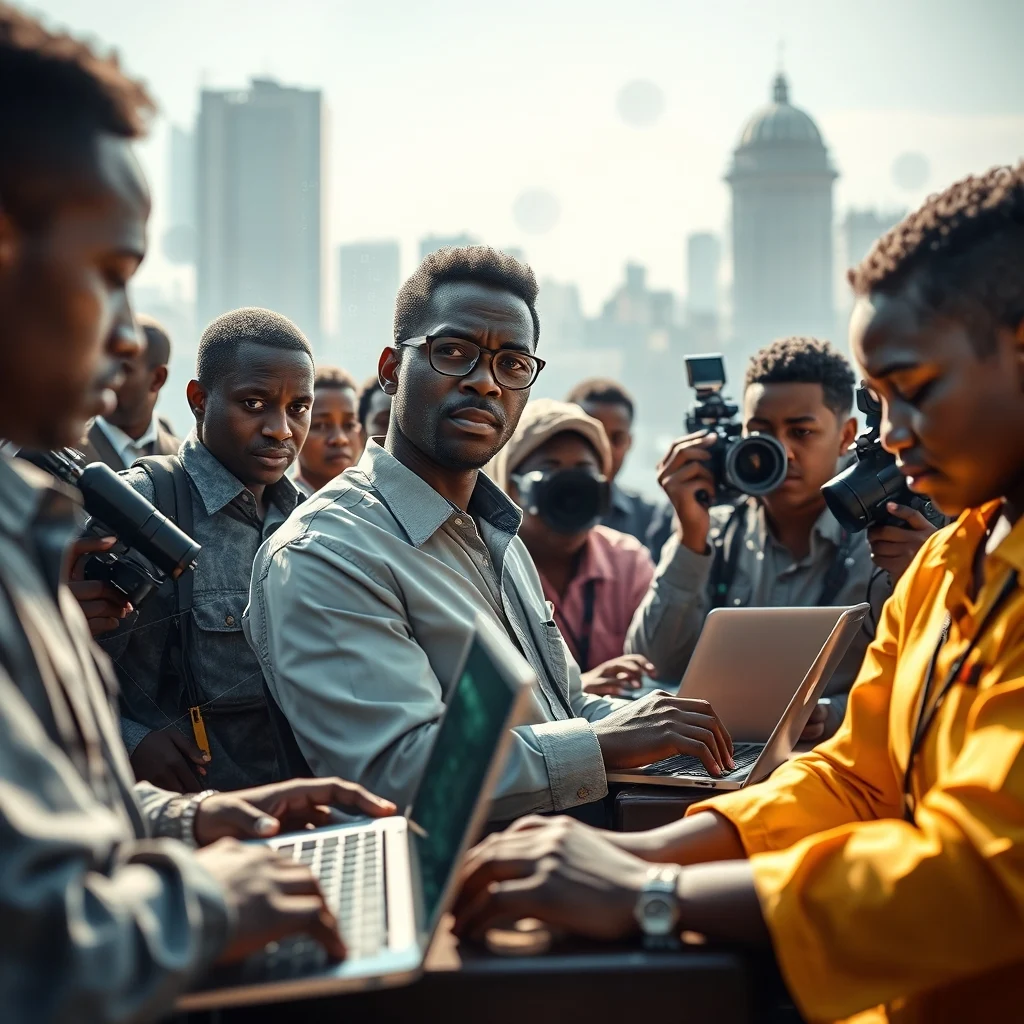
Accra, Ghana – Wednesday marked a significant moment for Ghana’s media landscape as British High Commissioner Christian Rogg celebrated the nation’s 13-place climb on the World Press Freedom Index. However, his address, delivered at his residence in Accra on World Press Freedom Day, also sounded a stark warning: new digital threats are increasingly jeopardizing the country’s hard-won press freedom.
Celebrating Progress, Acknowledging New Dangers
Mr. Rogg highlighted Ghana’s impressive leap in the latest World Press Freedom Index, noting it now ranks as the fourth freest media environment in Africa. This achievement, he stated, is a testament to Ghana’s constitutional protections and its long-standing tradition of a free and open media.
Despite this progress, the High Commissioner cautioned that even nations with robust democratic foundations are vulnerable to the evolving global media environment. “Even countries like Ghana and the UK with those traditions are not immune from some of the challenges that we’re seeing and some of the changes in the media landscape,” he remarked.
The Pervasive Threat of Misinformation and Disinformation
A primary concern raised by Mr. Rogg is the escalating susceptibility of societies to misinformation and disinformation. The COVID-19 pandemic, he pointed out, starkly illustrated how rapidly false information can spread across borders, often with little factual basis.
Digital technologies, while revolutionizing information dissemination, have concurrently introduced significant risks. “We are also seeing the downside of that trend, the misinformation and disinformation that I’ve mentioned, but also we’re seeing growing pressure and threats towards journalists, and we’re seeing an erosion of public trust as a result,” Rogg explained.
These seemingly isolated incidents, he warned, can coalesce into broader trends that undermine democratic institutions. Such trends can lead to a shrinking of civic space, increased tensions, and potentially even violence if not actively addressed.
Organized Disinformation Campaigns Target Africa
Mr. Rogg cited the conflict in Bawku as a local example where fabricated stories and fake online accounts have exacerbated existing tensions. More concerningly, he revealed that disinformation campaigns are becoming increasingly organized and international in scope.
Citing research from the Africa Centre for Strategic Studies, Rogg stated that since 2022, Russia has sponsored 80 documented disinformation campaigns across 22 African countries. West Africa, he noted, is the most heavily targeted region, accounting for nearly 40% of these campaigns.
Independent Journalism: A Crucial Counterweight
In this challenging environment, the role of independent journalism becomes paramount. “We know that independent journalism strengthens information integrity. We know that it acts as a vital counterweight to disinformation and propaganda,” Mr. Rogg emphasized.
He concluded with a firm reminder that press freedom is not a given and requires continuous effort. “Press Freedom is not self-sustaining. It requires vigilance, partnership and political will,” he stated.
The High Commissioner urged a renewal of commitment to truth, accountability, and the democratic values that are intrinsically linked to a free press. “And today is not just about marking this particular day, but it’s also about renewing our shared commitment, and that is a commitment to truth, a commitment to accountability and a commitment to the democratic values that depend on the free press.”
Looking Ahead: Vigilance in the Digital Age
As Ghana celebrates its press freedom advancements, the focus now shifts to safeguarding this progress against the sophisticated and pervasive threats of digital disinformation. The coming months will likely see increased efforts in media literacy initiatives and collaborative strategies between governments, media organizations, and international partners to counter these challenges. The resilience of Ghana’s democratic institutions will depend on its ability to adapt and defend its information space in this evolving digital landscape.




Leave a Reply