
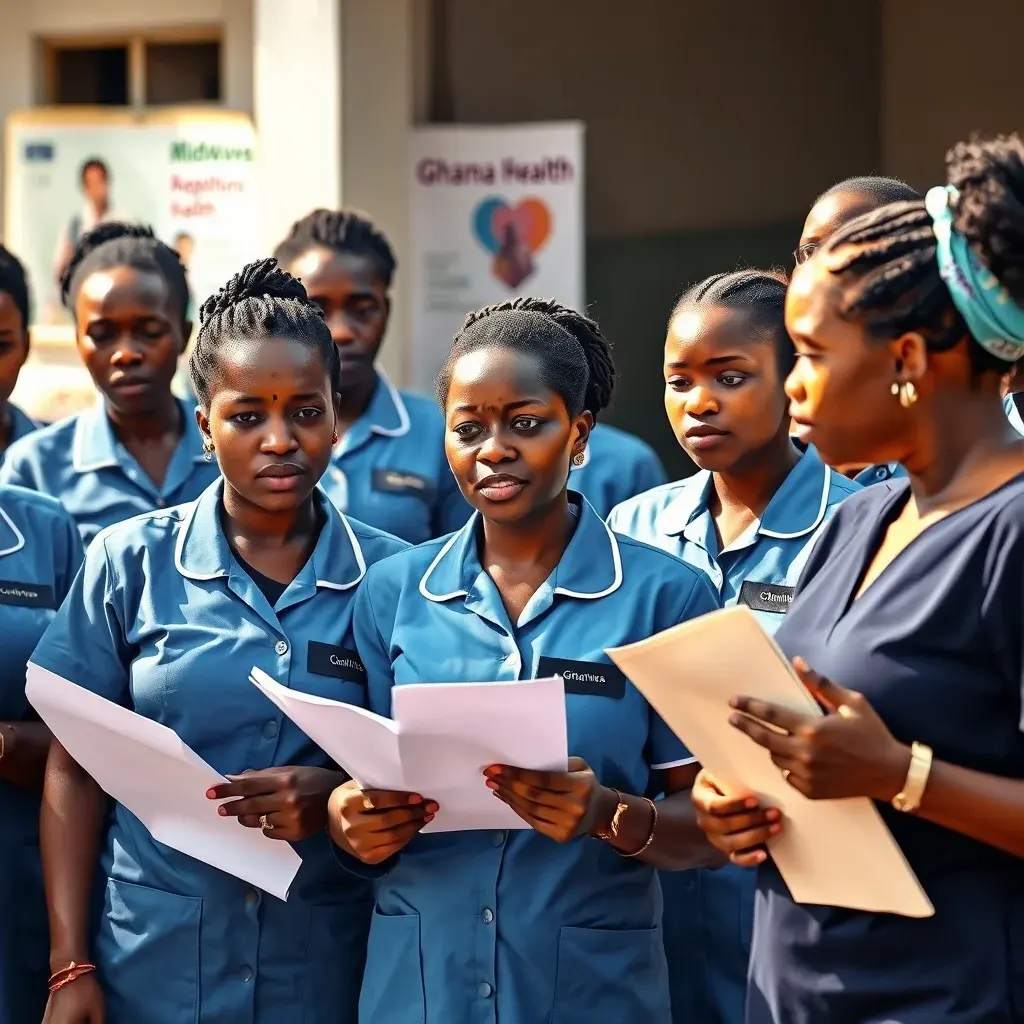
Tamale, Ghana – The Ghana Registered Midwives Association (GRMA) marked the International Day of the Midwife on May 5th with a fervent plea for increased investment in midwifery workforce development to improve maternal and newborn health outcomes across the nation. The call underscores the critical need for more trained midwives, better support systems, and improved working conditions to address a persistent crisis.
Context: The Global and National Midwifery Challenge
International Day of the Midwife, observed annually on May 5th, serves to highlight the indispensable role midwives play in safeguarding mothers and newborns globally. This year’s global theme, “One Million More Midwives,” directly informed Ghana’s national theme: “More Midwives for Ghana: Invest, Train, Retain – Save a Mother, Save a Nation.” These themes emphasize the dual challenge of increasing the midwifery workforce while simultaneously ensuring they are adequately supported and retained within the country.
The event in Tamale, supported by the United Nations Population Fund (UNFPA) and other partners, convened policymakers, development partners, health professionals, and student midwives. It also provided a platform to recognize the outstanding contributions of midwives nationwide.
Urgent Need for a Comprehensive Strategy
Mrs. Netta Forson Ackon, President of the GRMA, stressed that simply increasing the number of midwives is insufficient. She called for a comprehensive national strategy to tackle the multifaceted challenges facing the profession. Such a strategy, she elaborated, must encompass equitable deployment of midwives, particularly to underserved areas.
Improved working conditions, access to continuous professional development, and clear career progression pathways are also crucial components. Furthermore, measures to combat burnout among dedicated healthcare providers are essential for retention. Mrs. Ackon described midwives as the “backbone” of maternal and newborn healthcare, often providing life-saving care under difficult circumstances.
Alarming Maternal Mortality Rates and Brain Drain
Ghana recorded over 900 maternal deaths in 2025, a statistic that highlights the urgency of the situation. Dr. Emmily Naphambo, Deputy Country Representative for UNFPA, revealed that Ghana’s maternal mortality ratio remains high at approximately 310 deaths per 100,000 live births. This figure underscores the critical need for immediate and sustained action.
A significant factor contributing to the strain on the healthcare system is the “brain drain” phenomenon. Over 3,000 nurses and midwives reportedly leave Ghana annually seeking better opportunities abroad, creating substantial gaps in healthcare delivery. This exodus exacerbates existing staffing shortages.
Staffing Gaps, Especially in Rural Areas
The impact of these shortages is most acutely felt in rural and underserved communities. Approximately 65 percent of Community-based Health Planning and Services (CHPS) zones across Ghana face inadequate midwifery staffing. In some remote areas, a single midwife may be responsible for the health of thousands, creating a precarious situation where the absence of one professional can break the continuum of care.
Calls for Greater Autonomy and Specialized Training
Ms. Leticia Asaba Atia, President of the National Association of Registered Midwives, Ghana, advocated for greater autonomy and leadership for midwives within the healthcare system. She expressed concern over instances where non-midwives occupy key leadership positions within midwifery services, arguing that such roles should be led by trained midwives.
Ms. Atia also called for the expansion of specialized midwifery training programs to enhance skills and expertise. Improved conditions of service, particularly for midwives working in rural and hard-to-reach areas, were also emphasized as critical for retention and motivation.
UNFPA’s Support and Future Outlook
The UNFPA is actively involved in supporting midwifery in Ghana through various interventions. These include strengthening midwifery education and regulatory frameworks, promoting digital health innovations to improve service delivery, and supporting broader maternal health initiatives. The organization’s involvement highlights the international recognition of the challenges and the importance of addressing them.
The ongoing dialogue and calls for action from the GRMA and its partners signal a critical juncture for maternal healthcare in Ghana. The effectiveness of future strategies will depend on sustained political will, increased financial investment, and a commitment to implementing comprehensive solutions that not only increase the number of midwives but also ensure they are well-trained, well-supported, and equitably deployed.








Leave a Reply