
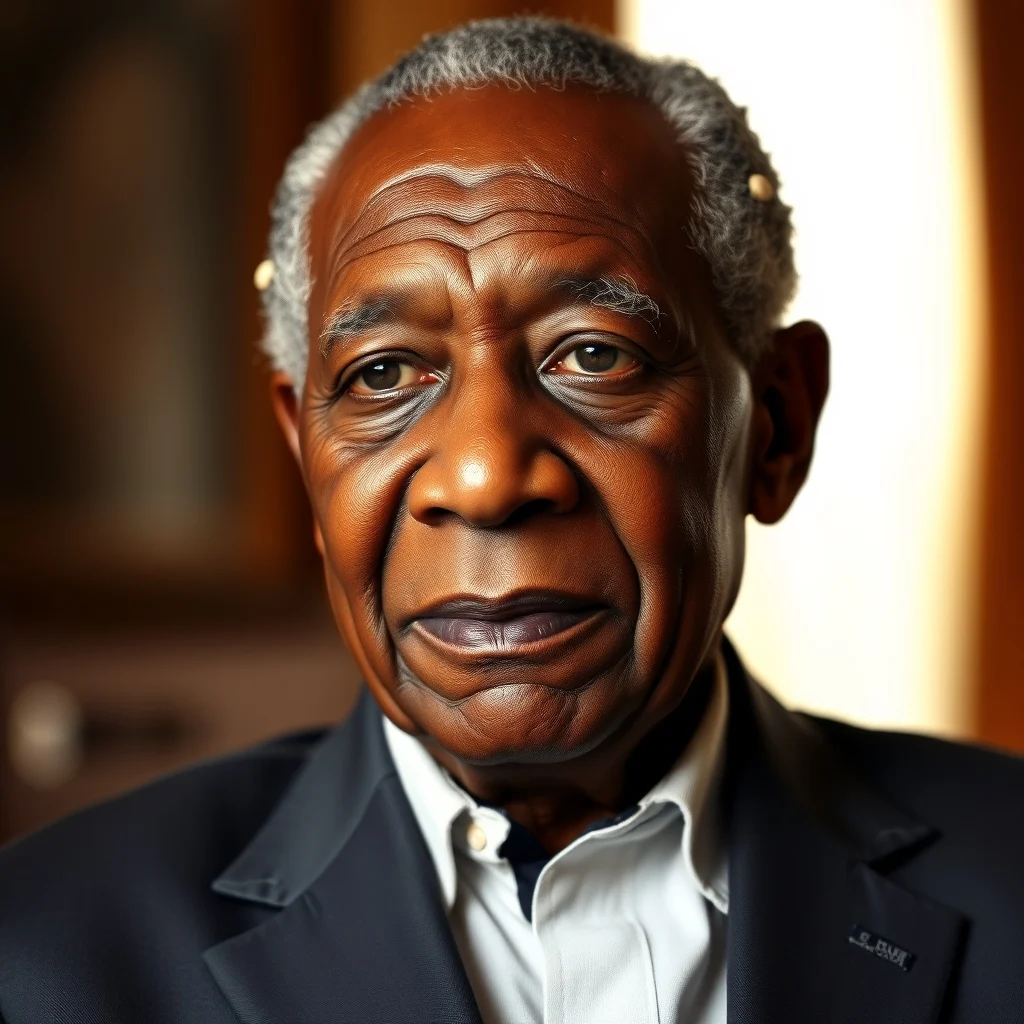
The Republic of Botswana is observing a period of national mourning following the passing of its third president, Festus Mogae, at the age of 86. The former head of state died early Friday in Gaborone, where he had been receiving medical treatment for declining health, as confirmed by current President Duma Boko.
A Legacy of Principled Governance
Mogae served as president from 1998 to 2008, a decade marked by solidified stability and transparency in Botswana. President Boko lauded Mogae as a distinguished statesman and patriot dedicated to national service.
“He stood firmly for discipline, good governance, economic prudence and the advancement of our nation,” Boko stated in a national address.
From Humble Beginnings to Oxford
Born in Serowe in 1939, Festus Mogae’s early life was shaped by a cattle-herding family and a late start to formal education, beginning at age 11. His academic journey led him to the United Kingdom, where he studied economics at Oxford and Sussex Universities.
Upon returning to Botswana in 1968, Mogae embarked on a career in public service. He held key roles within the Ministry of Finance and Development Planning, eventually ascending to director of economic affairs and head of the Central Bank.
The Architect of Economic Prosperity
Before becoming president, Mogae served as finance minister and vice president, building a strong foundation in economic policy. His presidency, under the Botswana Democratic Party (BDP), coincided with significant economic expansion, largely driven by diamond revenues.
His leadership is widely credited with enhancing Botswana’s economic management frameworks. “Under his leadership, Botswana earned its international respect for principled governance,” noted President Boko.
A Global Leader in the HIV Crisis
One of Mogae’s most impactful achievements was his decisive response to the HIV/AIDS epidemic, which severely affected Botswana in the early 2000s. He strategically moved the crisis management from the Ministry of Health to the Office of the President for “closer and more binding control.”
Under his initiative, Botswana became the first African nation to offer free antiretroviral drugs to all infected citizens. The government also implemented campaigns aimed at preventing mother-to-child transmission of the virus.
In a move to combat stigma, Mogae was the first African head of state to publicly undergo an HIV test.
Recognition through the Ibrahim Prize
In 2008, Festus Mogae was awarded the prestigious Ibrahim Prize for Achievement in African Leadership. The prize recognized his dedication to democracy and the peaceful transition of power to his successor, Ian Khama.
The award citation highlighted his success in maintaining Botswana’s stability and prosperity amidst an epidemic that threatened the nation’s future. The prize included a $5 million award and a lifelong annual stipend.
Following his presidency, Mogae remained engaged in international advisory and peace mediation efforts across Africa.
A Shared Vision for African Governance
Mogae’s influence extended beyond Botswana, serving as a model for democratic stability in countries like Ghana. In 2012, he delivered a significant lecture in Accra on “Credible Elections and Governance in Africa,” organized by the Ghana Centre for Democratic Development.
He often described Ghana and Botswana as “twin beacons” of African democracy, advocating for institutional strength over individual rule. His views resonated with civil society groups, reinforcing bilateral ties built on the rule of law and peaceful power transitions.
Commitment to Democratic Transitions
Mogae was a vocal proponent against leaders overstaying their constitutional terms. He warned in a 2013 interview that prolonged leadership can lead to declining performance and the conflation of personal and national interests.
Reinforcing his democratic philosophy in a 2020 speech, he stated, “Traditionally, many of our leaders behave as if they own their countries. But the principle of democracy is that the leader is the servant of the people.”
National Mourning and Final Tributes
President Boko has declared three days of national mourning, with flags flying at half-mast. Mogae is survived by his wife and three daughters. His death signifies the closing of a significant chapter for Botswana, a nation that has maintained its status as one of Africa’s most stable democracies since its independence in 1966.
Mogae’s legacy, marked by humility and institutional integrity, transcends Botswana’s borders. His ability to translate mineral wealth into human progress and his staunch defense of democratic principles offer a blueprint for development and a source of pride for the continent. His life exemplifies the belief that a nation’s true strength lies in its people’s well-being and the integrity of its constitutional framework.
Looking ahead, the enduring principles of governance and public health championed by Festus Mogae will likely continue to influence Botswana’s trajectory and serve as a benchmark for leadership across Africa. Observers will watch how current and future leaders uphold this legacy of principled governance, economic prudence, and unwavering commitment to democratic values.










Leave a Reply