
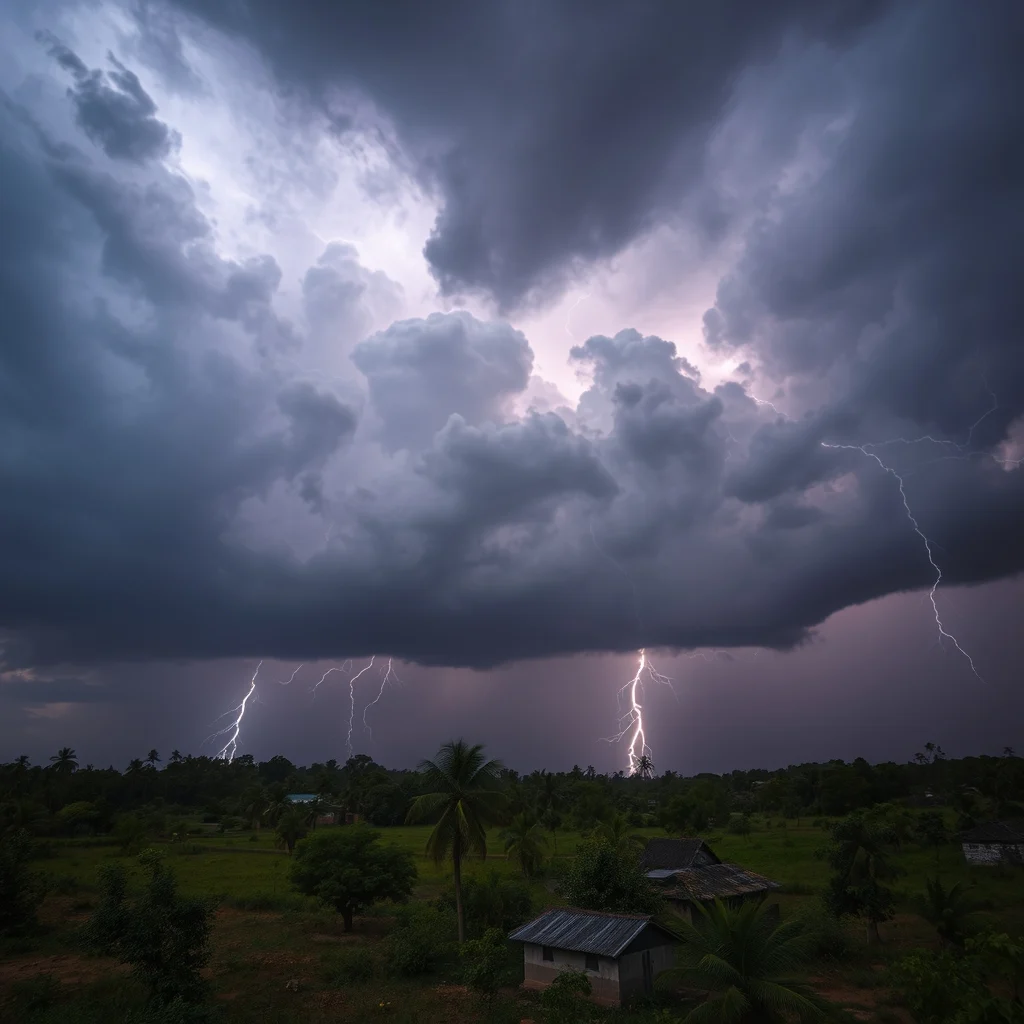
Ghana is currently experiencing widespread thunderstorm and rain activity, with a significant weather system moving inland from Togo and Benin, according to an urgent alert issued by the Ghana Meteorological Agency (GMet). The agency forecasts that these conditions will affect the northern, transition, and coastal sectors of the country throughout the day.
System Dynamics and Affected Regions
The primary weather system, originating from the coast of Togo and Benin, has already begun impacting parts of the Volta Region. GMet’s latest update indicates this system is tracking westward, with its influence expected to spread to the Eastern, Greater Accra, and Ashanti regions.
Adding to the widespread weather, a separate moderate rainstorm is situated over the northeastern part of Ghana. This system is also projected to move westwards. Residents in the Northern and Transition sectors should anticipate cloudy conditions and thunderstorms, with or without rainfall, from morning into the afternoon.
Furthermore, pockets of rain-bearing clouds located off Ghana’s western coast are anticipated to trigger rainfall over sections of the western coastal areas. This suggests a broad geographical impact across multiple regions of the country.
GMet’s Safety Advisory
The Ghana Meteorological Agency has issued a strong caution regarding potentially strong and windy conditions that may precede the thunderstorms. They are urging the public to implement necessary precautionary measures to ensure personal and property safety.
Residents in areas expected to be affected are advised to remain alert and vigilant. Key recommendations include avoiding flood-prone zones, which are particularly vulnerable during heavy rainfall events, and securing any loose outdoor objects that could be displaced or pose a hazard due to strong winds.
Expert Insights and Preparedness
Dr. Michael Adjei, a climatologist, noted that such inland-moving systems are typical during this season, emphasizing the importance of timely alerts. “These systems draw moisture from the ocean and can intensify rapidly as they interact with local atmospheric conditions,” Dr. Adjei stated. “The Ghana Meteorological Agency’s proactive issuance of this alert is crucial for disaster risk reduction.”
Data from GMet’s monitoring stations shows increased atmospheric instability in the affected regions over the past 24 hours, a precursor to significant convective activity. The agency relies on a network of ground-based weather stations and satellite imagery to track these developing systems.
Broader Implications and Future Outlook
The widespread nature of these thunderstorms highlights the vulnerability of various sectors to adverse weather. The agricultural sector, particularly in the northern and eastern parts of the country, could see impacts on crops if rainfall is excessive or accompanied by strong winds. Urban areas, especially in Greater Accra and Ashanti, face increased risks of localized flooding, disrupting daily commutes and economic activities.
The agency’s preparedness advice underscores the need for community resilience. Public awareness campaigns about flood safety and securing property during storms are vital components of national disaster management strategies. As these systems continue their westward trajectory, monitoring their intensity and potential for flash flooding will be key.
Residents and authorities in the impacted regions will need to closely follow GMet’s updates. The agency continues to monitor the evolution of these weather systems, with particular attention to their duration and the intensity of rainfall. Further updates will be provided as the situation develops, guiding ongoing safety measures and preparedness efforts across the affected areas.










Leave a Reply