
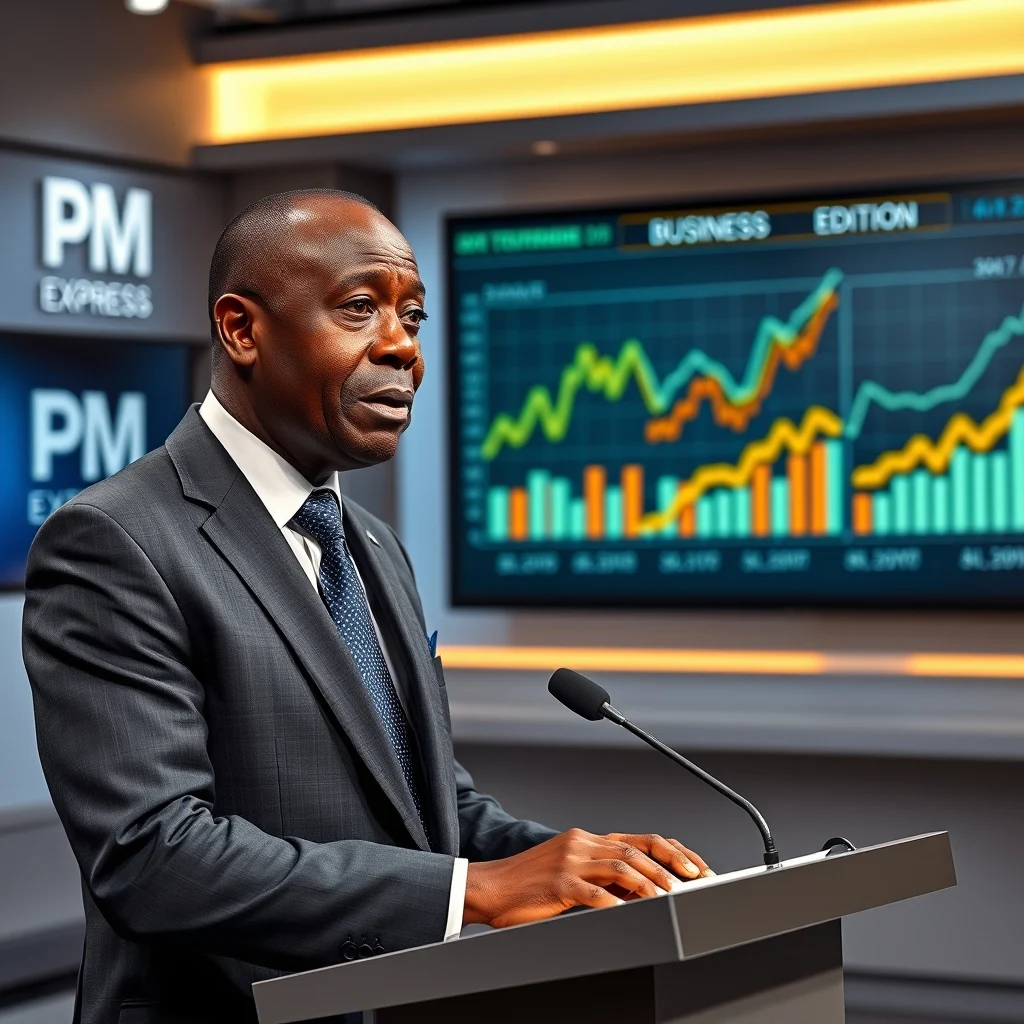
Accra, Ghana – May 7, 2026 – Seth Terkper, an economic advisor to President John Mahama, affirmed the government’s unwavering commitment to fiscal discipline aimed at accelerating the recovery of the Bank of Ghana (BoG). This commitment is crucial for ensuring the central bank can effectively fulfill its mandate as the lender of last resort and maintain economic stability.
Context: BoG’s Financial Challenges
The Bank of Ghana’s financial health has been a significant concern. In 2025, the bank reported an operating loss of GH¢15.6 billion, a substantial increase from the GH¢9.4 billion loss recorded in 2024. This represents a GH¢6.2 billion rise in losses year-on-year.
The bank’s balance sheet has also deteriorated. Negative equity surged from GH¢58.62 billion in 2024 to GH¢93.82 billion in 2025. While total assets grew to GH¢237 billion from GH¢215 billion, liabilities saw an even sharper increase, climbing from GH¢276 billion to GH¢333 billion.
Drivers of Losses and Criticisms
The primary driver behind the escalating losses has been the significant cost associated with monetary policy operations. Open Market Operations, a key tool for managing liquidity, saw a sharp rise of approximately 95%, reaching GH¢16.7 billion.
Furthermore, sterilization liabilities to commercial banks jumped by an alarming 186% to GH¢93.6 billion. Money market liabilities also more than doubled, reaching GH¢93.8 billion. The bank attributed a portion of its reduced income to the Domestic Debt Exchange Programme, which lowered returns on government securities and resulted in an estimated forgone income exceeding GH¢12 billion in 2025.
These financial strains have led to criticism, particularly from the minority in Parliament, regarding the pace of the Bank of Ghana’s liquidity mop-up operations. Critics question the effectiveness of these measures in curbing inflation.
Government’s Recovery Plan and Commitment
Despite these challenges, Mr. Terkper emphasized that the government is resolute in its strategy. He argued that the tough measures were necessary and pointed to international examples of countries that successfully navigated similar economic situations through gradualist approaches.
The government’s strategy includes a recapitalisation programme, to be implemented under the Bank of Ghana Amendment Act 1158. This initiative aims to bolster the bank’s financial resilience by increasing its capital base and mitigating the impact of short-term income fluctuations on its solvency.
A Memorandum of Understanding (MOU) was signed between the Ministry of Finance and the Bank of Ghana on January 6, 2025, effective January 7, 2025. This agreement outlines the government’s support for reversing the bank’s negative equity position.
The recapitalisation framework is set to take effect once the government implements a plan that restores the bank’s total equity to at least the authorized capital level, or by December 31, 2032, whichever comes first. Mr. Terkper reiterated the government’s full commitment to this plan, rejecting any proposals to alter the established timelines for recapitalisation, despite the substantial operating losses.
Implications and Future Outlook
The government’s steadfast commitment to the Bank of Ghana’s recapitalisation signals a focus on long-term economic stability over short-term financial pressures. For citizens and businesses, this implies a continued effort to manage inflation and maintain currency stability, underpinned by a financially robust central bank.
The success of the recapitalisation plan will be critical in restoring confidence in the Ghanaian economy. Market participants and international investors will closely monitor the implementation of the fiscal discipline measures and the Bank of Ghana’s progress in rebuilding its balance sheet. The coming months will reveal the effectiveness of the current monetary policy operations and the government’s ability to adhere to the agreed-upon recapitalisation timeline, setting the stage for future economic performance.







Leave a Reply