
Iran’s Foreign Minister Abbas Araghchi accused the United States of engaging in a “reckless military adventure” on Friday, asserting that such actions occur whenever a “diplomatic solution is on the table.” The statement, posted on X, followed a day of escalating accusations and actions between the two nations regarding incidents in the Strait of Hormuz, with the US reportedly firing on more Iranian vessels. Araghchi questioned whether these moves were a “crude pressure tactic” or the result of a “spoiler” manipulating US President Donald Trump into another conflict.
Despite the heightened tensions and reported exchanges, President Trump stated that a ceasefire remained intact, intended to facilitate talks aimed at ending a war initiated by the US and Israel in February. US Secretary of State Marco Rubio indicated that Iran was expected to respond to US proposals by Friday, expressing hope for a “serious offer” during a visit to Italy.
Strait of Hormuz: A Critical Chokepoint
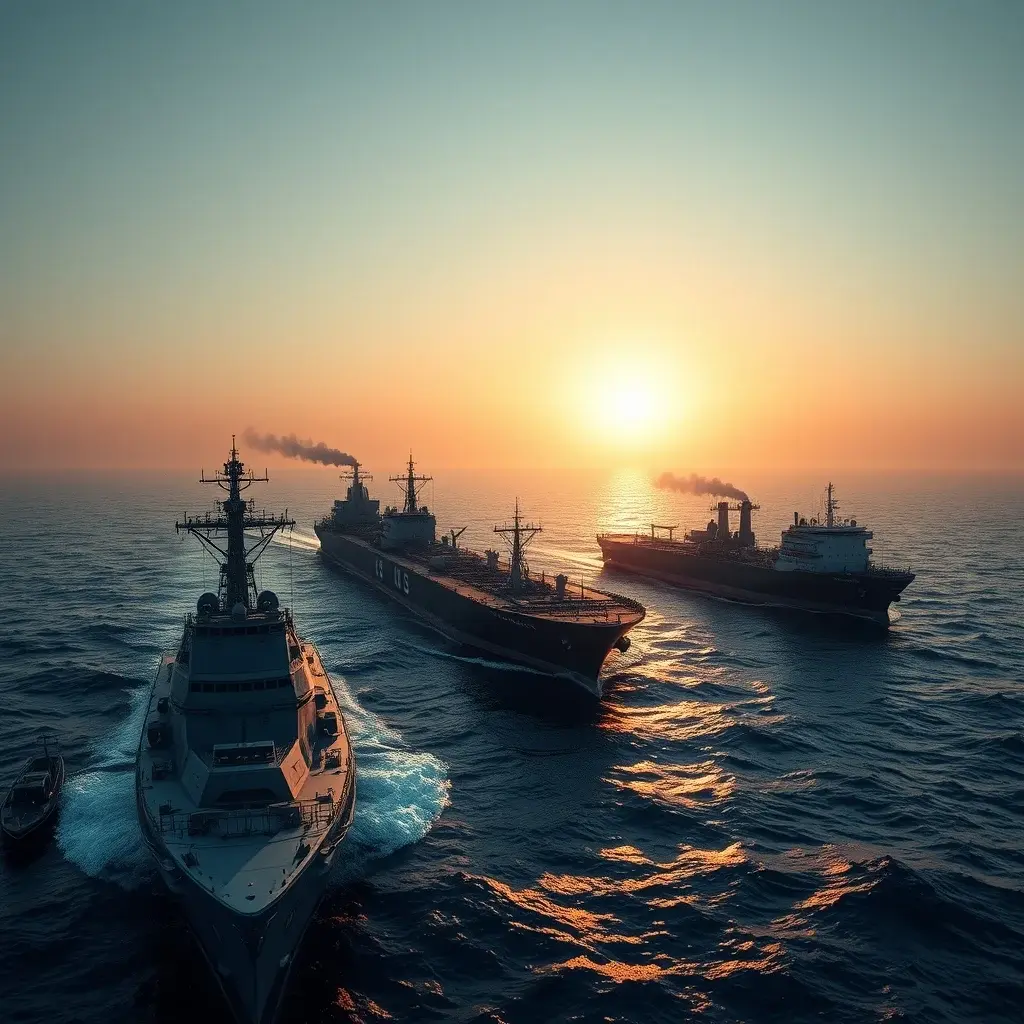
The Strait of Hormuz, a vital waterway through which approximately 20% of the world’s oil and liquefied natural gas passes, has become a focal point of the ongoing conflict. Iran has asserted control over the strait and has targeted US allies in the Gulf in retaliation for US and Israeli actions. Blockades and disruptions in this crucial chokepoint have led to a significant surge in global oil prices.
Earlier in the week, the US initiated and subsequently paused a military operation intended to free around 2,000 vessels stranded in the region since February. Concurrently, the US has maintained a naval blockade of Iranian ports, a move aimed at pressuring Tehran to accept US terms, which has intensified anger in Iran.
Escalating Encounters and US Actions
On Friday, US Central Command (Centcom) announced that US forces had disabled two Iranian-flagged, unladen oil tankers attempting to enter an Iranian port in the Gulf of Oman. Centcom stated these tankers were in “violation of the ongoing US blockade.” The command reported using “precision munitions into their smokestacks, preventing the non-compliant ships from entering Iran.”
Centcom further detailed that US forces were actively preventing over 70 tankers from either entering or leaving Iranian ports. These recent US actions followed exchanges in the Strait of Hormuz on Thursday, with both Iran and the US blaming each other for initiating attacks.
Conflicting Accounts of Incidents
Centcom accused Iran of launching missiles, drones, and small boats against three US warships, labeling it an “unprovoked attack.” Conversely, Iran’s top military command alleged that the US had targeted an Iranian oil tanker and another vessel approaching the Strait of Hormuz, in addition to conducting “aerial attacks” on several coastal areas.
Mohammad Radmehr, an official in Iran’s southern Hormozgan province, reported that one of the cargo vessels attacked near Minab caught fire. He informed the Iranian state news agency Mehr that “ten injured sailors have been transferred to hospital, and local groups and search teams are trying to learn the fate of the other sailors.”
US President Donald Trump, posting on Truth Social, confirmed that the US had destroyed multiple small boats, missiles, and drones, stating that “great damage” was inflicted upon the Iranian attackers. Trump issued a stern warning, “Just like we knocked them out again today, we’ll knock them out a lot harder, and a lot more violently, in the future, if they don’t get their Deal signed, FAST!”
Implications and Future Watch
The escalating rhetoric and kinetic actions in the Strait of Hormuz signal a dangerous trajectory in US-Iran relations. The accusations of “reckless military adventure” from Iran, juxtaposed with President Trump’s aggressive stance, highlight the fragility of any potential diplomatic breakthroughs. The continued blockade and US interdiction of tankers, coupled with Iranian retaliatory actions, threaten to further destabilize the vital energy chokepoint, potentially driving global oil prices higher and impacting international trade.
The response Iran is expected to provide to US proposals on Friday will be a critical indicator of whether diplomatic channels can be effectively utilized or if the situation will continue to deteriorate. Observers will be closely watching for any further military escalations, the impact on global energy markets, and the potential for third-party intervention to de-escalate the crisis.









Leave a Reply