
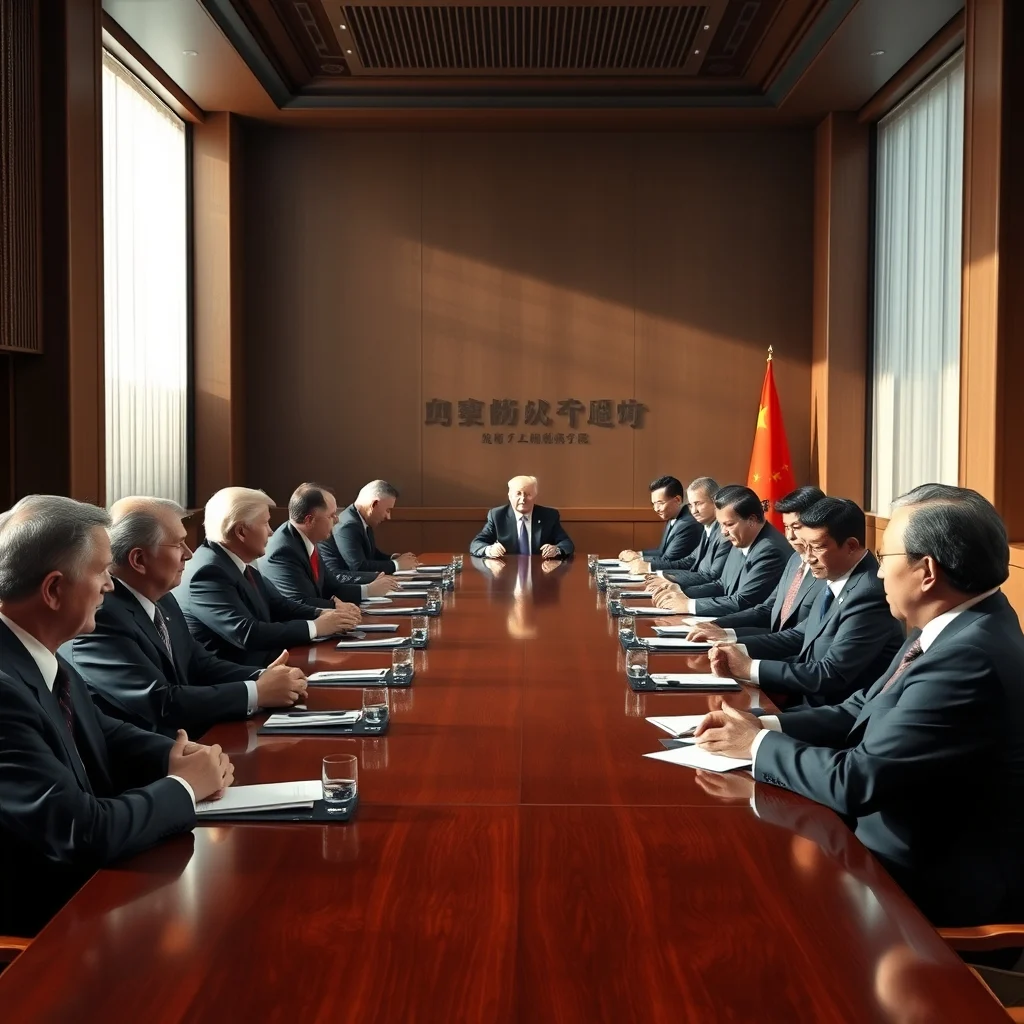
President Donald Trump is leading a delegation of 17 top American business executives, including leaders from Apple, Tesla, and BlackRock, on an official visit to Beijing this week. The trip aims to navigate growing economic and technological animosity between the United States and China, with a key focus on the ongoing war in Iran and its impact on global trade.
A Delegation of Industry Leaders
The high-profile delegation includes prominent figures such as Tim Cook of Apple and Elon Musk of Tesla and SpaceX. Larry Fink of BlackRock, Stephen Schwarzman of Blackstone, and Jane Fraser of Citi are also part of the group. Other notable executives represent major companies including Meta, Visa, JP Morgan, Boeing, Cargill, and GE Aerospace.
A White House official confirmed the composition of the delegation, highlighting the broad spectrum of American business interests represented. This includes leaders from social media, consumer hardware, financial services, aerospace, and agriculture sectors.
Dina Powell McCormick, president and vice chair of Meta, and Kelly Ortberg, president and chief executive of Boeing, are among those joining the President. Ryan McInerney, chief executive of Visa, and Brian Sikes, chief executive and chairman of Cargill, also form part of the official contingent.
The presence of these executives underscores the significance of the trip for US economic diplomacy. While Chuck Robbins, CEO of Cisco, was invited, he could not attend due to earnings-related commitments.
Navigating a Fragile Trade Truce
This visit comes at a critical juncture for US-China relations, testing a fragile trade truce established after a period of escalating tariffs. The two economic superpowers had previously imposed significant tariffs on each other’s goods, a cycle that was paused in October 2025 following a meeting between President Trump and President Xi Jinping.
The meeting is seen as crucial for de-escalating trade disputes and fostering a more stable economic environment. The ongoing trade friction has had ripple effects across global markets and supply chains.
The Shadow of the Iran Conflict
A significant backdrop to the Trump administration’s engagement with China is the war in Iran and its geopolitical and economic ramifications. The conflict, involving the US and Israel, has already caused delays to the scheduled meeting.
President Trump is expected to urge China, a major importer of Iranian oil, to play a role in facilitating an agreement to end the conflict. Such an outcome could stabilize oil supplies and mitigate economic impacts felt by countries reliant on imports.
China, which also seeks an end to the war, has experienced disruptions to its oil supply, affecting the purchasing power of nations importing Chinese goods. However, China’s substantial oil reserves and diversified energy sources have helped it withstand the fallout more effectively than many neighboring countries.
Industry Hopes and Future Outlook
Companies participating in the delegation expressed optimism about the visit. A spokeswoman for Illumina stated that Jacob Thaysen, their CEO, is honored to be part of the delegation and hopes the trip will strengthen relationships and help shape the future of precision medicine.
Representatives from other companies either declined immediate comment or did not respond to requests for information. The collective participation of these business leaders signals a unified front in seeking resolutions to trade challenges and geopolitical concerns.
Implications and What to Watch
The outcomes of President Trump’s discussions with President Xi Jinping, particularly concerning trade policies and the Iran conflict, will have significant implications for global markets. Businesses will be watching closely for any shifts in trade relations, tariff policies, and the geopolitical landscape.
The ability of the US delegation to secure concessions or foster cooperation on trade and the Iran conflict could set a new tone for US-China economic interaction. Future developments will likely focus on the implementation of any agreements reached and the ongoing efforts to manage bilateral economic tensions.







Leave a Reply