
Wonder Victor Kutor, Director of Human Resources at the Youth Employment Agency (YEA) and a board member of the Volta River Authority (VRA), urged inmates at the Kenyasi Camp Settlement Prison on Wednesday to embrace skills training for successful reintegration into society. He stressed that incarceration should be seen as a transitional phase, not a permanent removal from the national community.
Reformation and Reintegration
Lawyer Kutor addressed the inmates, acknowledging that circumstances led to their incarceration but emphasizing that their sentences will eventually conclude. He encouraged them to remain law-abiding and follow the directives of prison officers.
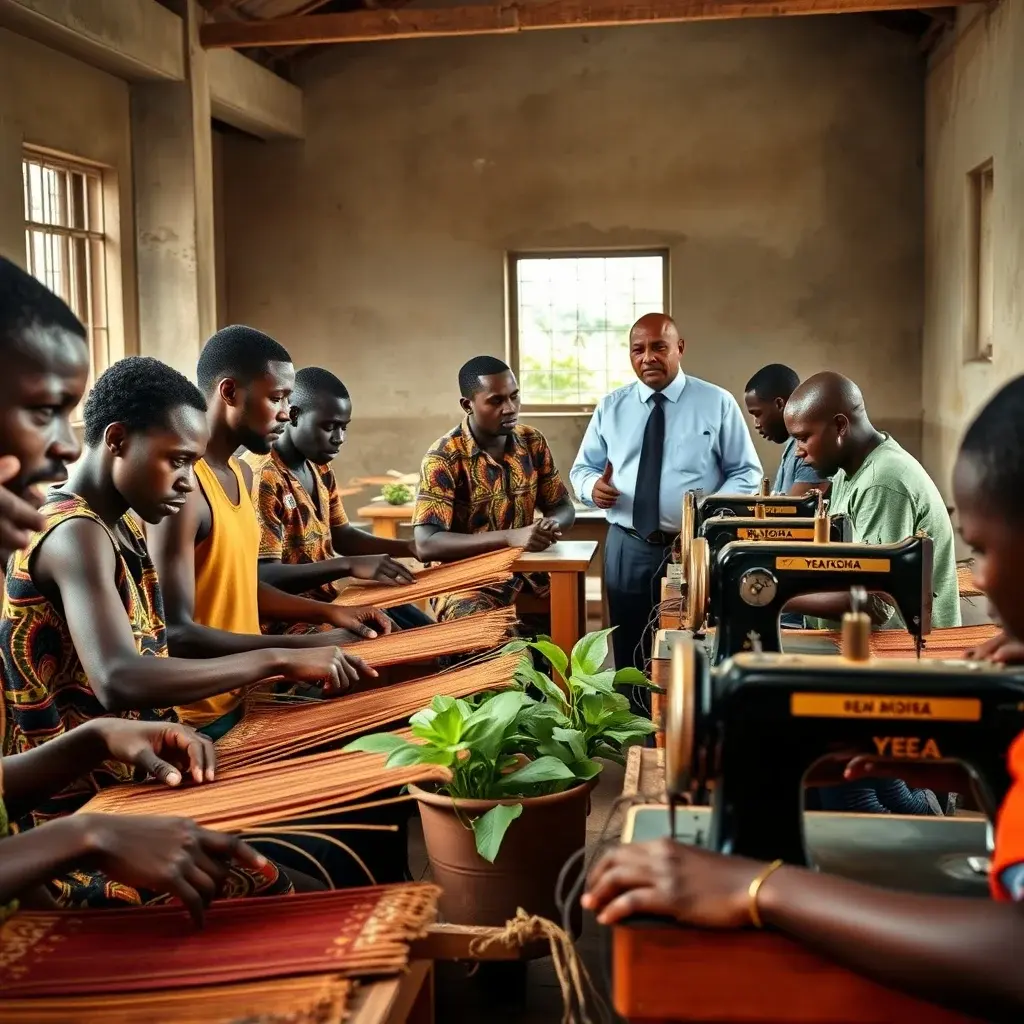
The focus, he stated, should be on seriously engaging in the skills training programs offered, such as fashion designing, kente weaving, and farming. These programs are designed to equip them with the tools needed to emerge as reformed citizens.
Kutor highlighted the contemporary objective of correctional services: to ensure reformed individuals can be perfectly reintegrated into society. This reintegration aims to enable them to improve their own lives and positively influence their communities.
YEA’s Role in Employment
The YEA, through its employment modules, is opening its doors to former inmates who have successfully completed their sentences and demonstrated reform. Kutor noted that with the skills acquired during their time in prison, combined with YEA’s support, these individuals can contribute meaningfully to national development.
Donation and Support
Kutor’s remarks were made during a donation event organized by Awudu Razak, the Ahafo Regional Director of the YEA, who celebrated his birthday by donating essential supplies. Bags of maize, rice, gari, and assorted soft drinks were gifted to the Kenyasi Camp Prison.
These items were intended to supplement the food provisions already supplied by the central government, addressing potential resource gaps.
Assistant Superintendent of Prisons (ASP) Mawuli Gupor accepted the donations on behalf of the Kenyasi Camp. He expressed gratitude for the contribution, underscoring the critical role of non-governmental and private humanitarian aid in supporting prison facilities where government budgets may be insufficient.
ASP Gupor emphasized that the camp welcomes continued support from individuals and institutions, noting that both encouragement and material aid are vital for boosting inmate morale and aiding their rehabilitation efforts.
Data Supporting Rehabilitation
Studies consistently show a strong correlation between participation in correctional education and job training programs and reduced recidivism rates. Inmates who engage in such training are significantly less likely to return to prison.
Furthermore, these programs enhance the likelihood of finding stable, high-quality employment post-release. Research indicates that the combination of humanitarian support and vocational training is a highly effective strategy for breaking the cycle of reoffending.
Specific research conducted at the Nsawam Medium Security Prison has demonstrated that inmates receiving targeted vocational skills support experience improved access to employment and housing opportunities upon their release.
Looking Ahead
The emphasis on skills training and the YEA’s commitment to employing reformed inmates signal a growing recognition of the importance of rehabilitation for societal benefit. Observers will be watching to see how these initiatives expand and if similar programs are adopted more broadly across the correctional system. The success of these reintegration efforts could have a significant impact on reducing prison populations and fostering more inclusive communities.










Leave a Reply