
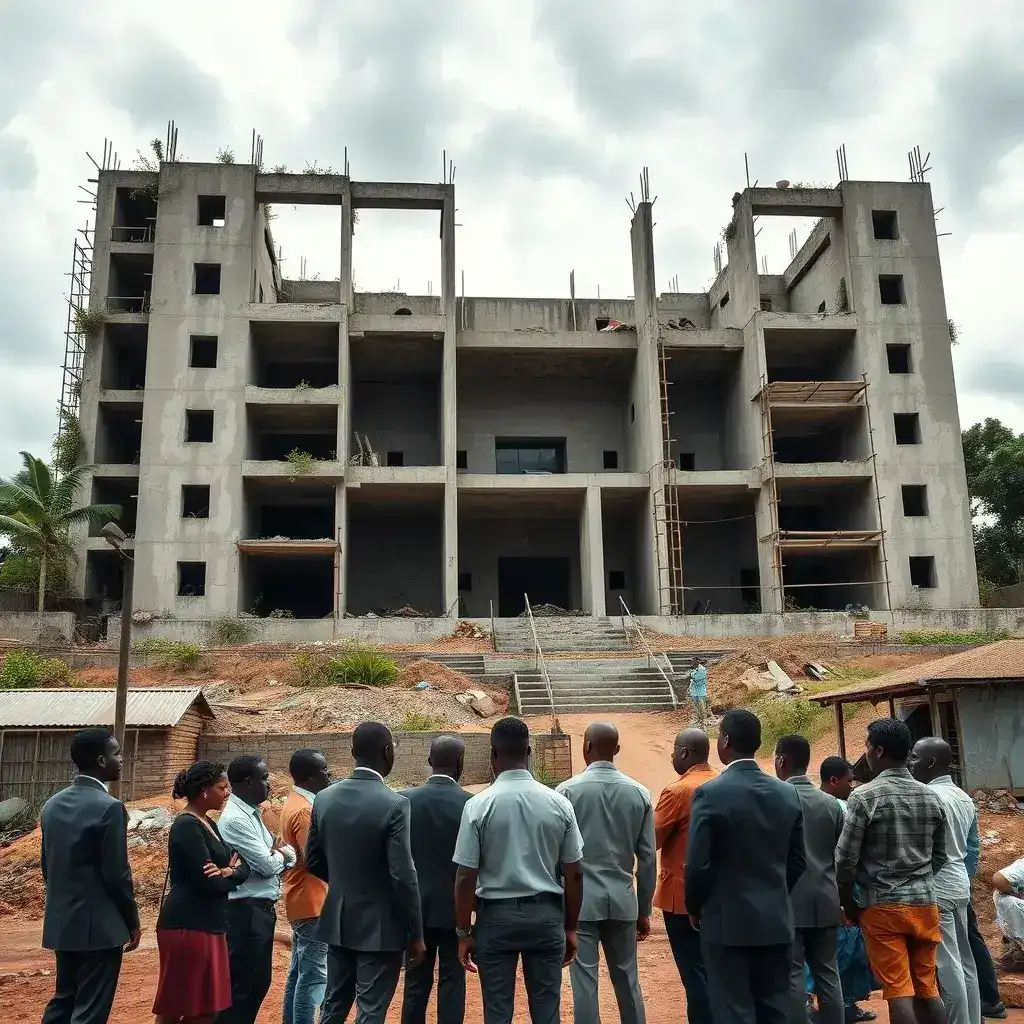
WA, GHANA – A decades-long construction project for the Wa Court Complex, initiated 26 years ago to alleviate severe overcrowding in the Upper West region’s judicial facilities, remains incomplete. Members of Parliament’s Judiciary Committee expressed profound dissatisfaction during a site inspection on Monday, disputing claims by the contractor that the project is 90% finished and leaving litigants still contending with cramped and inadequate courtrooms.
Decades of Delay and Stalled Progress
The multimillion-cedi complex was designed to house three high and circuit courtrooms, along with essential offices for judicial staff. Its purpose was to replace the long-standing inadequate facilities in Wa, where judges, lawyers, and the public have endured congested conditions for over thirty years. The situation has been so dire that court clerks have occasionally been forced to call cases from outside the limited courtroom space.
Construction on the project has been plagued by repeated stoppages since its inception. In an earlier phase, then-Chief Justice Sophia Akuffo visited the site, affirmed the structural integrity, and ordered work to resume. However, the contractor subsequently abandoned the site, citing outstanding payment issues.
From Livestock Pen to Legal Hub?
The unfinished building fell into disrepair, becoming overgrown with weeds. It was reportedly used as a shelter for livestock and a hideout for suspected criminals, highlighting the extent of its neglect. Frustration over these persistent delays led authorities to terminate the initial contract.
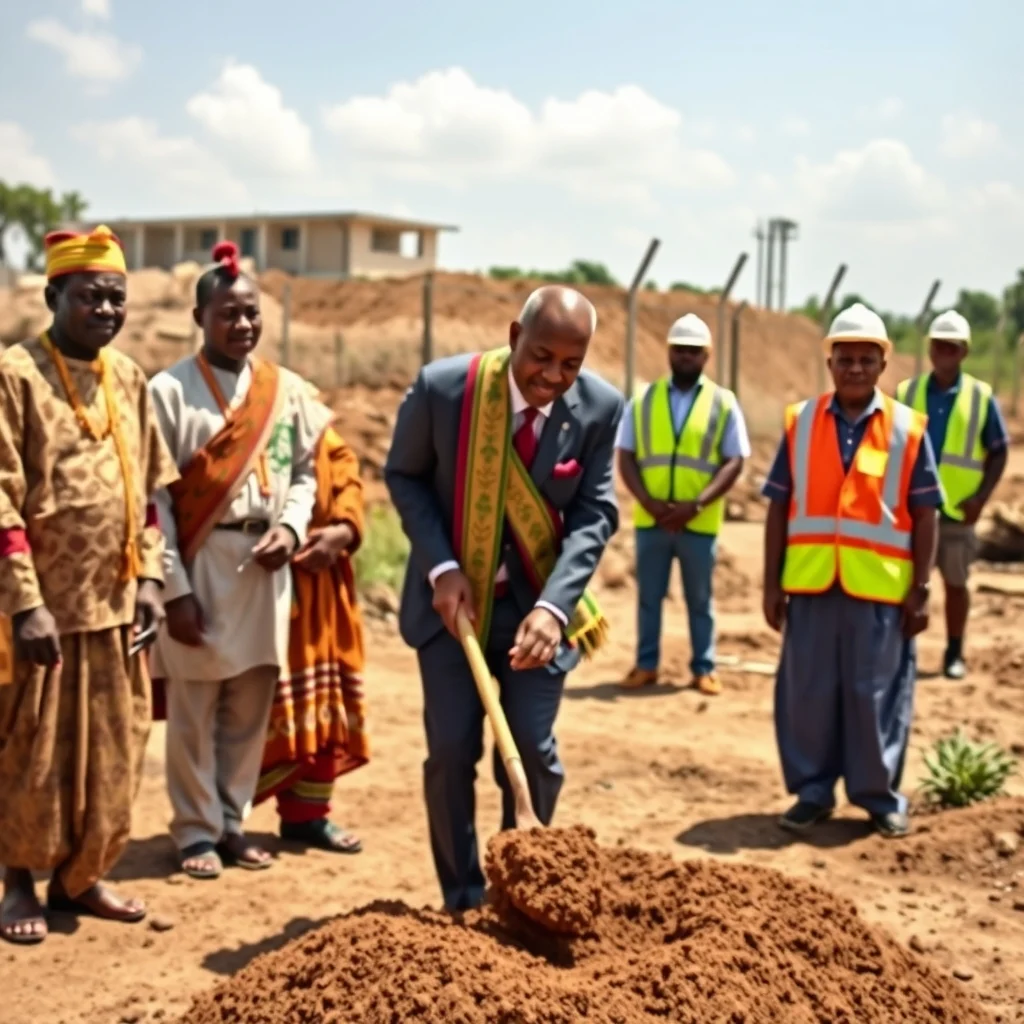
A new contract was awarded to Project Seven Limited, and work recommenced a few years ago with an ambitious target of commissioning the complex during the 2025 Ghana Bar Conference in Wa. This target, however, was not met.
Parliamentary Disappointment and Accusations
During the recent inspection, committee members, led by consultant Sylvester Dery of North West Consortium Limited, found the contractor’s assertion of 90% completion to be inaccurate based on the visible state of the work. They also noted that the structure was not designed to be disability-friendly.
Committee Chairman Joseph Frimpong, who is also the MP for Nkawkaw, voiced his strong disappointment. “I am highly disappointed because what we were told in Accra is not what we are seeing here,” he stated, visibly angered. “We were told the work was done 90 per cent since December last year, and we are in the 5th month, and look at the state of the building.”
Bede Ziedeng, the Ranking Member and MP for Lawra, shared these concerns. He explained that the contractor had attributed previous delays to unpaid certificates, assuring that payment would provide the necessary liquidity to complete the project. “After the payment of the outstanding certificates, we expected to come and see the work completed. However, he came to complain to us after payment,” Ziedeng noted.
Umar Alhassan, MP for Zabzugu, expressed frustration over the contractor’s absence from the site. “The disappointment is that the contractor is not here; he has pocketed his money, but the work remains. We will deal with him when we get to Accra,” Alhassan vowed.
Contractor to Face Parliament
Chairman Joseph Frimpong confirmed that the contractor would be summoned to appear before the committee when Parliament reconvenes. “We will haul the contractor before the committee when Parliament resumes to explain this delay,” he stated.
Future Implications and Next Steps
The continued delay in completing the Wa Court Complex has significant implications for access to justice in the Upper West region. Litigants and legal professionals will continue to operate in suboptimal conditions, potentially impacting the efficiency and fairness of judicial proceedings. The parliamentary committee’s imminent summoning of the contractor signals a serious intent to hold accountable those responsible for the protracted delays and the misappropriation of funds. The public will be watching closely to see if this intervention can finally bring the long-stalled project to completion and address the critical infrastructure deficit in Wa’s judicial system. Observers will also be keen to understand the measures being put in place to prevent similar situations from occurring with future public infrastructure projects.








Leave a Reply