
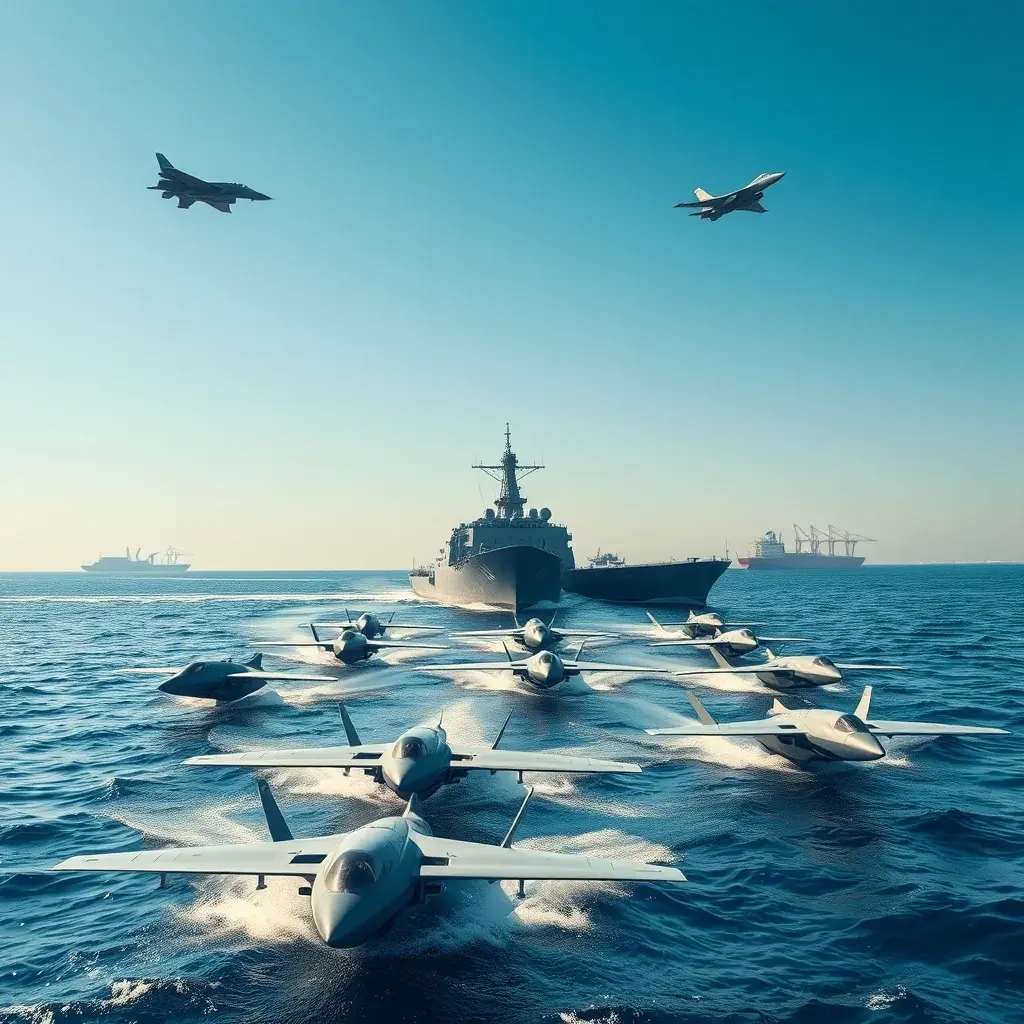
The United Kingdom announced on Tuesday its commitment to bolster maritime security in the Strait of Hormuz by deploying advanced military assets, including fighter jets, drones, and a warship, to a multinational mission aimed at safeguarding vital international shipping lanes. Defence minister John Healey revealed the package during a virtual summit of defence ministers, detailing contributions that include autonomous systems for mine detection and clearance, drone boats, and Typhoon jets for aerial surveillance.
International Collaboration for Maritime Safety
More than 40 nations are participating in this collaborative effort, which is slated to commence operations once conditions are deemed favorable. The initiative arises from escalating tensions in the region, where Iran has been asserting control over the Strait of Hormuz, a critical artery for global oil transport, reportedly in response to U.S. and Israeli military actions. Concurrently, the U.S. has maintained a blockade of Iranian ports to exert pressure on Tehran.
The Strait of Hormuz is indispensable to global energy markets, with approximately 20% of the world’s oil and liquefied natural gas transiting through its waters. Disruptions in this crucial waterway have previously led to significant increases in global energy prices. While a ceasefire between the U.S. and Iran has been in place since April, its stability has been described as precarious by U.S. President Donald Trump, with both sides exchanging accusations of recent attacks within the strait.
UK’s Contribution and Defensive Posture
The UK’s contribution signifies a substantial enhancement to existing defensive operations in the region. Over 1,000 British personnel are already deployed, engaged in counter-drone activities and operating fast jet squadrons. The Ministry of Defence emphasized that the multinational mission, co-announced with France last month, is strictly defensive in nature. Its primary objective is to restore confidence among commercial shipping operators navigating the Strait of Hormuz.
This commitment is supported by a new £115 million investment allocated for advanced mine-hunting drones and counter-drone systems. “With our allies, this multinational mission will be defensive, independent, and credible,” stated Defence Minister John Healey, underscoring the mission’s strategic intent. The air defence destroyer HMS Dragon, already en route to the Middle East, will be positioned to support any mission required to secure the strait. Additionally, the RFA Lyme Bay is undergoing upgrades to potentially support operations in the waterway.
Strategic Importance and Economic Impact
Minister Healey highlighted the mission’s dual purpose: to bolster the confidence of commercial shipping and to mitigate the economic impact of regional conflicts on the domestic population. The announcement aligns with the UK government’s stated priority of reopening the Strait of Hormuz to ensure the unimpeded flow of international shipping. This focus comes amidst broader discussions on the UK’s role in escalating global crises and its economic challenges.
The UK’s involvement underscores the strategic importance of the Strait of Hormuz not only for global energy security but also for international maritime trade. The deployment of advanced autonomous systems and surveillance capabilities signals a modern approach to naval defense, aiming to provide persistent monitoring and rapid response to threats such as naval mines and drone attacks.
Future Outlook and Regional Stability
The successful implementation of this multinational mission could set a precedent for international cooperation in securing critical global chokepoints. Observers will be watching to see how Iran and other regional actors respond to this increased international naval presence. The effectiveness of the new technologies deployed, particularly the autonomous mine-hunting systems and drone boats, will be crucial in deterring further disruptions and ensuring the safe passage of vessels. The long-term implications for energy prices and global trade stability hinge on the mission’s success in de-escalating tensions and restoring freedom of navigation in one of the world’s most strategically vital waterways.







Leave a Reply