
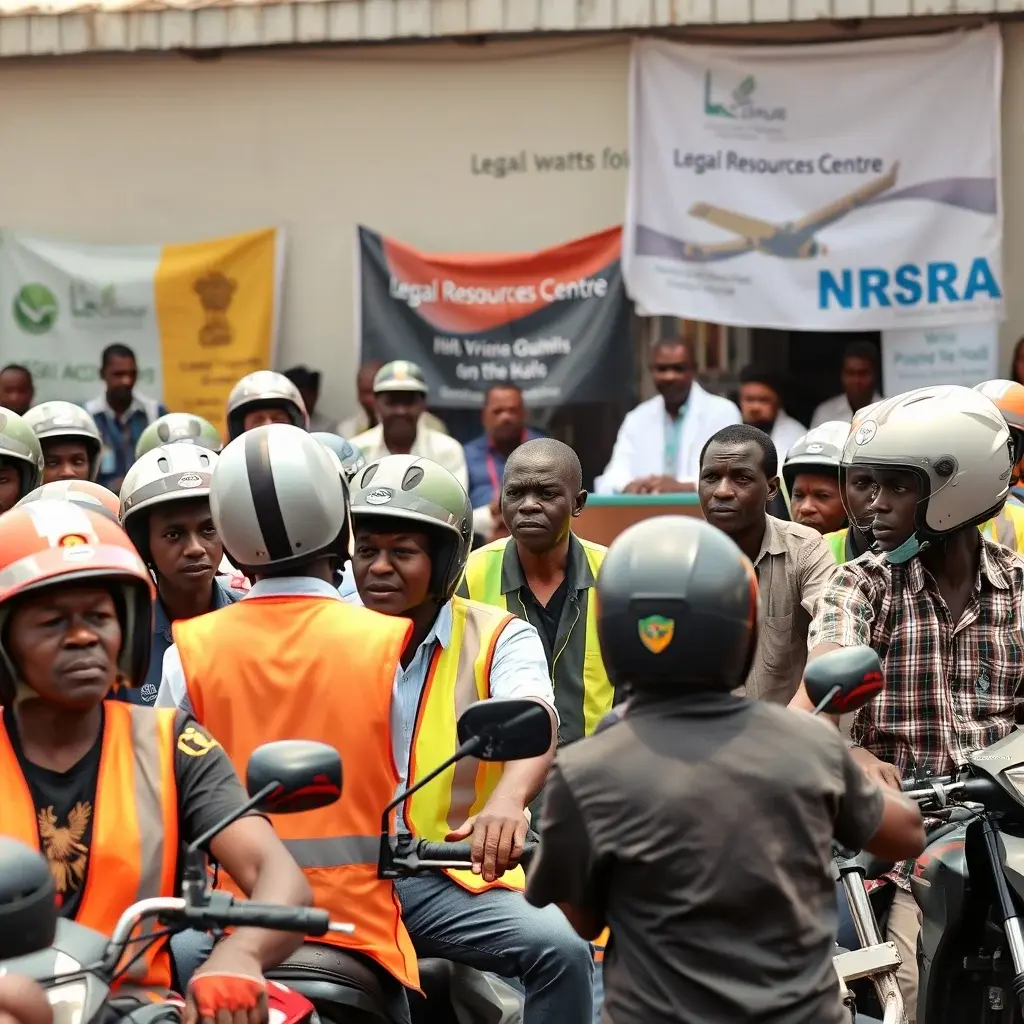
Commercial motorcycle riders, known locally as ‘Okada’ riders, in Ghana are being urged to formalise their operations by meeting stringent requirements ahead of the implementation of a new legal framework. This initiative, spearheaded by the Legal Resources Centre (LRC) through stakeholder engagements, aims to bring the burgeoning Okada transport sector under strict regulations to enhance safety and accountability.
Context: The Informal Sector’s Evolution
For years, commercial motorcycle transport has operated largely in an informal capacity across Ghana. While providing a vital, albeit often unregulated, mode of transport for many, its informal nature has raised significant safety and security concerns. The recent amendment to the Road Traffic Regulations seeks to address these issues by creating a structured environment for Okada operations.
The move to legalise and regulate the sector has been met with a mixed reception. While many riders welcome the opportunity to operate legally and with greater recognition, the accompanying requirements signal a significant shift from the status quo. The new framework is designed to ensure that only qualified and compliant individuals can participate in commercial motorcycle transport.
Formalisation and Rider Responsibilities
The National Road Safety Authority (NRSA) emphasized the necessity of formalising the sector to improve safety standards, establish clear lines of accountability, and boost overall efficiency. Mr. Dennis Yeribu, Deputy Director for Planning and Programming at the NRSA, highlighted that legalisation comes with defined responsibilities for riders.
Key among these requirements are the possession of valid riding licenses, proof of medical fitness, and essential documentation, including up-to-date insurance coverage for their motorcycles. These measures are fundamental to ensuring that riders are competent and that their vehicles are roadworthy and insured against potential accidents.
Furthermore, the new law mandates that Okada riders must join recognised and certified transport unions. These unions will act as central bodies for regulation, facilitating training programs, and overseeing the monitoring of riders. They will be responsible for maintaining accurate records of their members and ensuring continuous professional development through periodic training.
“Being part of a recognised union gives riders a structured platform. It also ensures that they can be easily identified and supported, especially in matters relating to safety and compliance,” stated Mr. Yeribu. This structured approach aims to professionalise the sector and provide a support system for riders.
Addressing Safety Concerns
Human behaviour continues to be identified as the primary cause of road crashes in Ghana. The NRSA is therefore urging riders to adopt safer riding practices. This includes avoiding excessive speeding, refraining from dangerous overtaking maneuvers, and never riding under the influence of alcohol or drugs.
The use of appropriate protective gear, particularly standardised helmets, is also strongly encouraged. This measure is critical for reducing the risk of fatalities and severe injuries in the event of an accident. The emphasis on safety gear underscores the commitment to mitigating the human cost of road traffic incidents.
Legal Practitioner Insights and Zoning
Mr. Enock Jengre, a private legal practitioner and Programme Officer for the LRC, clarified that the amendment to the Road Traffic Act and its accompanying Legislative Instrument are intended to tackle the persistent issues stemming from the informal nature of commercial motorcycle operations. He cautioned against a misunderstanding that all motorcycle owners can now operate commercially.
“There is a misconception that anyone with a motorbike can now operate commercially. That is not the case. You must meet the stated requirements, including union membership, proper documentation and adherence to safety standards,” Mr. Jengre explained. This highlights that qualification is conditional upon meeting specific criteria.
The new regulatory regime also introduces zoning arrangements, requiring riders to operate within designated areas. This is intended to bring order to the sector, reduce traffic congestion in urban centres, and improve overall traffic management. Compliance with these zoning rules will be a key aspect of the new operational framework.
Mr. Jengre advised riders to meticulously comply with all stipulated requirements. He noted that authorities would find it easier to sanction individuals who are properly documented and operating within the legal framework, suggesting that compliance offers better protection for riders.
Looking Ahead
The new regulatory regime is poised to take effect once Parliament finalises the process of passing the associated Legislative Instrument. This marks a significant step towards integrating the Okada sector into Ghana’s formal transport system, promising enhanced safety and order. Riders and stakeholders are now focused on adapting to these changes, with compliance and professionalism expected to be the watchwords for the future of commercial motorcycle transport in the country. The successful implementation will hinge on effective enforcement and the willingness of riders to embrace the new standards.










Leave a Reply