
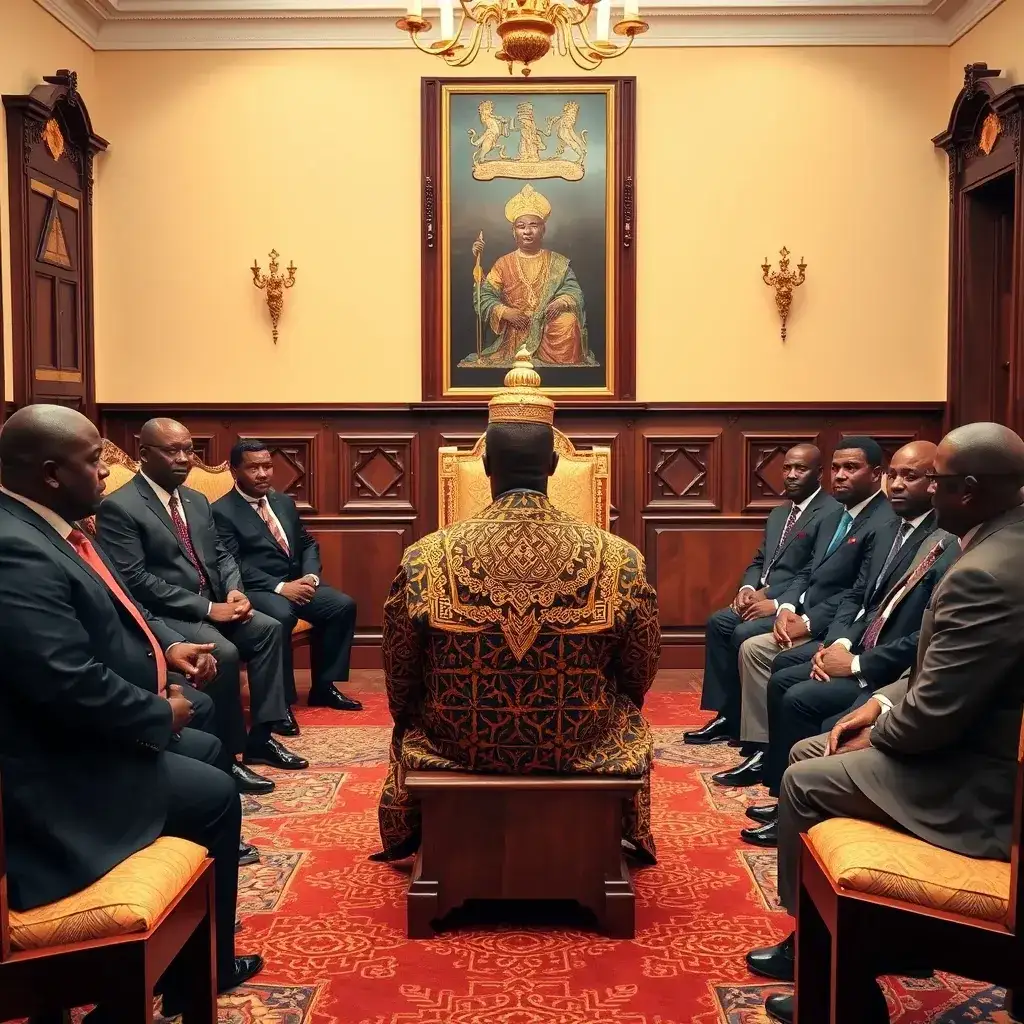
The Parliamentary Select Committee on Chieftaincy and Religious Affairs met with Otumfuo Osei Tutu II at the Manhyia Palace recently to solicit his guidance and support in tackling the increasing number of chieftaincy disputes plaguing Ghana. The committee views the Asantehene as a pivotal figure in traditional leadership, not only within Ghana but across the African continent and internationally.
Engaging Key Stakeholders
Dr. Fred Kyei Asamoah, Chairman of the Committee, explained that the visit was an integral part of their oversight duties and stakeholder engagement strategy. The primary goal was to gather valuable insights on matters concerning chieftaincy, culture, and religion.
This engagement also served to ensure the Asantehene had a clear understanding of the committee’s mandate and responsibilities. Dr. Asamoah highlighted the historical significance of chiefs in governance structures, predating modern democratic systems. He emphasized that the 1992 Constitution formally acknowledges and bestows important duties upon traditional authorities.
Concerns Over Partisan Interference and State Resources
The committee expressed particular encouragement regarding the Asantehene’s concerns about preventing partisan politics from encroaching upon chieftaincy affairs. Dr. Asamoah underscored the intrinsic connection between chieftaincy, culture, and religion in fostering national peace and unity.
A significant concern raised was the substantial financial burden placed on the state to resolve chieftaincy disputes, often necessitating security interventions. Dr. Asamoah proposed that a portion of these resources could be reallocated to bolster the dispute-resolution capabilities of the National House of Chiefs and Regional Houses of Chiefs, aiming to prevent disputes from escalating.
Call for Neutrality from Traditional Leaders
Several committee members echoed the sentiment, urging traditional leaders to abstain from active partisan politics. This call aims to safeguard peace, ensure fairness, and promote national development.
Elvis Osei Dapaah, the Member of Parliament for Ahafo Ano South West, specifically implored traditional leaders to uphold fairness, transparency, and neutrality in their customary roles. He cautioned that aligning with political parties could jeopardize their impartiality in chieftaincy matters.
Implications for Governance and National Unity
The committee’s proactive engagement with the Asantehene signals a critical recognition of the enduring relevance of traditional leadership in contemporary Ghanaian governance. The increasing frequency of chieftaincy disputes presents a complex challenge, potentially undermining social cohesion and stability.
By seeking the wisdom of influential traditional figures like the Asantehene, the committee aims to leverage established mechanisms and respected voices to mediate and resolve these conflicts. The suggestion to strengthen the capacity of the Houses of Chiefs reflects a strategic approach to decentralized conflict resolution, potentially reducing the reliance on state security apparatus and associated costs.
Furthermore, the emphasis on keeping chieftaincy insulated from partisan politics is crucial for maintaining the integrity and public trust in traditional institutions. As Ghana continues its democratic journey, ensuring that traditional authorities remain neutral arbiters is vital for fair governance and inclusive development.
The ongoing efforts by the Parliamentary Select Committee underscore a broader trend of seeking integrated solutions that blend traditional structures with modern governance. The success of these initiatives will likely depend on the willingness of all stakeholders, including traditional leaders and political actors, to uphold the principles of neutrality and due process in resolving disputes. Observers will be watching to see how these collaborative efforts translate into tangible reductions in chieftaincy conflicts and a strengthened role for traditional authorities in promoting peace.






Leave a Reply