
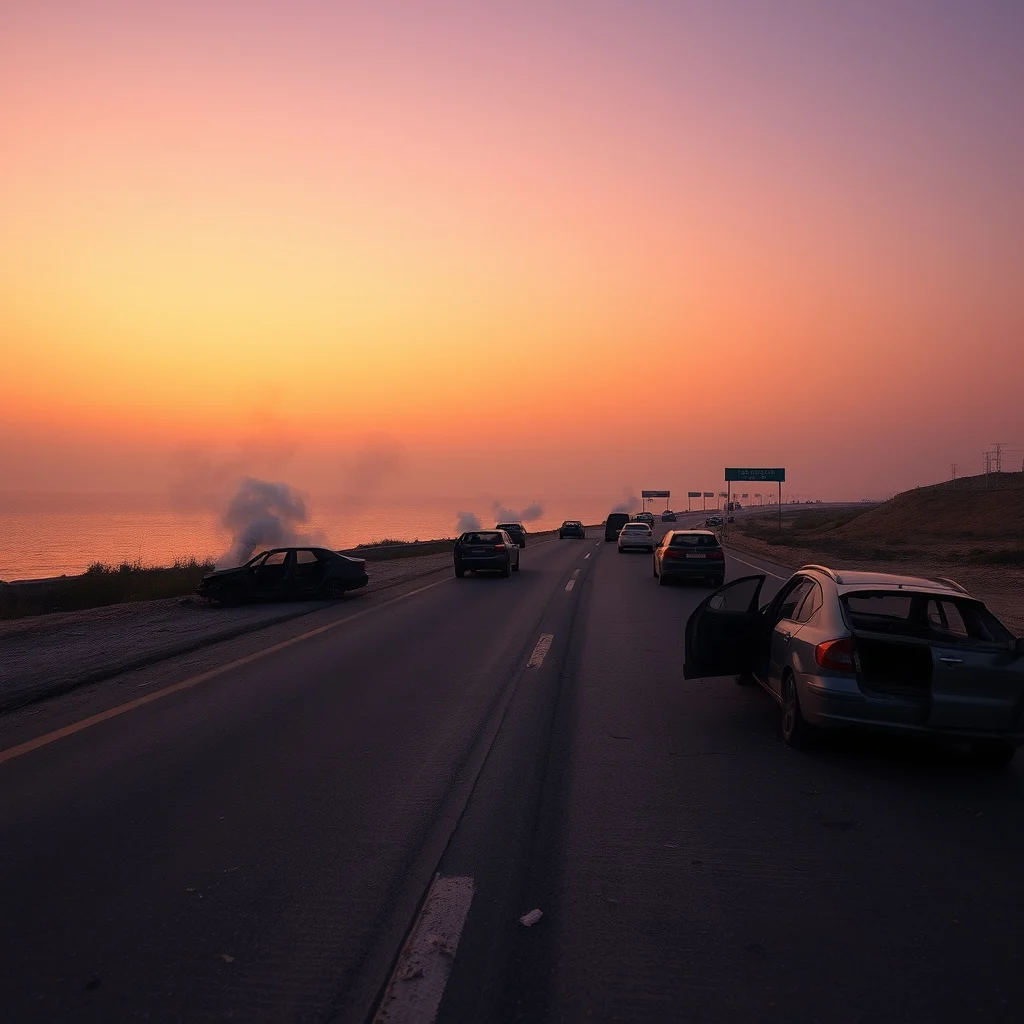
Twelve people, including children, were killed in seven separate Israeli air strikes on vehicles in southern Lebanon on [Date of strikes, inferring from article context, e.g., Wednesday], according to the Lebanese health ministry. The strikes occurred as the conflict between Israel and Hezbollah intensifies, despite a recent ceasefire announcement.
Escalation of Violence
The deadliest incident involved drones targeting three cars on the coastal highway in the Barja, Jiyeh, and Saadiyat areas, approximately 20km (12 miles) from the capital, Beirut. Eight individuals, including two children, perished in this attack. Additional casualties resulted from strikes on four vehicles further south, in the city of Sidon and the towns of Maaliyeh, Chaaitiyeh, and Naqoura.
The Israeli military has not yet issued a direct comment on these specific strikes. However, Israeli forces have confirmed strikes on Hezbollah infrastructure in various southern Lebanese locations. Hezbollah, in turn, reported launching drones that detonated near Israeli troop positions in southern Lebanon, though no casualties were reported by the group.
Context of the Conflict
This surge in violence follows a period of heightened tensions. On Tuesday, two paramedics from the state-run Civil Defence emergency service were among 13 individuals killed in strikes in southern Lebanon. The Lebanese health ministry reports that over 400 people have been killed in Lebanon since a ceasefire was announced by US President Donald Trump nearly a month ago.
Israel has significantly increased its air and artillery strikes in recent days, focusing on southern Lebanon. The stated objective is to target Hezbollah fighters and their operational infrastructure. Concurrently, Hezbollah has engaged in drone, rocket, and mortar attacks against Israeli troops stationed in southern Lebanon and against communities in northern Israel.
Diplomatic Efforts Stalled
Amidst the ongoing hostilities, Israeli and Lebanese officials were expected to participate in a third round of direct talks in Washington on Thursday. The objective of these discussions is to de-escalate the conflict and find a path towards peace.
However, any potential breakthrough faces significant challenges. Hezbollah’s leader, Naim Qassem, dismissed these diplomatic efforts in a letter released on Tuesday, asserting that his group would “not abandon the battlefield.”
Origins of the Current Escalation
The current phase of the conflict began on March 2, two days after a joint US-Iran military operation. Hezbollah responded by firing rockets into Israel, prompting widespread Israeli air strikes and a ground invasion of southern Lebanon. Since the conflict’s inception, the Lebanese health ministry reports at least 2,896 fatalities, a figure that does not differentiate between combatants and civilians. Israeli authorities state that 18 soldiers and four civilians have been killed during the same period.
Implications and Future Outlook
The continued targeting of vehicles and civilian areas raises grave concerns about the humanitarian impact and the potential for further civilian casualties. The unabated exchange of fire between Israel and Hezbollah, despite diplomatic overtures, signals a deeply entrenched and volatile situation. The upcoming talks in Washington will be closely watched for any signs of de-escalation, though Hezbollah’s defiant stance suggests a protracted conflict may lie ahead. Observers will be monitoring the effectiveness of Israeli strikes on Hezbollah infrastructure and the group’s capacity to retaliate, as well as the international community’s response to the escalating violence and its impact on regional stability.










Leave a Reply