
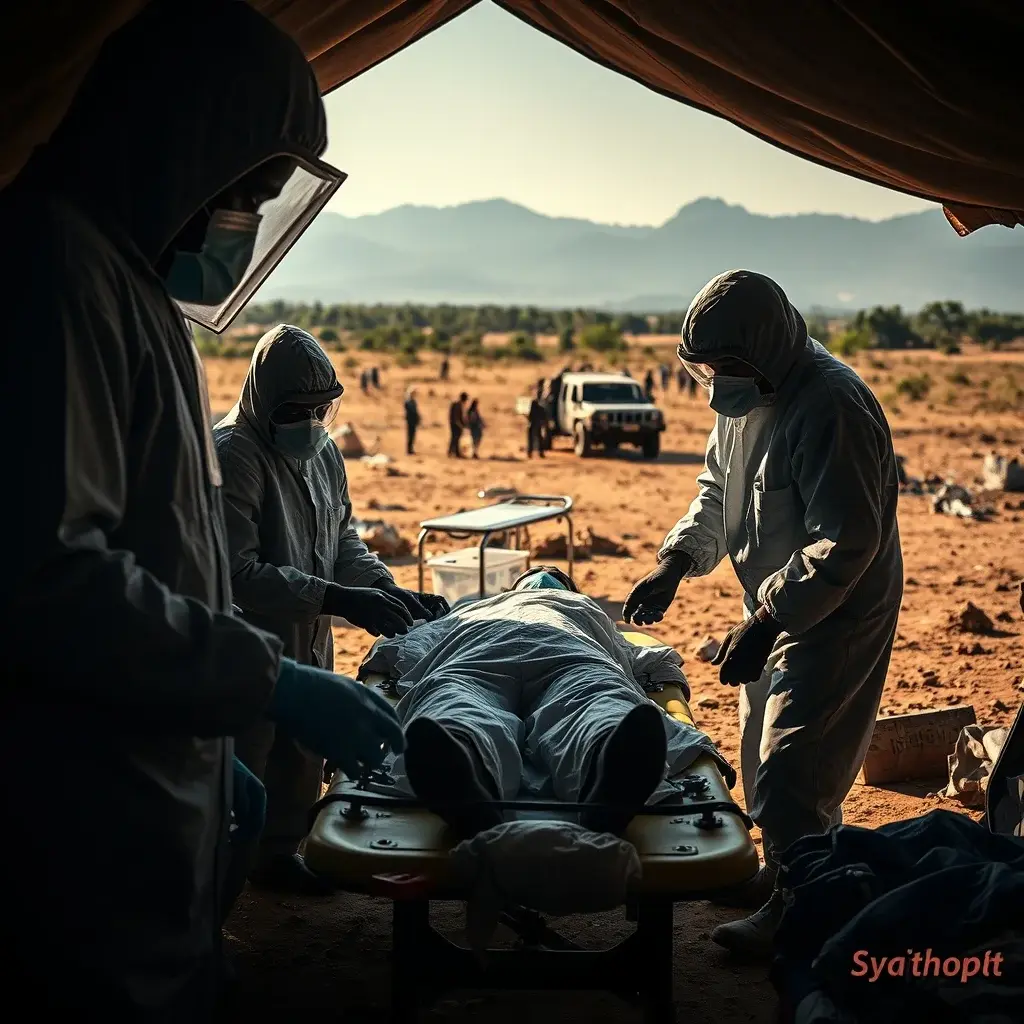
The Democratic Republic of Congo (DRC) is grappling with its 17th Ebola outbreak since 1976, as 65 deaths and 246 suspected cases have been confirmed in Ituri province, sparking fears of regional spread. This surge, occurring just five months after the previous outbreak was declared contained, highlights the virus’s persistent presence in eastern Congo and the strain on overwhelmed responders.
Context of Persistent Outbreaks
The Africa Centres for Disease Control and Prevention (Africa CDC) confirmed the outbreak, underscoring the challenge of managing recurrent viral threats. The proximity of this new surge to the previous one suggests that Ebola may have transitioned from an emergent threat to an endemic fixture in the region.
This constant cycle of outbreaks erodes community trust and depletes the resources of frontline health workers who have had no significant respite. The frequency of these events indicates a failure to fully eradicate the virus between episodes.
Urban Centers and Increased Risk
While the initial epicentre is in the Mongwalu and Rwampara health zones, the detection of suspected cases in Bunia, a provincial capital near the Ugandan border, significantly elevates the risk profile. Unlike isolated forest outbreaks, an urban setting like Bunia acts as a multiplier for highly contagious diseases.
Bunia’s population density and its role as a transit hub mean that traditional contact tracing methods are becoming increasingly difficult and less effective. The window of opportunity to contain the virus through such measures is rapidly closing.
Geographical and Security Complications
The vast geography of the DRC, with Ituri province located over 1,000 kilometers from the capital Kinshasa, has always presented logistical challenges for medical responses. However, the current situation is critically compounded by an ongoing security vacuum.
The presence of armed groups, including the M23 rebels and the Islamic State-linked Allied Democratic Force (ADF), has created “red zones” where health workers cannot safely access or operate. These insecure areas provide a sanctuary for the virus to spread undetected.
Effective containment strategies, such as ring vaccination and meticulous contact tracking, are functionally impossible when populations are in a state of constant, violent displacement due to conflict.
Potential for New Viral Strains
A particularly alarming development is the preliminary detection of a non-Zaire strain of the virus. Most current medical countermeasures, including the highly effective Ervebo vaccine, were developed specifically to combat the Zaire species of Ebola.
If further sequencing confirms a different strain, such as Sudan or Bundibugyo, the existing pharmaceutical arsenal could be rendered largely ineffective. This scenario would necessitate a shift away from a vaccine-led response back to the more labor-intensive and challenging methods of supportive care and isolation, similar to the pre-2014 era.
International and Regional Response
The Africa CDC is coordinating an international effort to contain the spread, including an urgent meeting with representatives from the DRC, Uganda, and South Sudan. The agency is collaborating with global partners to bolster cross-border surveillance, preparedness, and response capabilities.
Health officials are on high alert, recalling the devastating 2018-2020 Ebola outbreak in the same region, which resulted in over 2,000 deaths. Current control efforts are focused on limiting movement from mining hubs and securing the porous eastern borders to prevent a similar-scale catastrophe.
This coordinated response signifies a move towards prioritizing “Health Security and Sovereignty,” viewing the crisis not solely as a Congolese issue but as a test of the African continent’s capacity for self-managed biosecurity.
West African Vigilance
For other African nations, especially those in West Africa that experienced the 2014-2016 epidemic, this outbreak serves as a critical reminder of the need for robust public health infrastructure. Health authorities in these regions are maintaining a heightened state of alert.
Regional bodies are encouraging member states to enhance their diagnostic capabilities and community engagement strategies to foster greater self-reliance in managing potential outbreaks.
The Path Forward
The containment of the Ebola outbreak in Ituri hinges on a fragile synergy between international monitoring bodies and local actors operating within a conflict zone. The primary objective extends beyond simply ending the current outbreak to preventing the virus from spreading across porous borders, particularly via mobility linked to mining activities.
In this interconnected region, a failure to secure even a single health zone in eastern Congo could trigger a wider regional humanitarian crisis, a scenario for which the current global health infrastructure may be ill-equipped, especially after recent challenges.










Leave a Reply