
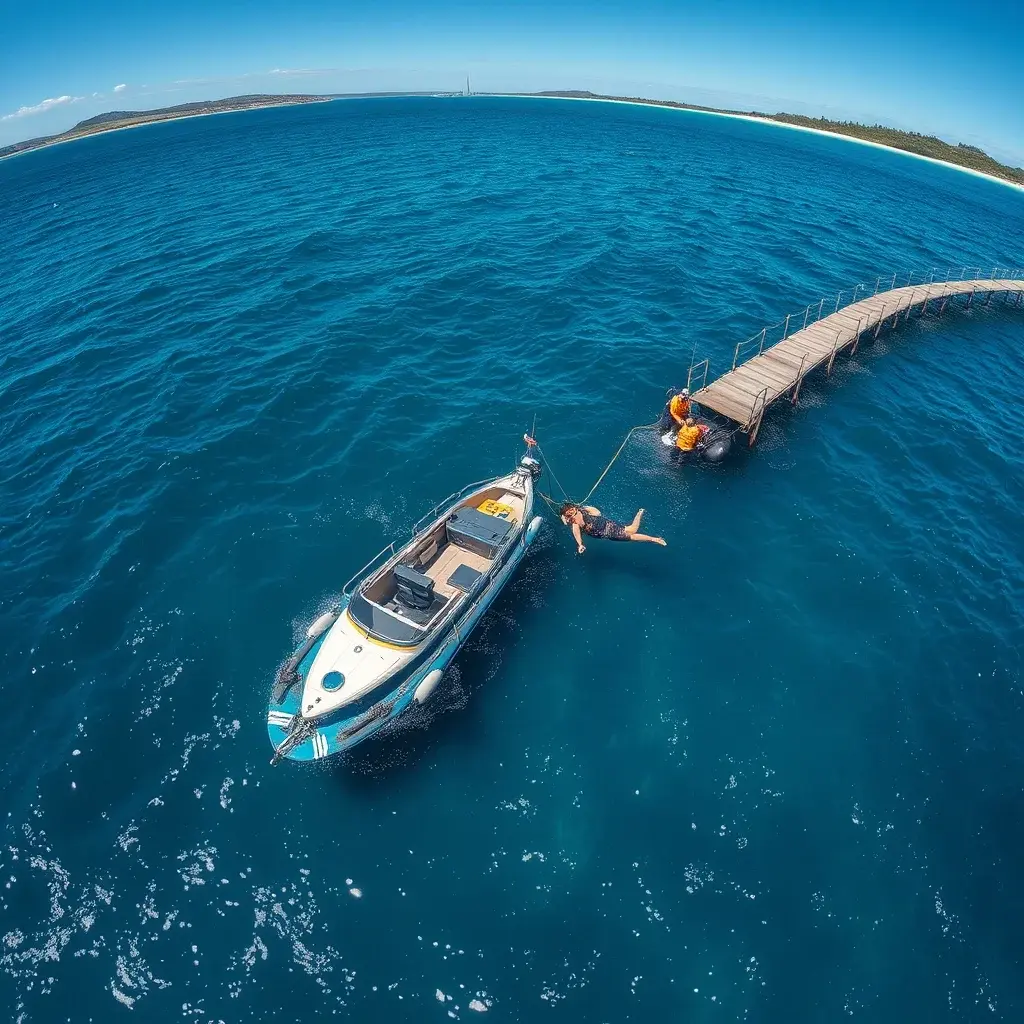
A 38-year-old man died on Saturday morning after being attacked by a 13-foot (4-meter) great white shark off the coast of Western Australia. The fatal incident occurred just before 10:00 AM local time near Horseshoe Reef, north-west of the popular Rottnest Island, just off the coast of Perth.
Incident Details and Response
Local police confirmed the man’s death following the shark encounter. Aerial footage captured the distressing scene, showing the man being brought to shore by boat. Paramedics and police attempted to revive him at the Geordie Bay jetty, but he was tragically unable to be saved.
The state’s Department of Primary Industries and Regional Development has reported the man was bitten by a great white shark. Authorities have issued a warning, urging the public to exercise additional caution in the waters surrounding the area.
Shark Attack Statistics in Australia
This tragic event marks the first fatal shark attack in Western Australia since March of the previous year, when a surfer was killed in a separate incident off a remote beach. Australia has a significant history of shark attacks, with records dating back to 1791. Since then, nearly 1,300 shark attacks have been documented nationwide, resulting in over 260 fatalities.
The frequency of such incidents has been a concern. Earlier this year, in January, the coast of New South Wales experienced a cluster of four shark attacks over a two-day period. Among these victims was 12-year-old Nico Antic, who was attacked by a suspected bull shark after jumping into Sydney Harbour. He succumbed to his injuries a week later, leaving his parents devastated.
Broader Context and Expert Views
Shark attacks, while rare, are a persistent concern for coastal communities and ocean users in Australia. Experts often cite factors such as changing ocean temperatures, increased human activity in marine environments, and prey availability as potential influences on shark behavior.
Dr. Fiona Smith, a marine biologist specializing in shark behavior, noted in a previous interview with ABC News that while these attacks are devastating, they remain statistically uncommon compared to other risks. “It’s crucial to remember the vastness of the ocean and the relatively small number of interactions that occur,” she stated. “However, each incident underscores the need for awareness and respect for marine wildlife.”
The Department of Primary Industries and Regional Development employs various strategies to monitor shark activity and mitigate risks, including beach closures and public advisement. The effectiveness of these measures is continually assessed in light of evolving conditions and research.
Implications for Beachgoers and Tourism
The incident near Rottnest Island is likely to heighten concerns among swimmers, surfers, and other water users in the popular tourist region. Authorities are expected to increase patrols and surveillance in the affected area.
For the tourism industry in Western Australia, such events can have a significant impact, potentially deterring visitors who may perceive the waters as less safe. Coastal communities often rely heavily on marine tourism, making shark-related incidents a sensitive issue.
What to Watch Next
Authorities will continue to monitor shark activity in the waters around Perth and Rottnest Island. Further advisories or safety measures may be implemented based on ongoing assessments. The public is advised to stay informed through official channels regarding any updates on water conditions and shark sightings. Research into shark behavior and deterrent technologies also remains an active area of focus, aiming to improve safety for all ocean users.










Leave a Reply