
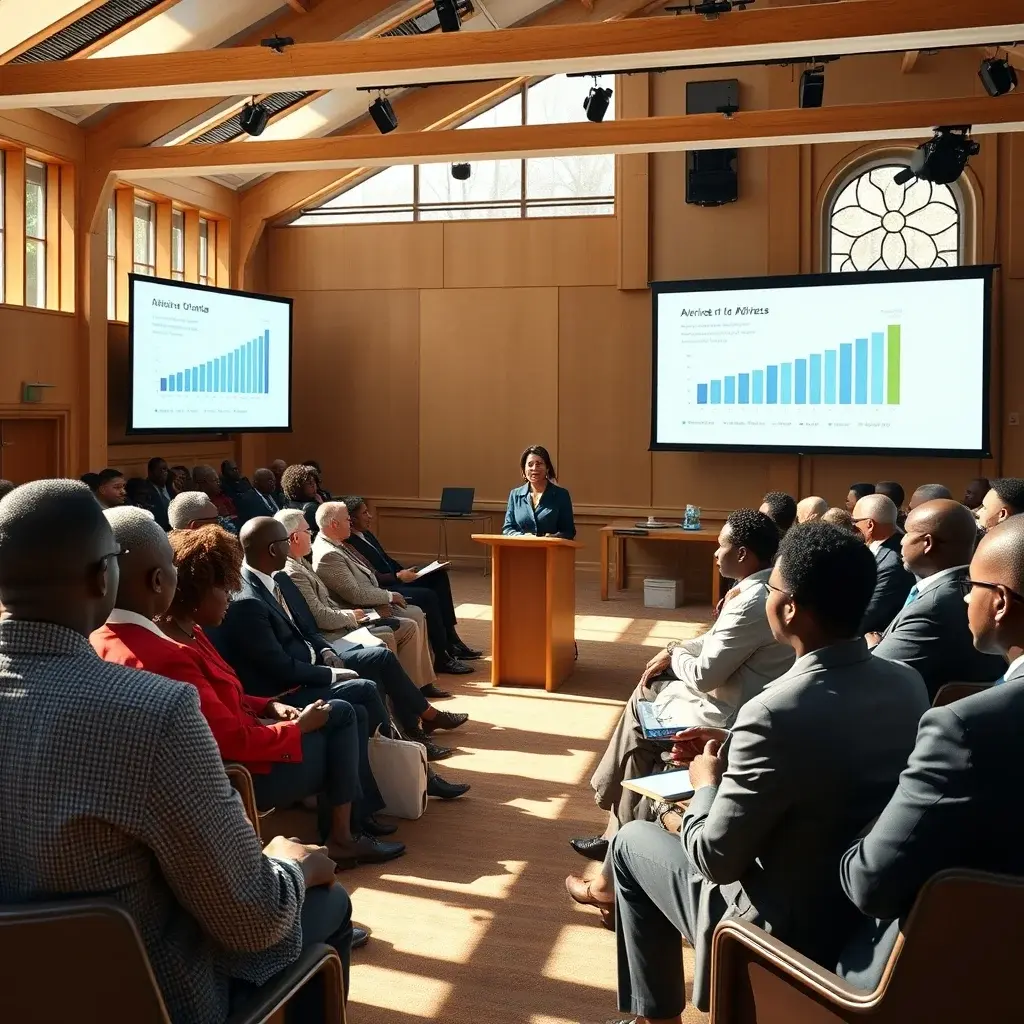
Vice President Professor Naana Jane Opoku-Agyemang called for a new era of African leadership focused on practical implementation, strong institutions, and sustainable economic change at the 16th Oxford Africa Conference. Speaking at the University of Oxford in the United Kingdom, she emphasized that the continent has the inherent capabilities to steer its own development, despite facing numerous challenges.
Context: Grounded Leadership in Disruption
The Oxford Africa Conference, organized by the Oxford Africa Society, convened under the theme “Anchoring Africa: Grounded Leadership in the Age of Disruption.” This theme highlights the urgent need for leadership strategies that can navigate the complexities of a rapidly changing global landscape. In this context, Professor Opoku-Agyemang’s address provided a critical perspective on how African nations can best respond to these disruptions.
Africa’s Imperative for Self-Determination
Professor Opoku-Agyemang asserted that effective leadership in the contemporary world must transcend mere pronouncements and concentrate on tangible governance that enhances citizens’ well-being. “Transformation depends on governance that remains disciplined, ethical, connected to implementation, and grounded in the people it serves,” she stated.
She pointed to Ghana’s current economic reforms as an example of this approach. These reforms aim to stabilize the economy, reduce reliance on raw material exports, and boost value addition in key sectors like cocoa processing.
The Vice President also highlighted specific initiatives such as the proposed 24-Hour Economy policy and the establishment of a Women’s Development Bank. These policies are designed to broaden economic engagement and provide crucial support to vulnerable populations, particularly women operating in the informal economy.
“The Women’s Development Bank seeks not only to provide financial support, but also to equip women with the skills and tools necessary to grow sustainably and participate more fully in economic transformation,” she explained.
Strategic Positioning in Emerging Technologies
A significant portion of the Vice President’s address focused on the need for Africa to strategically position itself within burgeoning fields. These include artificial intelligence, digital infrastructure, the global energy transition, and the critical issue of data sovereignty.
Professor Opoku-Agyemang cautioned against Africa remaining a passive consumer of technologies and systems developed elsewhere. She urged the continent to prioritize the development of indigenous technologies and solutions that are tailored to its unique realities and developmental priorities.
“Africa must develop technologies and solutions rooted in its own realities and priorities,” she emphasized.
Leveraging the AfCFTA and Community Connection
The African Continental Free Trade Area (AfCFTA) was underscored as a pivotal opportunity for fostering economic integration and driving growth across the continent. The Vice President described it as a key mechanism for unlocking Africa’s economic potential.
Drawing on her extensive background in academia and public service, Professor Opoku-Agyemang advocated for leaders to maintain close ties with their communities. She stressed the importance of responsiveness to the genuine needs of citizens as a cornerstone of effective governance.
Future Outlook
The Vice President concluded by stating that the trajectory of Africa’s future is intrinsically linked to its deliberate and collective efforts to organize itself. This self-organization is crucial for leading effectively in an increasingly unpredictable global environment. The emphasis remains on building resilient systems and fostering leadership that is both grounded and forward-thinking.






Leave a Reply