
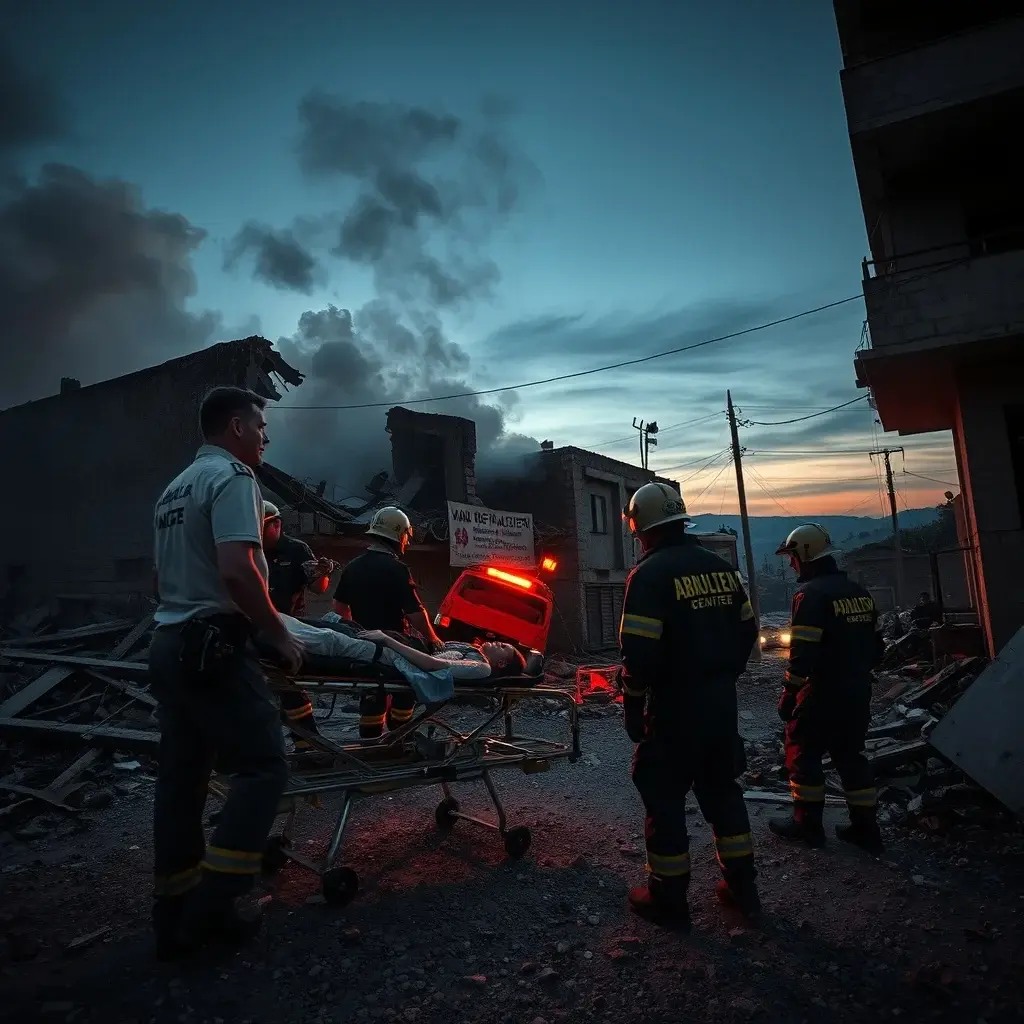
An Israeli air strike on the southern Lebanese town of Harouf killed six people, including three paramedics, on Wednesday, according to Lebanon’s health ministry. This incident occurred as the United States announced a 45-day extension to a fragile ceasefire between Lebanon and Israel, brokered following intense negotiations in Washington D.C.
Escalating Tensions and Civilian Casualties
Lebanon’s health ministry reported that a fourth paramedic sustained critical injuries when a civil defense center was targeted in Harouf. The Israeli military stated they had identified and eliminated two Hezbollah operatives, asserting that measures were taken to minimize civilian harm.
The announcement of the ceasefire extension by the U.S. State Department followed two days of diplomatic efforts. U.S. President Donald Trump initially declared the truce on April 16, but sporadic exchanges of fire between Israel and Hezbollah have persisted.
Earlier in the week, on Wednesday, Lebanese health officials reported that Israeli air strikes had claimed the lives of 22 people, including eight children, across southern Lebanon. These escalating strikes have heightened concerns over civilian safety.
Diplomatic Efforts and Future Negotiations
U.S. State Department spokesman Tommy Pigott expressed hope that the ongoing discussions would foster lasting peace, mutual recognition of sovereignty, and genuine security along the shared border. The State Department plans to reconvene the political track of negotiations in June.
Additionally, a security track involving military delegations from both countries is set to launch at the Pentagon on May 29. Israel’s Ambassador to the U.S., Yechiel Leiter, described the talks as “frank and constructive.” Lebanon’s Prime Minister Nawaf Salam indicated his intention to rally Arab and international support to strengthen Lebanon’s negotiating position.
Background of the Conflict
The current conflict began on March 2, two days after a joint U.S.-Israeli operation targeting Iran. Hezbollah responded by launching rockets into Israel, prompting widespread Israeli air strikes and a ground invasion of southern Lebanon.
Since the start of the conflict, there have been near-daily reports of cross-border exchanges between Hezbollah and Israel. Israel has intensified its air and artillery strikes in recent days, particularly in southern Lebanon, stating its objective is to target Hezbollah fighters and infrastructure.
Humanitarian Impact and Accusations
Lebanon’s health ministry has accused Israel of deliberately targeting civilians and paramedics, allegations that Israel denies. The Israeli military asserts its aim is to establish a buffer zone in southern Lebanon to prevent future Hezbollah attacks.
Human rights groups have raised concerns that tactics employed by the Israeli military in southern Lebanon, which have led to the destruction of entire villages, could constitute war crimes. These accusations are also denied by Israel.
Hezbollah has engaged in its own attacks against Israeli troops within Lebanon and across the northern Israeli border, utilizing rockets and drones. Southern Lebanon, a stronghold of the Shia community and a key base of support for Hezbollah, has been subjected to continuous Israeli bombardment.
The ongoing conflict has resulted in a significant humanitarian crisis, displacing over one million people, approximately one-fifth of Lebanon’s population. The majority of displaced individuals originate from southern Lebanon, the Bekaa Valley, and the southern suburbs of Beirut, areas where Hezbollah maintains considerable influence.
According to Lebanon’s health ministry, at least 2,896 people have been killed in Lebanon since the conflict began. Israeli authorities report that 18 soldiers and four civilians have lost their lives during the same period.
Looking Ahead
The extension of the ceasefire marks a critical juncture, with the upcoming political and security track negotiations in June and May holding significant potential to de-escalate tensions. However, the recent deadly strike in Harouf underscores the volatile nature of the situation and the persistent risks to civilian populations. Observers will be watching closely to see if the diplomatic momentum can overcome continued military exchanges and lead to a sustainable resolution for the region.







Leave a Reply