
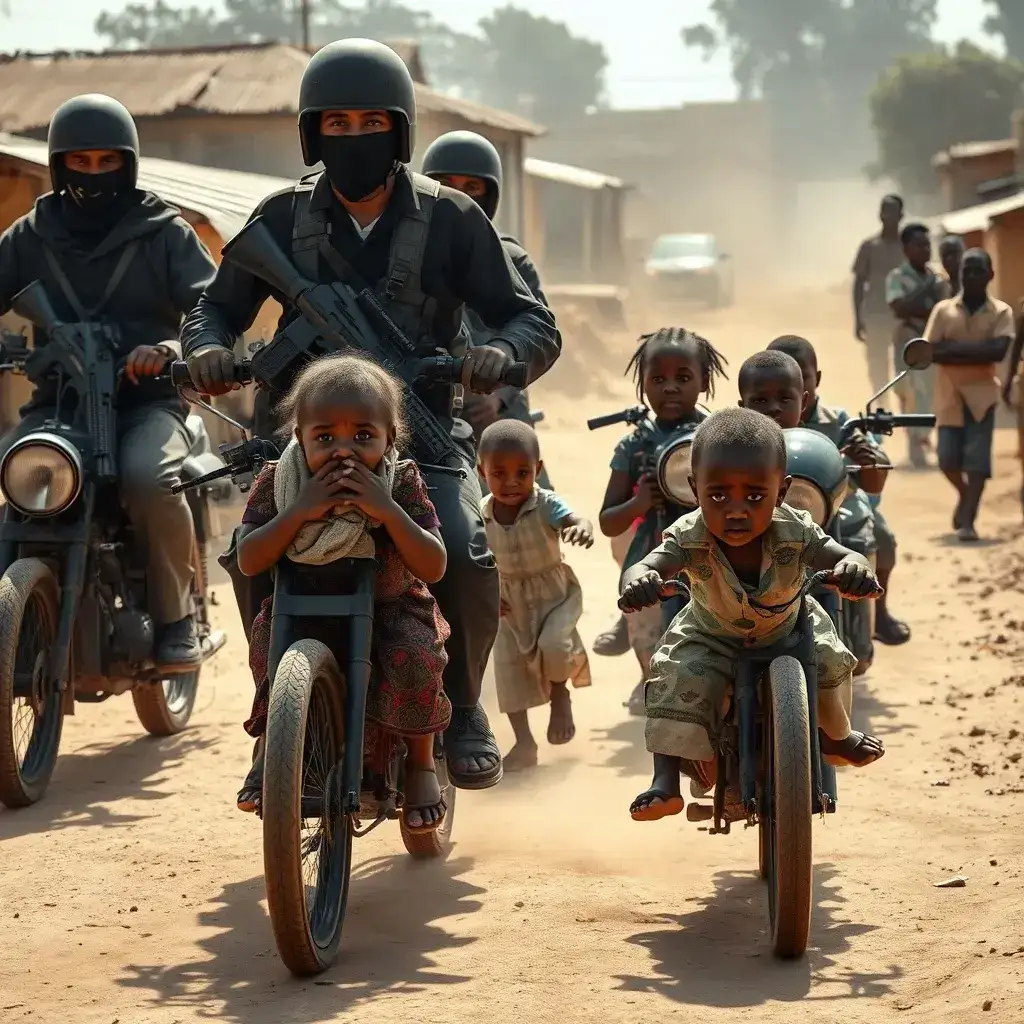
More than 50 schoolchildren, predominantly toddlers aged two to five, were abducted from three schools in Mussa town, Borno State, Nigeria, on Friday morning by gunmen. Eyewitnesses reported that the attackers used the children as human shields while escaping on motorbikes, hindering security forces’ response. No group has yet claimed responsibility for the brazen attacks, which have left parents in anguish and the community reeling from decades of insecurity.
Escalating Security Crisis in North-East Nigeria
The abductions in Mussa, Borno State, highlight a disturbing trend of mass kidnappings plaguing Nigeria. This latest incident occurred across Government Day Secondary School, Mussa Central Primary School, and State Universal Basis Education Board (SUBEB) Secondary School. Senator Ali Ndume of Borno South confirmed in a statement that at least 42 children were taken from two of the schools, underscoring the scale of the tragedy.
The modus operandi of the attackers, utilizing motorbikes and employing children as shields, bears similarities to tactics previously associated with extremist groups like Boko Haram and its rival faction, Islamic State West Africa Province (ISWAP). These groups have been vying for control in the region, contributing to a pervasive climate of fear and instability.
Eyewitness Accounts Detail Terrifying Ordeal
Headmaster Abdu Dunama of Mussa Central Primary School recounted the harrowing moments when gunfire erupted, followed by armed men storming the school. He stated that 34 children, mostly nursery pupils under five, were seized directly from their classrooms. The attackers reportedly arrived on motorcycles shortly after troops conducting patrols had departed the town, a timing that suggests a well-coordinated operation.
Residents described witnessing the chaos unfold. Bukar Buba, whose daughter was among those taken, noted the proximity of the attack to the departure of security forces. Gunfire sporadically echoed through the town, forcing residents to seek shelter. Many parents watched helplessly from nearby hills as their children were forcibly loaded onto motorcycles and driven away.
During the pandemonium, some older students managed to escape by fleeing into the surrounding bushes, according to local accounts. The farming community, already facing economic challenges, is now desperately appealing to the government for swift action to ensure the safe return of their abducted children.
Trauma and Uncertainty Grip Mussa
Traumatized parents are grappling with unbearable anxiety, with many feeling powerless but to wait for news. One father, speaking anonymously for fear of reprisal, shared the profound distress of his wife after their six-year-old daughter was abducted. The emotional toll on the community is immense, as families face the grim reality of their children being in the hands of unknown captors.
Despite the fear and uncertainty, contact has been maintained with security forces. Mr. Dunama confirmed that troops are actively on the ground and engaged in efforts to track down the abductors and rescue the kidnapped children. The response from government officials has been limited, with no immediate comment provided to the BBC following requests for information.
Implications and What to Watch Next
The kidnapping of such a large number of young children raises grave concerns about the vulnerability of educational institutions and the safety of students in regions affected by insurgency and banditry. It underscores the urgent need for enhanced security measures around schools and improved intelligence gathering to preempt such attacks.
For the affected families and the Mussa community, the immediate future is consumed by the agonizing wait for the children’s return. The long-term implications could include increased displacement as residents seek safer areas, further economic disruption, and lasting psychological trauma for the children and their families. The government’s response and the success of ongoing rescue operations will be critical in determining the immediate outcome and will set a precedent for how such escalating security challenges are addressed across Nigeria.










Leave a Reply