
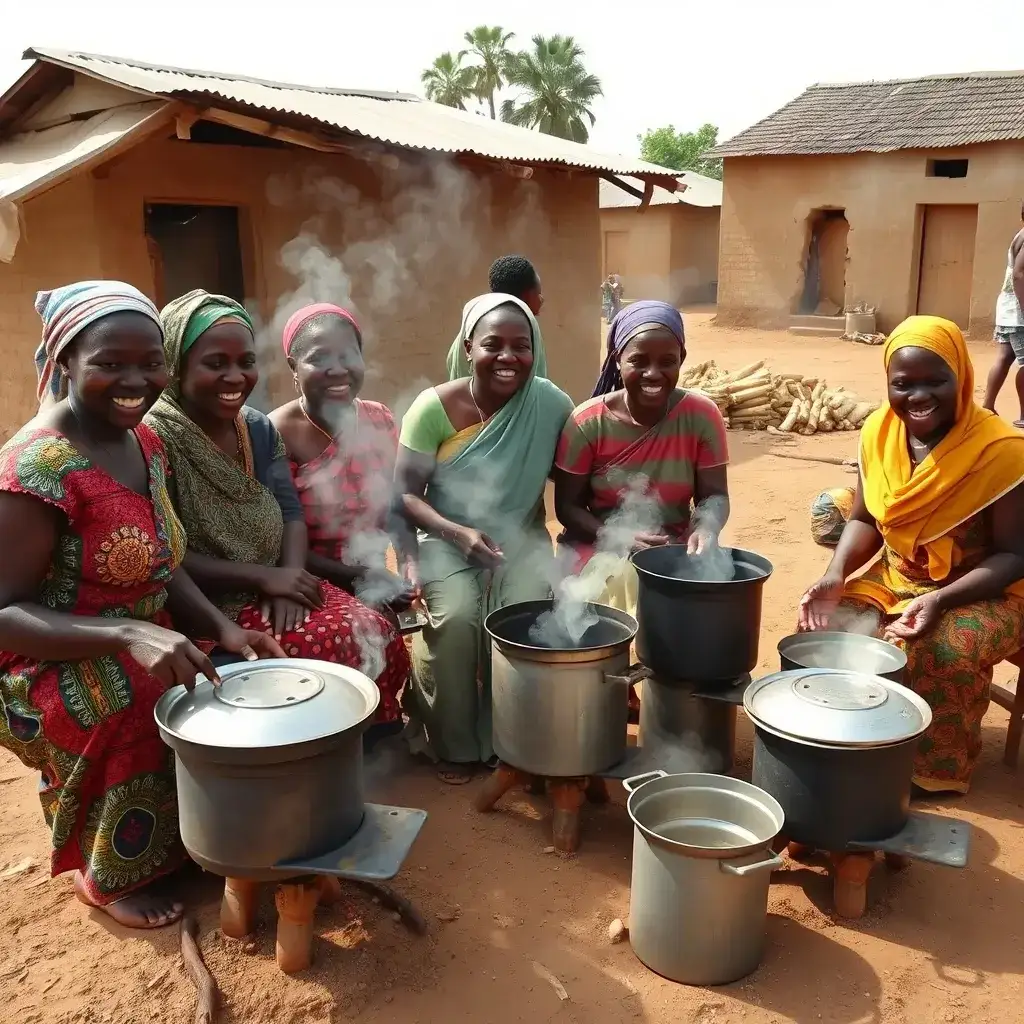
Women in Kakoshi and Lamsi, East Gonja District, Savannah Region, are experiencing significant improvements in their health and economic well-being due to the introduction of cleaner cooking technology. This transformation is largely attributed to the Eco-Flame Project, a collaborative effort by World Vision Ghana and Vivo Energy.
Context: The Health and Environmental Burden of Traditional Cooking
For generations, women in these communities relied on traditional methods for processing cassava into gari, a staple food. These methods involved open fires and firewood, leading to substantial exposure to indoor air pollution from smoke and harmful gases.
This daily exposure caused widespread health issues, including respiratory problems and eye infections. Furthermore, the reliance on firewood contributed to deforestation, exacerbating environmental degradation and consuming valuable time that could have been dedicated to other income-generating activities.
Eco-Flame Project: A Sustainable Solution
The Eco-Flame Project directly addresses these challenges by promoting the adoption of energy-efficient stoves. The initiative’s primary goals are to reduce indoor air pollution and foster sustainable livelihoods among the women involved.
Over 200 women have received comprehensive training. This training covers the construction, proper usage, and maintenance of the new, modern stoves. This hands-on approach ensures the long-term sustainability and effectiveness of the project.
Transforming Gari Production and Livelihoods
The introduction of these improved stoves has revolutionized the gari production process. It is now faster, cleaner, and significantly more efficient. This increased efficiency translates directly into higher incomes for the women.
Beneficiaries report a marked reduction in health ailments. Azara Tahiru, a project participant, shared,






Leave a Reply