
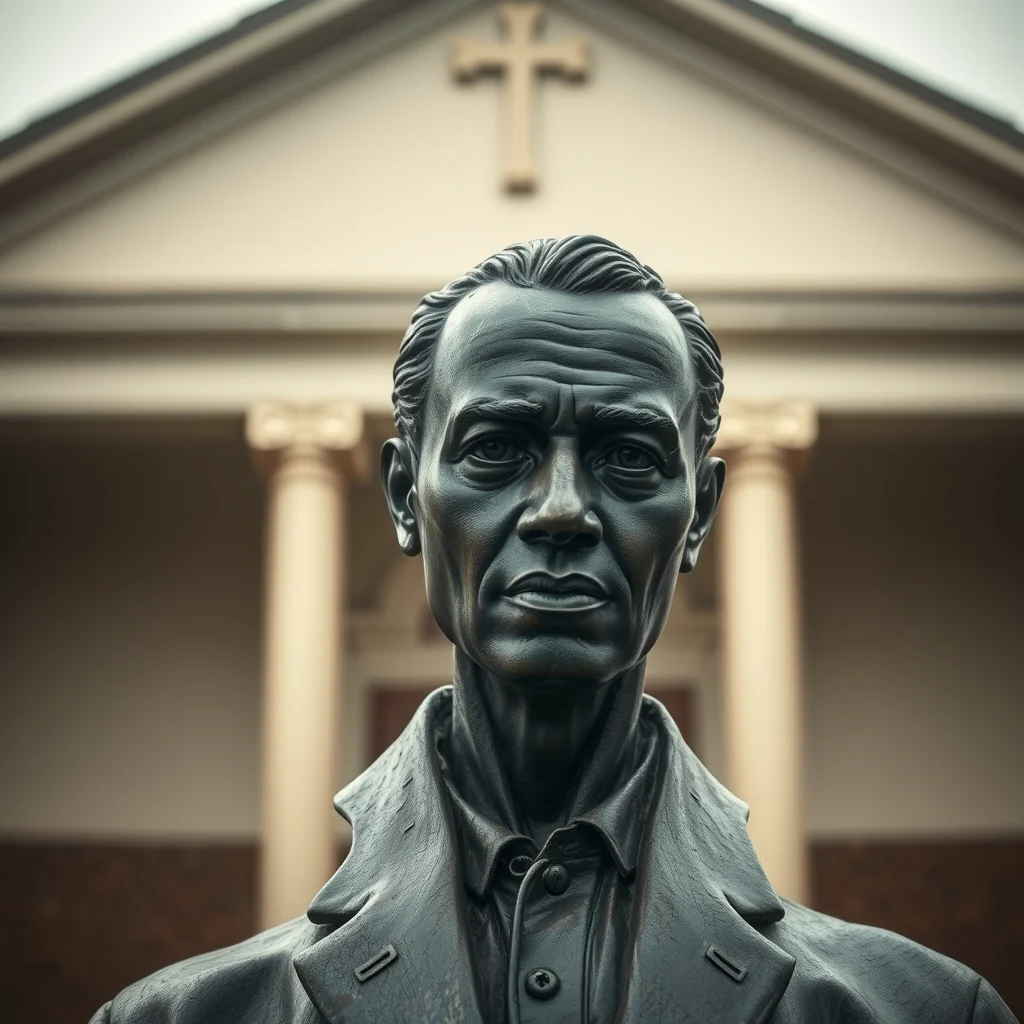
Questions are being raised about the historical commemoration of Dr. Kwegyir Aggrey, a co-founder of Achimota School, with concerns that his profound scholarly contributions have been significantly reduced to a few memorable slogans. The debate, prompted by reflections on Ralph Ellison’s “Invisible Man,” highlights a perceived institutional logic that may have marginalized Aggrey’s intellectual legacy, particularly in the context of his role at the prestigious Ghanaian educational institution.
The Reduction of a Scholar
Dr. Kwegyir Aggrey, an individual described as a scholar of immense global stature, is primarily remembered today through a handful of aphorisms. His most cited contributions include analogies about piano keys representing harmony and the advocacy for women’s education. A third, the soaring eagle, is also frequently associated with him.
This reductionist portrayal stands in stark contrast to his significant scholarly works and speeches, which, according to critics, were never compiled into published books during his lifetime. This oversight is particularly notable given that lesser-known figures had their works published. The absence of his original texts in the curriculum of Achimota School, an institution he helped found, further fuels these concerns.
Potential for Colonial Gatekeeping
The article suggests that this marginalization may not be accidental but could stem from the intricate mechanics of colonial gatekeeping and the architecture of power. While acknowledging that the definition of “Founder” can be subject to interpretation, the author questions why Aggrey’s intellectual output was not elevated into published works at the time, which could have served as a powerful demonstration of African epistemic autonomy.
Global Acclaim vs. Institutional Role
Dr. Aggrey’s intellectual prowess was recognized globally. He engaged with prominent figures like Dr. W. E. B. Du Bois and participated in discussions within the Harlem Renaissance. Biographies by respected scholars such as Professor L. H. Ofosu-Appiah, A. W. Cardinall, W.E.F. Ward, and E.W. Smith document his high esteem.
Despite this global recognition and his qualifications, including being a Phelps-Stokes scholar with a doctoral degree, Aggrey was appointed Vice Principal at Achimota School. Even the plaque on his bust at the school chapel, named in his honor, reportedly described him as “Assistant Vice Principal.” This raises questions about the decision-making process, potentially involving colonial Governor Gordon Guggisberg, and the discrepancy between his international standing and his institutional role.
The Political-Economy of Erasure
The situation prompts a sober intellectual consideration of the political-economy at play. The subtle containment of revolutionary intellectual potential through historical erasure is highlighted as a significant issue. The sentiment from Ralph Ellison’s “Invisible Man,” “I am invisible, understand, simply because people refuse to see me,” is invoked to underscore this point.
Centenaries and Rectifying History
Centenary celebrations are presented as opportune moments for reflection and the rectification of historical errors. The author emphasizes that ambiguities in history can be resolved through sincere acceptance of the historical record and diligent investigation by relevant institutions.
The article concludes by stating that while these questions are raised for public discourse, the onus is on the institutions to undertake the necessary work to reconcile historical inaccuracies. This process is deemed crucial for guaranteeing community intellectual independence and avoiding the “second injury” of historical denial to those whose contributions have been overlooked.









Leave a Reply