
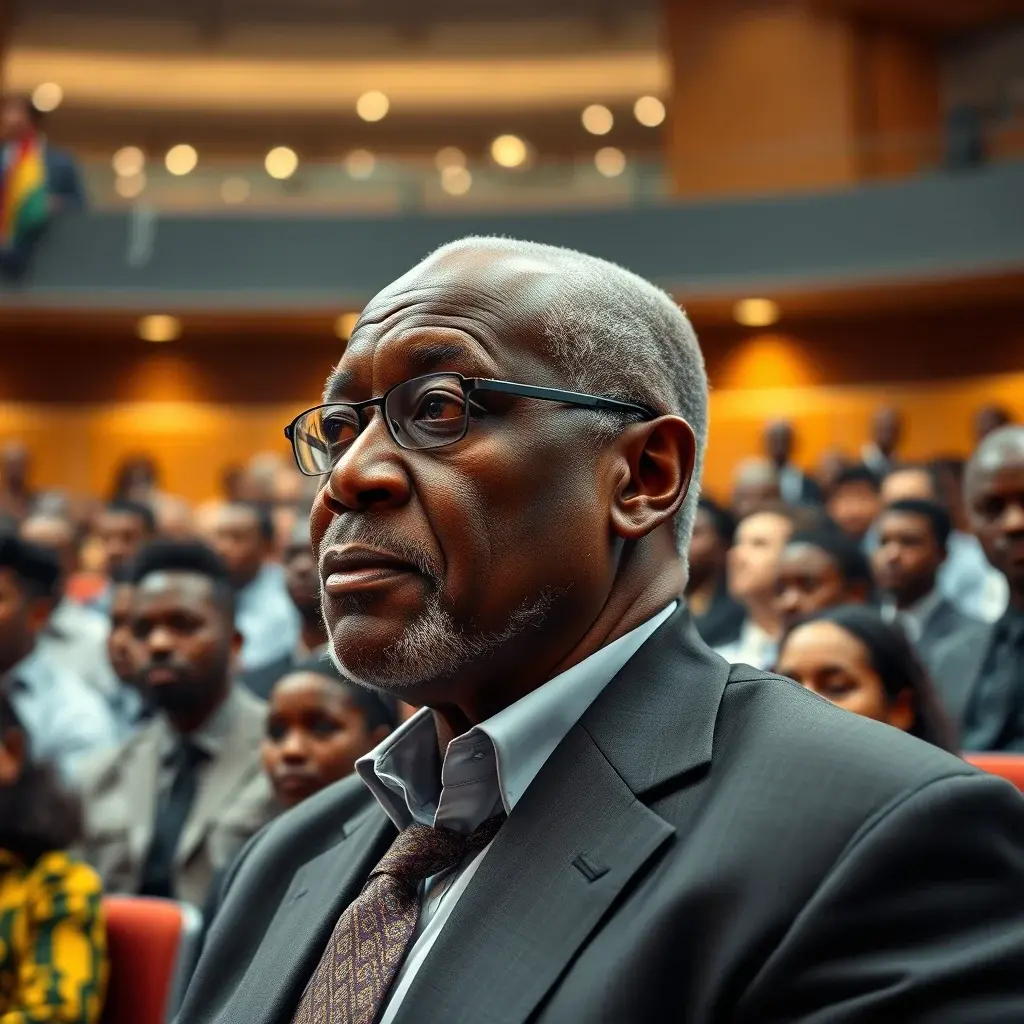
The Asantehene, Otumfuo Osei Tutu II, speaking at the Ghana Business Leaders Conclave at the University of Professional Studies, Accra (UPSA) on Friday, stated that Ghana, as it approaches its 70th anniversary of independence in 2027, has fallen short of its promises due to a persistent focus on political rhetoric over tangible business development.
The conclave, themed “Leading with Integrity, Negotiation, Mediation and Ethical Governance for Business Sustainability,” was part of UPSA’s Diamond Jubilee celebrations. Otumfuo, an alumnus, highlighted a recurring pattern of disappointment in Ghanaian leadership cycles, where initial public hope devolves into disillusionment.
A Legacy of Unfulfilled Promises
Otumfuo Osei Tutu II delivered a stark assessment of Ghana’s progress since independence. He argued that the nation has mistaken political discourse for genuine advancement, asserting that good governance alone is insufficient without robust business foundations.
“Ghana must now become a nation of builders,” the Asantehene declared, advocating for a national shift away from political slogans and towards enterprise.
He challenged Ghanaians to critically examine the real-world impact of independence, questioning whether it has truly translated into prosperity, opportunity, and dignity for all citizens. His implicit answer was a call for a fundamental reorientation toward production and value creation.
The Insufficiency of Good Governance Alone
The Asantehene emphasized that economic transformation is not an automatic outcome of elections or political slogans. Instead, it stems from the discipline of building businesses and creating value.
He pointed to nations like the United States, China, India, Singapore, and Vietnam as examples of countries that achieved prosperity through deliberate investment in enterprise, technology, and innovation, rather than solely through political systems.
Otumfuo drew a distinction between democracy as a governance system and trust as the bedrock of a functioning society. While elections change governments, sustained institutional credibility is what keeps societies intact and progressing.
Four Fronts for National Change
The Asantehene outlined a four-pronged approach for Ghana’s development: a transition from political rhetoric to building businesses, from slogans to production, from lamentation to enterprise, and from dependency to value creation.
He stressed the critical role of businesses as the engine of economic growth. Governments, he urged, must cultivate an environment conducive to their flourishing.
Key elements for such an environment include stable economic policies, transparent regulations, and a predictable business climate. Otumfuo warned that economic uncertainty, policy inconsistencies, and bureaucratic hurdles deter investment and stifle national development.
Strengthening the Public-Private Partnership
Collaboration between the government and the private sector is essential, according to the Asantehene. He stated that neither can achieve economic transformation independently.
He encouraged business leaders to continue investing in innovation, skills development, and value addition to enhance Ghana’s global competitiveness.
The conclave itself, as part of UPSA’s 60th anniversary, was lauded by Otumfuo as a potential turning point. UPSA Vice Chancellor Professor John Kwaku Mensah Mawutor positioned the event as a contribution to national discourse on sustainability, succession planning, and responsible leadership.
A Call to Action Beyond Ceremony
However, the Asantehene made it clear that a true turning point will not arise from a single event or ceremony. It will manifest when Ghanaians shift their focus from celebrating independence to actively building upon it through sustained economic endeavor.
The implications for Ghana are significant: a challenge to redefine national priorities and a call for a collective commitment to fostering a business-centric economy that delivers tangible prosperity and dignity for its citizens.








Leave a Reply