
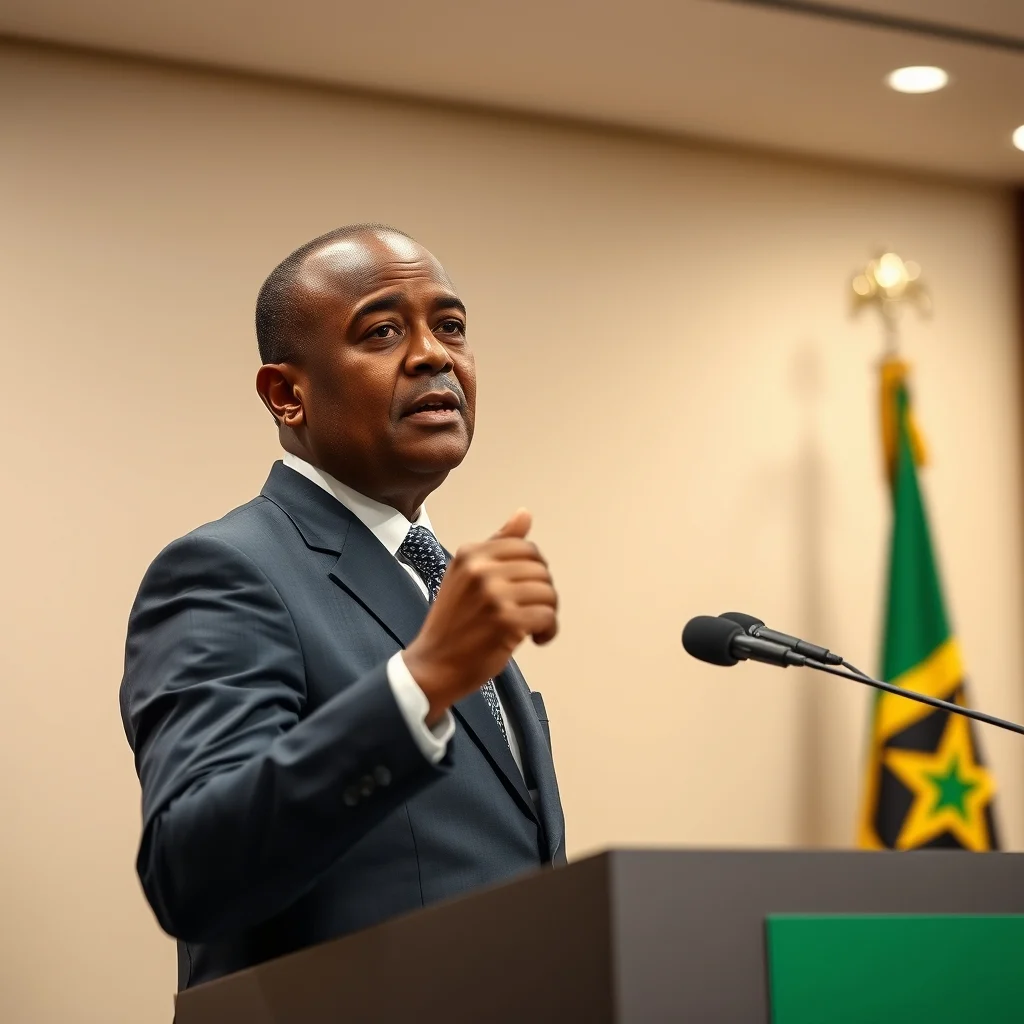
Government spokesperson Felix Kwakye Ofosu has vehemently denied allegations that the Mahama administration is secretly plotting to weaken or dismantle the Office of the Special Prosecutor (OSP). Speaking on the program PM Express on Monday, Ofosu asserted that President John Mahama offers his full support to the anti-corruption body and has previously intervened to prevent its abolition.
Context of the OSP’s Role
The Office of the Special Prosecutor was established as an independent body tasked with investigating and prosecuting corruption cases. Its creation was a significant step in Ghana’s efforts to combat graft, a persistent challenge in many public institutions. The OSP operates with a mandate to ensure accountability and deter corrupt practices among public officials.
Government’s Stance on OSP Support
When questioned about a potential government plan to eliminate the OSP, Felix Kwakye Ofosu, who is also the Member of Parliament for Abura Asebu-Kwamankese, stated unequivocally, “Absolutely not.” He presented a key piece of evidence for the President’s backing: an attempt last year to scrap the office through a parliamentary bill initiated by the Majority Leader and Majority Chief Whip.
Ofosu explained that the governing party at the time commanded a significant majority in Parliament, with 189 members. He suggested that if a party whip had been applied, the bill would have easily passed, leading to the OSP’s dissolution. However, he revealed that President Mahama personally intervened, persuading party leaders to allow the institution to continue its operations.
“The president prevailed on the majority leader and the majority chief whip to give the special prosecutor a chance,” Ofosu stated, highlighting the President’s direct involvement in safeguarding the OSP’s existence.
Addressing Legal Challenges
The government spokesperson addressed recent legal challenges faced by the OSP, arguing that these should not be misconstrued as government-led attacks. He elaborated on a court case where an accused individual questioned the Special Prosecutor’s authority to initiate prosecutions without the Attorney General’s consent, citing constitutional provisions.
“The court upheld his position,” Ofosu confirmed, emphasizing that the judiciary holds the ultimate constitutional authority to interpret laws. He added, “So, if the judiciary… sees that the special prosecutor is acting in violation of the constitution, that should be respected.”
Ofosu also referred to a separate matter before the Supreme Court, where the Attorney General was required to clarify the legal standing regarding the OSP’s powers. He stressed that the Attorney General is bound to adhere to the law and cannot operate outside constitutional boundaries.
“The attorney general is bound to take the position of the law,” he insisted, reinforcing that any legal interpretations by the courts must be honored. He cautioned against twisting these judicial pronouncements into claims of political interference.
“It does not mean that government has anything against the special prosecutor,” he asserted. Ofosu reiterated that President Mahama has publicly affirmed his support for the OSP on multiple occasions, even in the face of internal party concerns.
“The special prosecutor’s office has the president’s full and absolute backing to do what he has to,” he declared. However, he underscored the necessity for the OSP to operate strictly within the constitutional framework.
Future Considerations
Ofosu suggested that any legal deficiencies identified by the courts could be addressed through future constitutional amendments. He concluded, “We cannot say that if it is believed by the Supreme Court… that the special prosecutor’s office is existing unlawfully or acting unlawfully, then we should still allow it to operate. That would fly in the face of the rule of law.” This stance indicates a commitment to upholding legal and constitutional integrity while supporting the OSP’s anti-corruption mandate.





Leave a Reply