
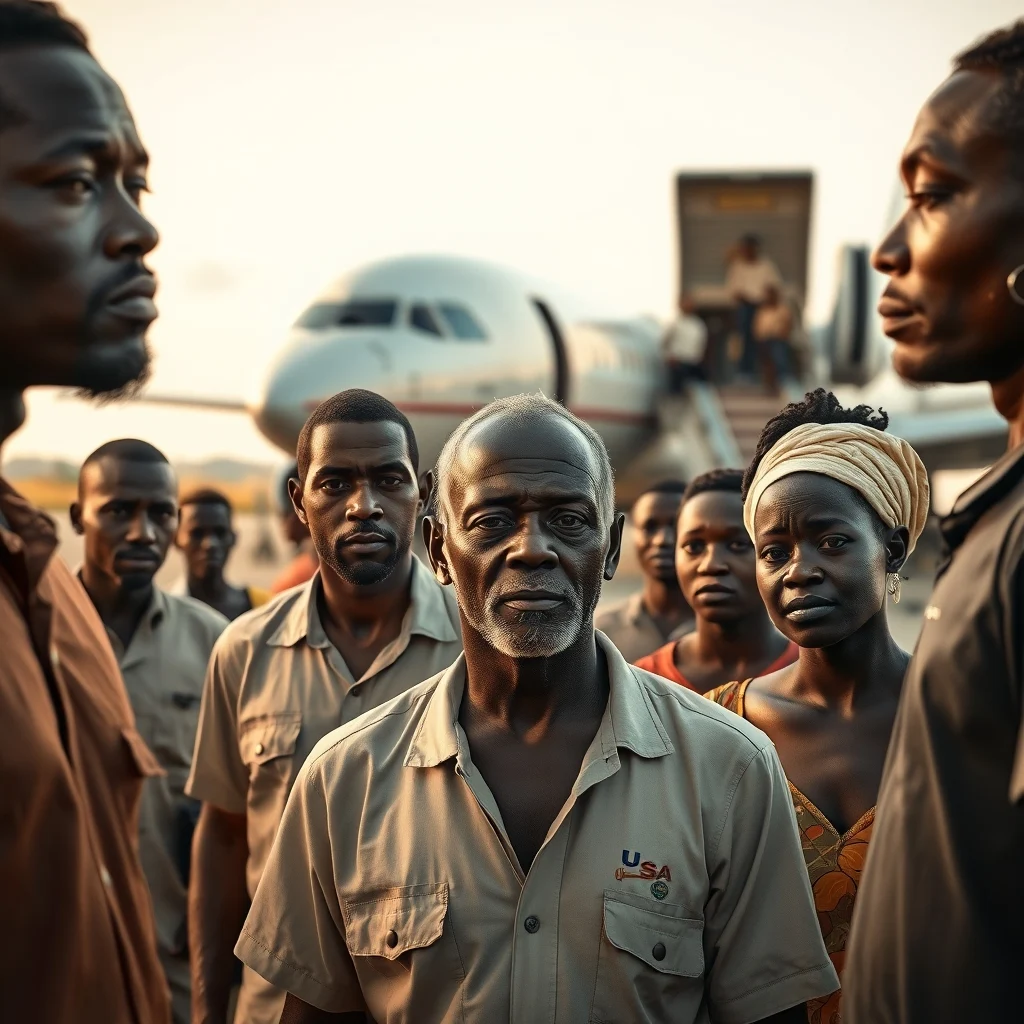
Sierra Leone has agreed to accept hundreds of West African migrants deported by the United States, Foreign Minister Timothy Kabba announced, with the first flight of 25 deportees from Senegal, Ghana, Guinea, and Nigeria scheduled to arrive on May 20. This arrangement marks the latest move by the U.S. administration to expedite removals by facilitating the return of individuals to third countries.
Context of Third-Country Removals
The agreement positions Sierra Leone as the latest African nation to participate in the U.S.’s third-country deportation program. Similar arrangements have previously seen deportees sent to countries like the Democratic Republic of the Congo, Ghana, Cameroon, Equatorial Guinea, and Eswatini. These practices have drawn scrutiny from legal experts and human rights organizations concerned about the legality and ethical implications of deporting individuals to nations where they are not citizens.
Details of the Sierra Leone Agreement
Under the terms of the “Third Country National Agreement” signed with the U.S., Sierra Leone is set to receive a maximum of 25 ECOWAS (Economic Community of West African States) citizens per month, totaling up to 300 individuals annually. Minister Kabba stated that the agreement is part of Sierra Leone’s efforts to assist with U.S. immigration policy as part of their bilateral relationship.
It remains unclear whether these deportees will be permitted to remain in Sierra Leone. A government spokesperson did not immediately provide further details when contacted. The financial or other benefits Sierra Leone might receive in exchange for hosting these deportees were also not disclosed by the minister.
Past Deportation Disputes
The U.S. and Sierra Leone have a history of disagreements regarding deportations. In 2017, under the Trump administration, Washington threatened to deny visas to Sierra Leonean foreign ministry and immigration officials due to the government’s refusal to accept its own deported nationals from the U.S.
The U.S. State Department has previously asserted the lawfulness of such deportations. However, past reports by Reuters have highlighted instances where deportees sent to countries like Ghana and Equatorial Guinea were subsequently forced to return to their home countries, despite having received U.S. court protections designed to prevent such outcomes.
Financial Aspects and Criticisms
The financial costs associated with third-country removals are not fully known. A February report by Democrats on the Senate Foreign Relations Committee indicated that over $32 million had been directly transferred to five countries—Equatorial Guinea, Rwanda, El Salvador, Eswatini, and Palau—for such purposes. The specific financial details of the Sierra Leone agreement have not been made public.
Implications and Future Outlook
This new agreement raises questions about the long-term implications for the deported individuals and the broader West African region. The potential for deportees to be further displaced or to face challenges in establishing new lives in Sierra Leone, especially if they are not nationals, warrants close observation. The effectiveness and legality of these third-country deportation policies continue to be a subject of debate among international legal scholars and human rights advocates.
As the first flight is set to arrive in late May, attention will be focused on how Sierra Leone manages the arrival and integration of these deportees, and whether similar agreements with other West African nations will follow. The U.S. administration’s continued pursuit of third-country deportations suggests this policy will remain a significant aspect of its immigration enforcement strategy.









Leave a Reply