
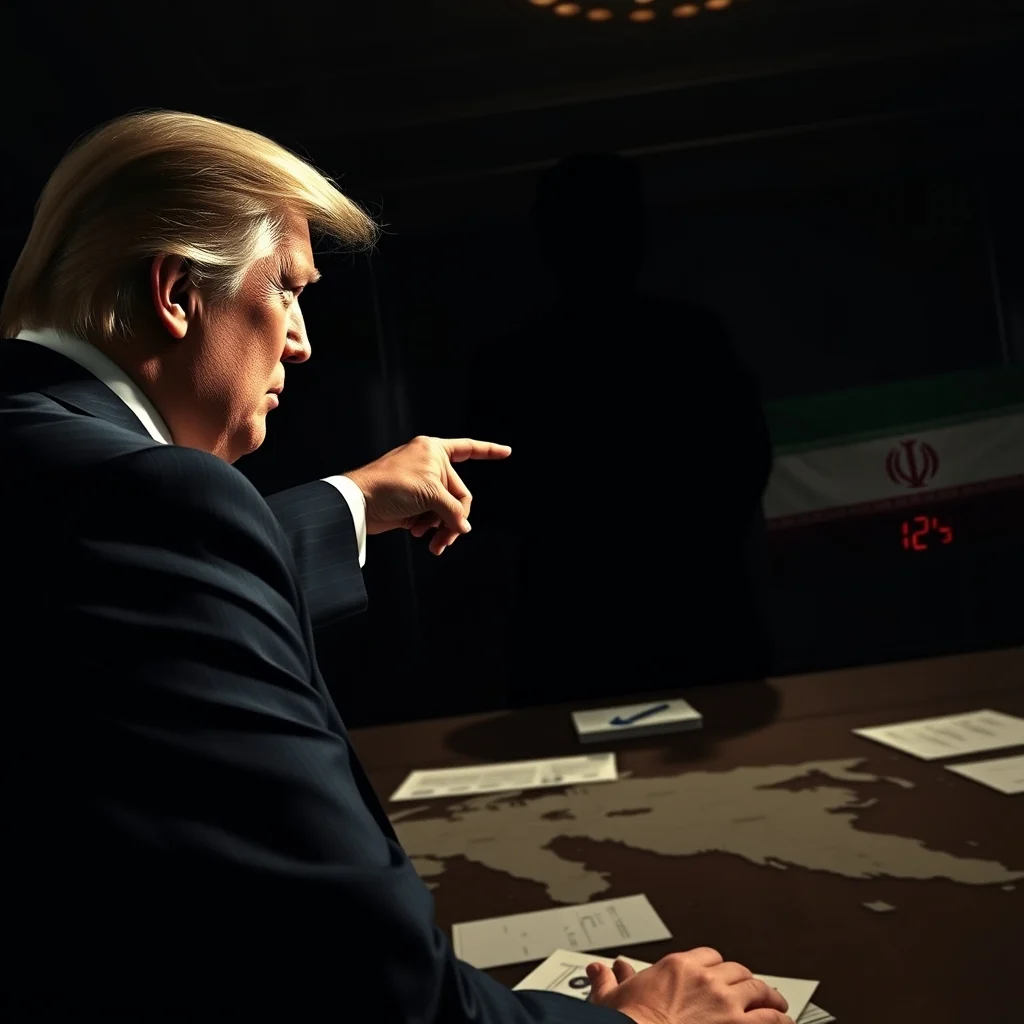
US President Donald Trump issued a stark warning to Iran on Sunday, stating “the clock is ticking” as negotiations aimed at ending the ongoing conflict have reportedly stalled. The President’s comments, made via his Truth Social platform, suggest a growing impatience with the pace of diplomatic progress.
Stalled Negotiations and Unmet Demands
The warning comes as President Trump was scheduled to speak with Israeli Prime Minister Benjamin Netanyahu. Meanwhile, Iranian media reported that the US had not presented any concrete concessions in response to Tehran’s latest proposals for ending the war. The semi-official Mehr news agency indicated that a lack of compromise from Washington could lead to an “impasse in the negotiations.”
President Trump’s rhetoric echoes previous threats, including one made shortly before an early April ceasefire announcement, where he warned that a “whole civilization” would face destruction if Iran did not agree to a deal. Earlier this week, he described the truce as being on “massive life support” after rejecting Tehran’s demands as “totally unacceptable.”
Iran’s Proposed Terms and US Counter-Conditions
An Iranian foreign ministry spokesperson, Esmail Baghaei, insisted that Tehran’s proposals were both “responsible” and “generous.” According to Iran’s semi-official Tasnim news agency, these terms included an immediate cessation of hostilities on all fronts, referencing ongoing Israeli actions against Hezbollah in Lebanon. They also called for an end to the US naval blockade of Iranian ports and guarantees against further attacks on Iran.
Further reports from Iran’s semi-official Fars news agency detailed five conditions reportedly set by Washington in response to Tehran’s proposal. These allegedly include a demand for Iran to maintain only one nuclear site and transfer its enriched uranium stockpile to the US. This comes after President Trump suggested on Friday that he might accept a 20-year suspension of Iran’s nuclear program, a departure from previous demands for a complete halt.
Background of the Conflict and Blockade
Massive air strikes by Israeli and US forces against Iran commenced on February 28th. A ceasefire was subsequently announced to facilitate peace talks, and it has been largely observed, despite occasional exchanges of fire. The conflict has had significant global economic repercussions, particularly concerning oil prices.
Iran has maintained control over the Strait of Hormuz, a critical waterway through which approximately 20% of the world’s oil and liquefied natural gas is transported. Iran states this action is a retaliatory measure against US and Israeli attacks. In response, the US has implemented a blockade of Iranian ports, aiming to pressure Tehran into accepting its terms.
Mediator Efforts and Future Outlook
Pakistan has been actively engaged in mediating discussions between the US and Iran. However, despite these efforts, both nations appear to remain significantly distant in their positions. The escalating rhetoric and apparent deadlock in negotiations raise concerns about the future stability of the region and the potential for renewed hostilities.
The coming days will be critical in determining whether diplomatic channels can be reopened and progress can be made towards a lasting resolution. The implications of continued stalemate could lead to further economic disruption and heightened geopolitical tensions in the Middle East.










Leave a Reply