
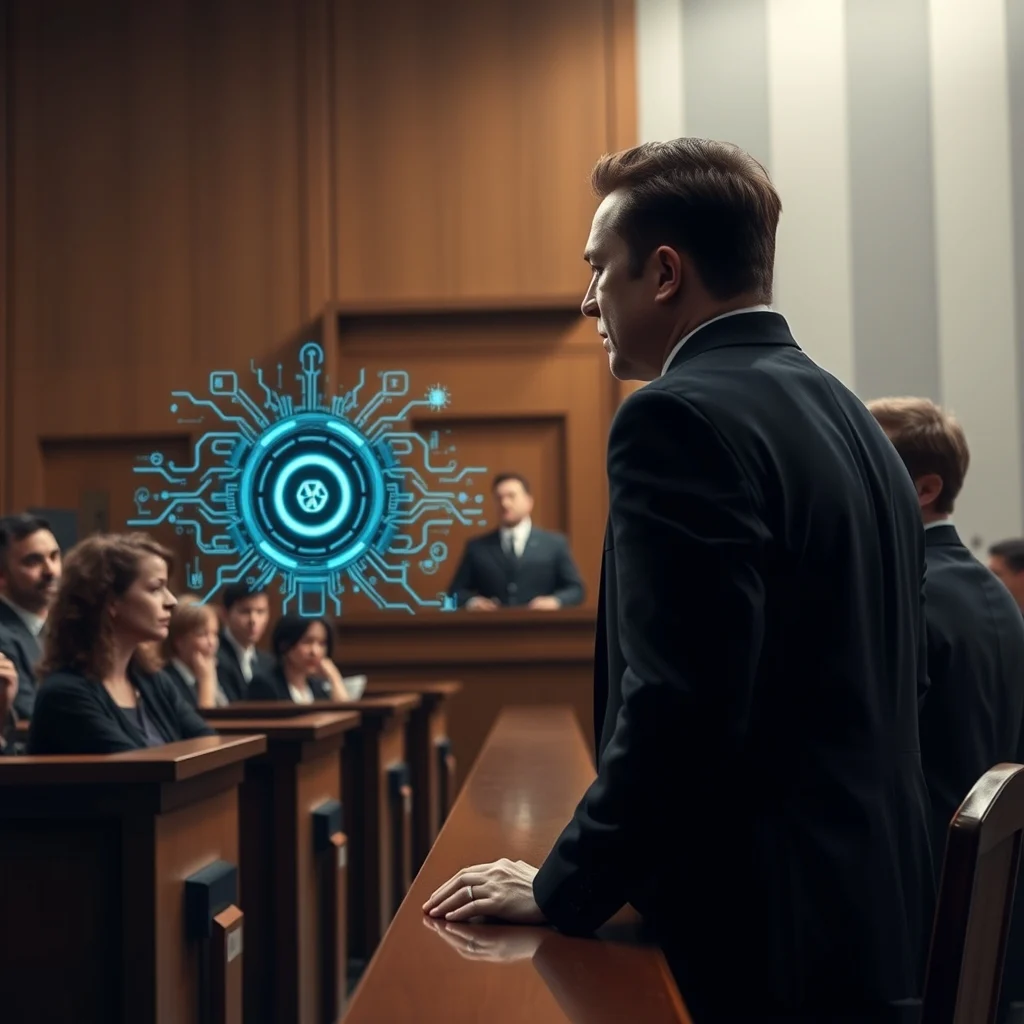
OAKLAND, CA – A U.S. jury on Monday delivered a verdict against Elon Musk in his lawsuit accusing OpenAI of deviating from its founding mission. The jury found the artificial intelligence company not liable to the tech mogul for allegedly abandoning its commitment to benefiting humanity, determining that Musk had filed his case too late.
Background of the Dispute
The trial, which commenced on April 28 in Oakland federal court, has been a pivotal moment for the burgeoning field of artificial intelligence. It highlighted critical debates surrounding AI’s development, its ethical deployment, and the distribution of its benefits, including financial gains.
Musk, a co-founder of OpenAI, alleged that the company, under the leadership of CEO Sam Altman, had improperly prioritized enriching investors and insiders over its original nonprofit mission. He further contended that OpenAI had failed to adequately focus on AI safety, a core tenet of its founding principles.
OpenAI, in turn, argued that Musk himself was motivated by financial interests and had waited too long to bring his claims. The company asserted that it had always strived to build safe AI for the benefit of humanity, countering Musk’s narrative of a mission drift driven by profit.
Trial Highlights and Key Arguments
Over 11 days of testimony and arguments, both Musk and Altman faced intense scrutiny. Lawyers for each side repeatedly attacked the credibility of the opposing party, painting a picture of conflicting motivations regarding money versus altruism.
Musk’s legal team, led by Steven Molo, emphasized that several witnesses had questioned Altman’s candor or labeled him untrustworthy. Molo reminded the jury that Musk himself did not unequivocally affirm his complete trustworthiness when questioned during the trial, suggesting that Altman’s credibility was central to OpenAI’s defense.
Conversely, OpenAI’s counsel, William Savitt, suggested that Musk was the one fixated on financial returns. Savitt famously stated, “Mr. Musk may have the Midas touch in some areas, but not in AI,” implying Musk’s pursuit of wealth was misapplied to the AI sector.
Musk’s lawsuit aimed to hold OpenAI accountable for what he described as a betrayal of its founding agreement. He specifically pointed to the company’s increasing commercial partnerships, particularly with Microsoft, as evidence of its shift away from its original goals.
Industry Context and Financial Stakes
The legal battle unfolded against a backdrop of intense competition and massive financial investment in the AI industry. OpenAI, a leader in generative AI with its popular ChatGPT model, is reportedly preparing for a potential initial public offering (IPO) that could value the company at an astounding $1 trillion.
Microsoft, a key strategic partner, has invested heavily in OpenAI, with one executive testifying that the tech giant has poured over $100 billion into the collaboration. This deep financial entanglement underscores the commercial ambitions driving AI development.
Meanwhile, Elon Musk has also entered the AI race with his own venture, xAI, which is integrated into his aerospace company, SpaceX. SpaceX itself is also planning an IPO, potentially exceeding OpenAI’s in scale, indicating Musk’s continued significant interest and investment in the AI landscape.
Broader Implications for AI Development
The jury’s decision has significant implications for the future governance and direction of artificial intelligence. By ruling in favor of OpenAI, the court has affirmed the company’s current operational model and its strategic partnerships.
This verdict could embolden other AI companies to pursue aggressive commercialization strategies, potentially prioritizing market growth and investor returns. It may also set a precedent regarding the enforceability of founding mission statements in rapidly evolving technology sectors.
The lawsuit also highlighted public concerns about AI’s societal impact, including job displacement and the potential for misuse. While the jury focused on the legal merits of Musk’s claims, the broader public debate about AI ethics and safety continues unabated.
What to Watch Next
Moving forward, attention will likely remain focused on OpenAI’s trajectory toward its potential IPO and its ongoing development of AI technologies. The relationship between OpenAI and Microsoft will be closely monitored, as will the competitive landscape featuring players like Anthropic and Musk’s xAI.
Furthermore, the legal outcome may influence how future disputes over AI company missions are handled and could shape regulatory discussions surrounding the industry. The ongoing tension between innovation, commercialization, and ethical considerations in AI development remains a critical area to observe.









Leave a Reply