
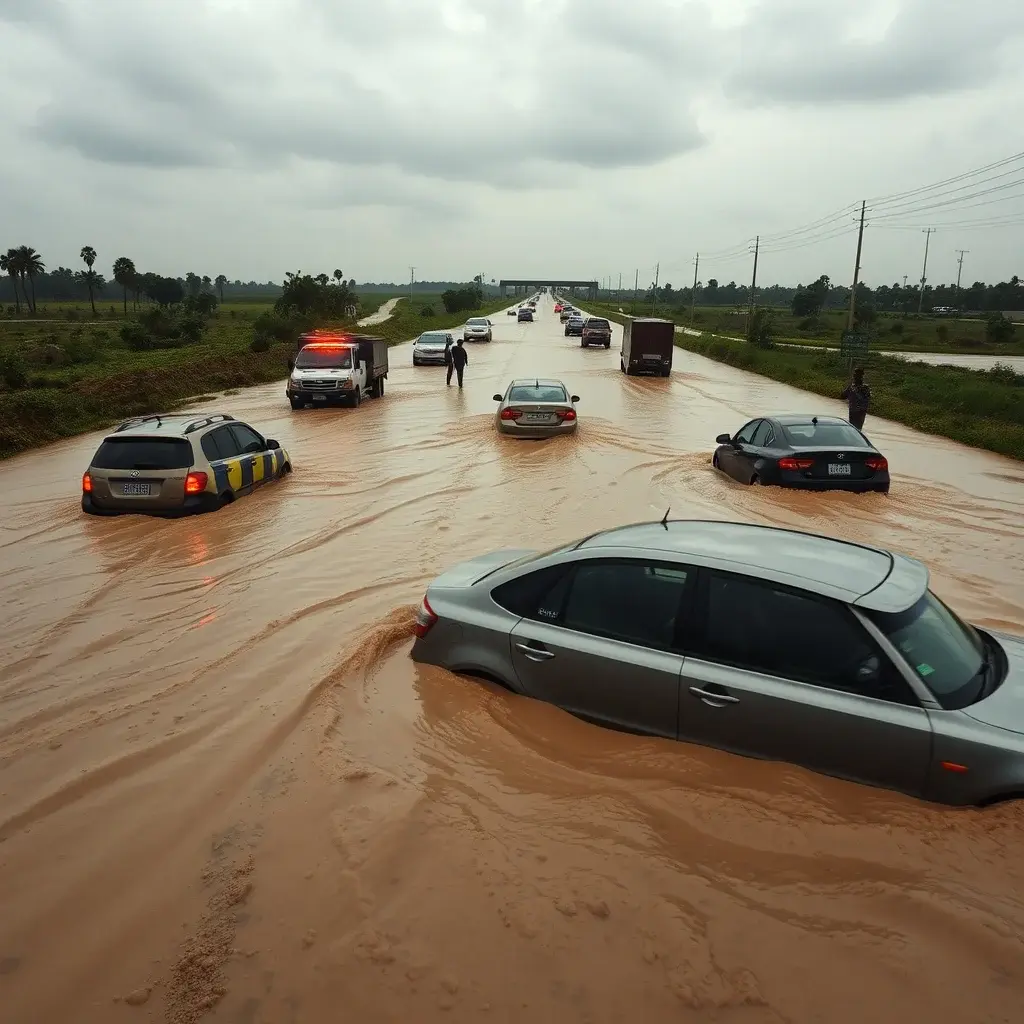
Motorists faced significant disruptions on Monday, May 18, 2026, as floodwaters inundated sections of the vital Accra-Cape Coast-Takoradi Highway, specifically impacting the Biriwa stretch. The inundation led to heavy vehicular traffic and stranded numerous travelers. In a separate but related incident, tidal waves caused widespread damage in the coastal town of Moree, resulting in the collapse of over 13 houses and displacing residents.
Highway Submerged Amidst Environmental Concerns
The flooding on the Biriwa section of the highway, a key transport artery connecting major cities, brought traffic to a standstill. Channel One News reported that the immediate cause of the severe flooding is attributed to ongoing sand winning activities in the vicinity.
Local residents have voiced concerns that these activities have disrupted the natural drainage patterns of the area, exacerbating the impact of rainfall and leading to the road submersion.
Emergency services, including personnel from the Central Regional Rapid Response Unit of the National Disaster Management Organisation (NADMO) and the Ghana Police Service, were deployed to manage the chaos. Their primary roles involved directing traffic away from submerged areas and providing assistance to stranded drivers and passengers.
Authorities have issued advisories urging all motorists using the route to exercise extreme caution. They also called for patience as efforts are underway to clear the water and restore normal traffic flow.
Coastal Community Reels from Tidal Wave Impact
The crisis on the highway was compounded by a devastating event in Moree, a coastal community within the Abura-Asebu-Kwamankese District. Powerful tidal waves swept through the town, causing significant structural damage.
More than thirteen houses were reported to have collapsed as a direct result of the wave action. The destruction has left a number of residents homeless and facing displacement.
The proximity of these events highlights the vulnerability of Ghana’s coastal regions to environmental changes and extreme weather phenomena.
Expert Perspectives on Environmental Degradation and Infrastructure
Environmental experts have long warned about the consequences of unchecked sand winning along Ghana’s coastlines. These activities can alter natural watercourses and increase susceptibility to flooding, especially during periods of heavy rainfall.
Dr. Kofi Mensah, an environmental scientist at the University of Ghana, previously stated in a report by the Environmental Protection Agency (EPA) that sand winning operations often disregard crucial ecological factors, leading to long-term degradation of coastal ecosystems and increased flood risk.
The NADMO reports consistently indicate a correlation between unregulated coastal development, including sand winning, and the severity of flooding incidents in low-lying areas.
Infrastructure development along coastlines also needs careful planning to mitigate the impact of natural forces like tidal waves, according to urban planning analysts.
Implications for Travelers and Coastal Residents
The immediate implication for motorists is severe travel delays and the need for alternative routes, if available. This disruption impacts supply chains and the movement of goods and services, potentially leading to economic losses.
For the residents of Moree, the impact is immediate and life-altering, involving loss of property, displacement, and the need for emergency shelter and support.
Looking Ahead: Climate Resilience and Sustainable Practices
The dual incidents underscore the urgent need for stricter regulation of sand winning activities and improved coastal management strategies. Authorities are expected to reassess environmental protection laws and enforcement mechanisms.
The events also serve as a stark reminder of the increasing threats posed by climate change, necessitating greater investment in climate-resilient infrastructure and early warning systems for both flooding and coastal erosion.
What to watch next includes the government’s response to calls for stricter environmental regulations, the long-term recovery efforts for affected communities, and the potential for similar incidents to occur along other vulnerable coastal routes and settlements.









Leave a Reply