
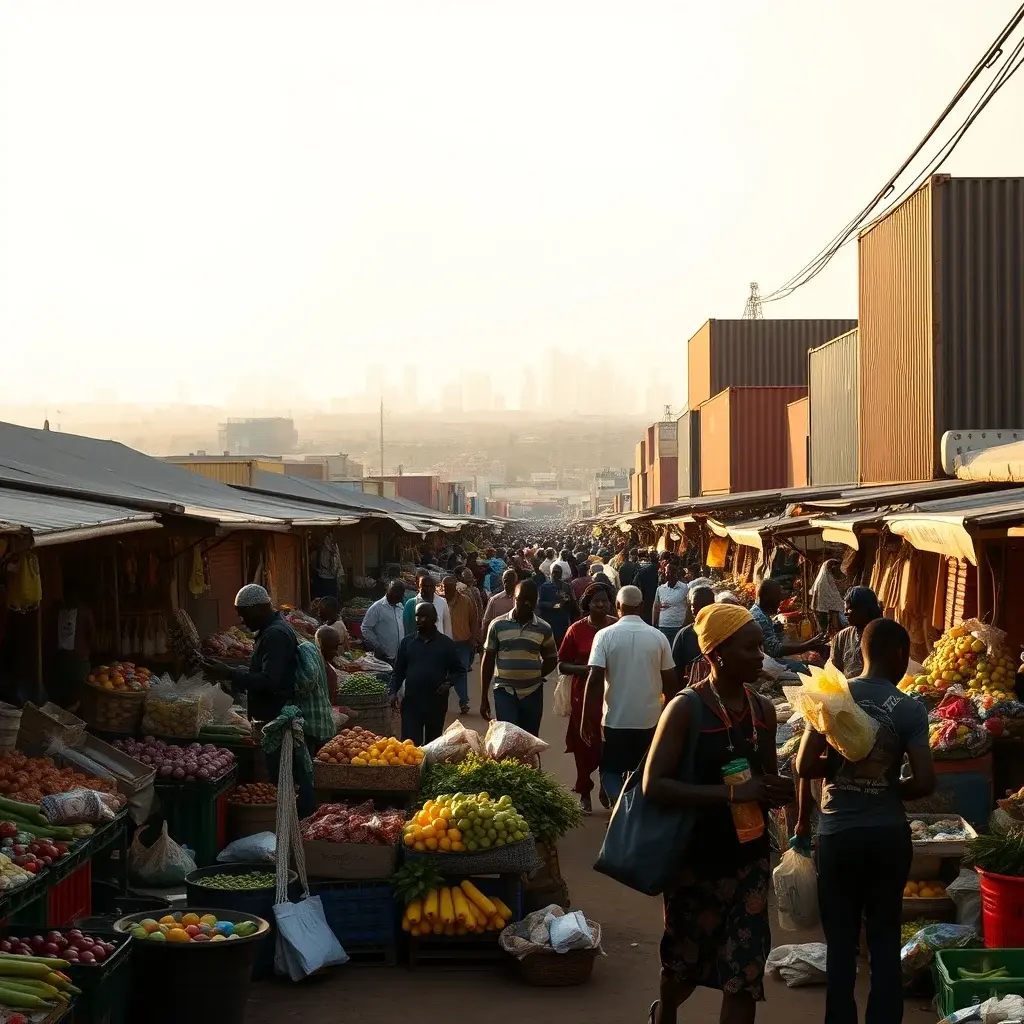
Ghana, despite its rich natural resources and stable political climate, consistently faces economic headwinds during global crises, prompting a critical re-evaluation of its heavy reliance on imports. Recent events, from the COVID-19 pandemic to the Russia-Ukraine war and current Middle East tensions, have underscored the nation’s vulnerability to external shocks, akin to experiencing global turmoil firsthand without direct involvement.
The ‘We’ll Import It’ Dependency
For years, Ghana has maintained a strong dependence on imports for essential goods, including fuel, machinery, finished products, and even basic industrial inputs. This import-heavy strategy, while offering short-term convenience, proves unsustainable when global supply chains falter or prices surge due to international events.
In contrast, nations like Iran, subjected to prolonged international sanctions, have been compelled to develop domestic capabilities across various sectors. This forced self-reliance has spurred advancements in industries such as steel, pharmaceuticals, and defense, demonstrating an alternative path to resilience.
Addressing ‘Galamsey’ with Innovation
The persistent issue of illegal small-scale mining, known locally as ‘galamsey,’ highlights a domestic challenge where traditional enforcement methods have proven insufficient. The environmental degradation and the complex entanglement of political interests complicate efforts to curb the practice.
The article suggests a paradigm shift, proposing the use of advanced technology, such as drones, for real-time monitoring and targeted interventions. This approach, inspired by Iran’s development of cost-effective drone technology for surveillance, could offer a more efficient and less confrontational solution to monitoring remote mining activities.
Strengthening National Security Through Technology
Ghana’s position as a regional beacon of peace is increasingly challenged by escalating security threats in the neighboring Sahel region. The creeping influence of terrorist activities necessitates a proactive enhancement of national security infrastructure.
The article posits that modern security apparatus, including surveillance systems, intelligence gathering, and rapid response capabilities, are no longer optional but essential. It draws a parallel with Iran’s defense strategy, which prioritizes smart, flexible systems over sheer size, a model potentially adaptable for resource-constrained nations like Ghana.
Strategic Learning, Not Political Alignment
The suggestion to draw lessons from Iran is framed not as a geopolitical alignment but as a pragmatic approach to acquiring beneficial knowledge and technology. This strategy involves studying how nations have built industrial capacity and developed technological solutions under duress.
The core idea is that Ghana can selectively learn from global examples, adopting effective strategies and technologies regardless of their origin. This approach emphasizes practical problem-solving and the pursuit of national interest through diverse international engagements.
The Imperative of Self-Reliance and Mindset Shift
Ultimately, the discussion centers on a fundamental shift in national mindset—moving from reactive responses to proactive preparation and from importing solutions to cultivating domestic innovation.
Ghana’s potential remains significant, but realizing it hinges on bridging the gap between available resources and strategic utilization. The article concludes by advocating for a more active role in shaping its own development narrative, drawing inspiration from the resilience forged by necessity in other nations.
Careful and strategic engagement with countries like Iran could unlock opportunities in defense technology, industrial development, and technical education. This collaborative learning is presented as a component of a broader strategy to foster national self-sufficiency and ensure Ghana is better equipped to navigate future global challenges.






Leave a Reply