
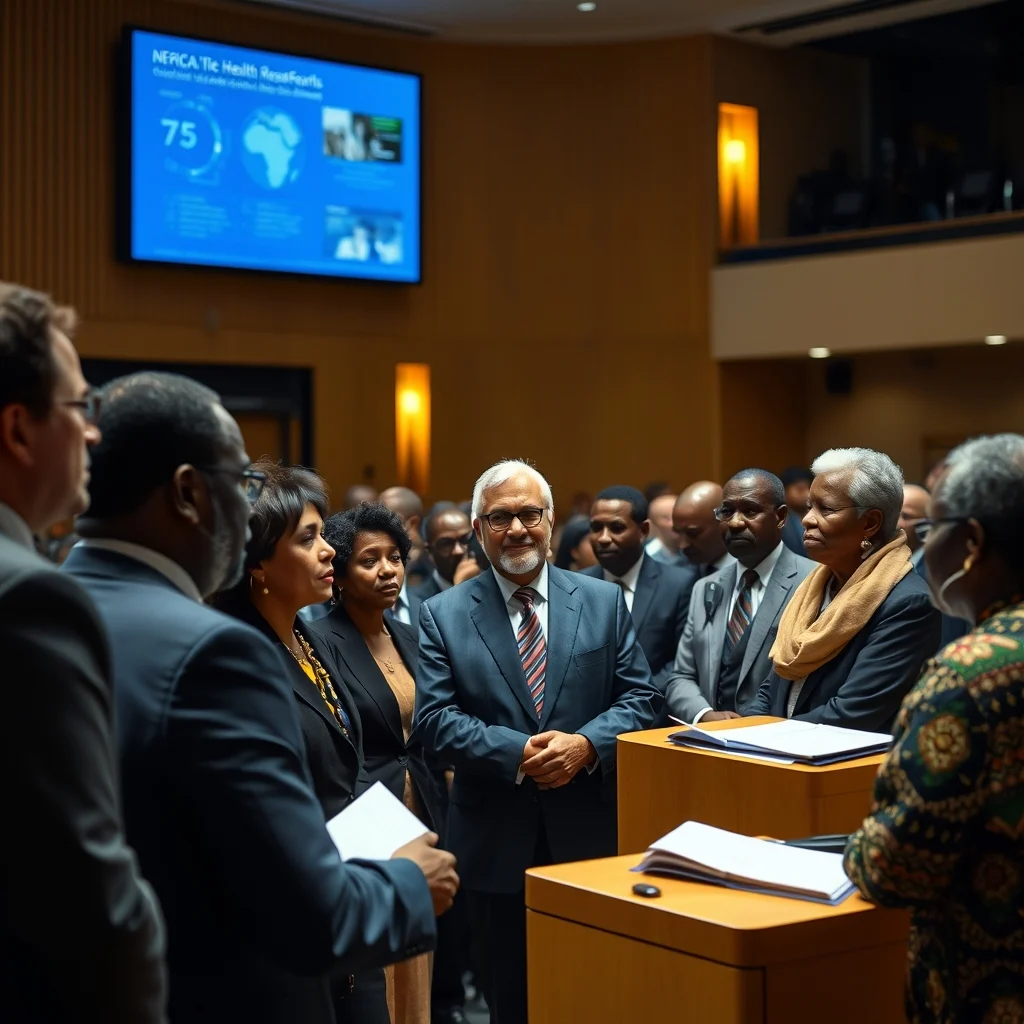
GENEVA – World Health Organization (WHO) Director-General Dr. Tedros Adhanom Ghebreyesus has commended former President John Mahama for his pivotal role in advancing global health reforms through the ‘Accra Reset’ initiative. The recognition, made during the ongoing World Health Assembly in Geneva, highlights the initiative’s success in fostering health sovereignty and reducing reliance on international aid, especially in the face of declining donor funding.
Context of Declining Aid and Shifting Priorities
The global health landscape is currently navigating a critical juncture characterized by a significant downturn in international development assistance. This reduction in funding has had tangible negative impacts on healthcare delivery in many nations, leading to severe setbacks and disruptions.
Dr. Tedros emphasized that these disruptions, which harmed individuals, families, and communities, were both regrettable and preventable. The crisis, however, has served as a catalyst, prompting a fundamental re-evaluation of global health financing and strategic approaches among world leaders.
The ‘Accra Reset’ Initiative and Health Sovereignty
President Mahama’s ‘Accra Reset’ initiative, launched in 2025, emerged as a direct response to these challenges. It advocates for a paradigm shift away from donor dependency towards a new era of health sovereignty, particularly for African nations.
The initiative champions increased domestic investment in healthcare systems. It also promotes enhanced regional cooperation, the development of local pharmaceutical manufacturing capabilities, and a reduced reliance on foreign aid for essential health programs.
Furthermore, the ‘Accra Reset’ calls for significant reforms within the global health financing system. The goal is to empower developing countries with a more influential voice in decision-making processes and to cultivate sustainable and resilient health systems across Africa.
A Call for a New Global Health Architecture
Dr. Tedros articulated the urgent need for innovation to construct a “new global health architecture fit for the future.” He stated that the current World Health Assembly is focused on consolidating existing reform efforts rather than initiating entirely new structures.
“Our purpose is not to launch a new initiative but to bring together the many existing initiatives that have proposed reforms of the global health architecture in part or in whole,” Dr. Tedros explained. This approach aims to streamline efforts and build upon the progress already made by various member states and organizations.
The theme for this year’s Assembly, “Reshaping Global Health: A Shared Responsibility,” directly reflects this growing consensus. It underscores the imperative for countries to assume greater ownership of their health systems.
Echoes of Accra in Geneva
The WHO Director-General explicitly credited President Mahama’s ‘Accra Reset’ for shaping this burgeoning global dialogue on health financing and self-reliance. “This is the message of the Accra Reset and the echoes of Accra now resounding in Geneva and around the world. Thank you, Your Excellency, for your leadership on this,” Dr. Tedros stated.
The ‘Accra Reset’ initiative draws lessons from recent global health emergencies, including the COVID-19 pandemic and past Ebola outbreaks, to inform its strategies. It seeks to rethink Africa’s approach to health financing and healthcare delivery in light of these experiences and the evolving international aid landscape.
Implications for Global Health
The endorsement of the ‘Accra Reset’ by the WHO signifies a potential shift in the global health governance model. It suggests a move towards more equitable partnerships and a greater emphasis on country-led health strategies.
For readers, this trend implies a future where national governments are expected to play a more prominent role in funding and managing their own healthcare systems. It also signals an increased focus on South-South cooperation and the development of indigenous health solutions.
The push for health sovereignty could lead to more tailored and responsive health interventions, better adapted to local contexts and needs. The success of such reforms will depend on sustained political will, robust domestic resource mobilization, and continued, albeit potentially restructured, international collaboration.
Moving forward, the focus will be on how effectively existing reform initiatives can be consolidated and implemented under the proposed new architecture. The commitment of member states to domestic financing and the development of sustainable health systems will be crucial indicators to watch.








Leave a Reply