
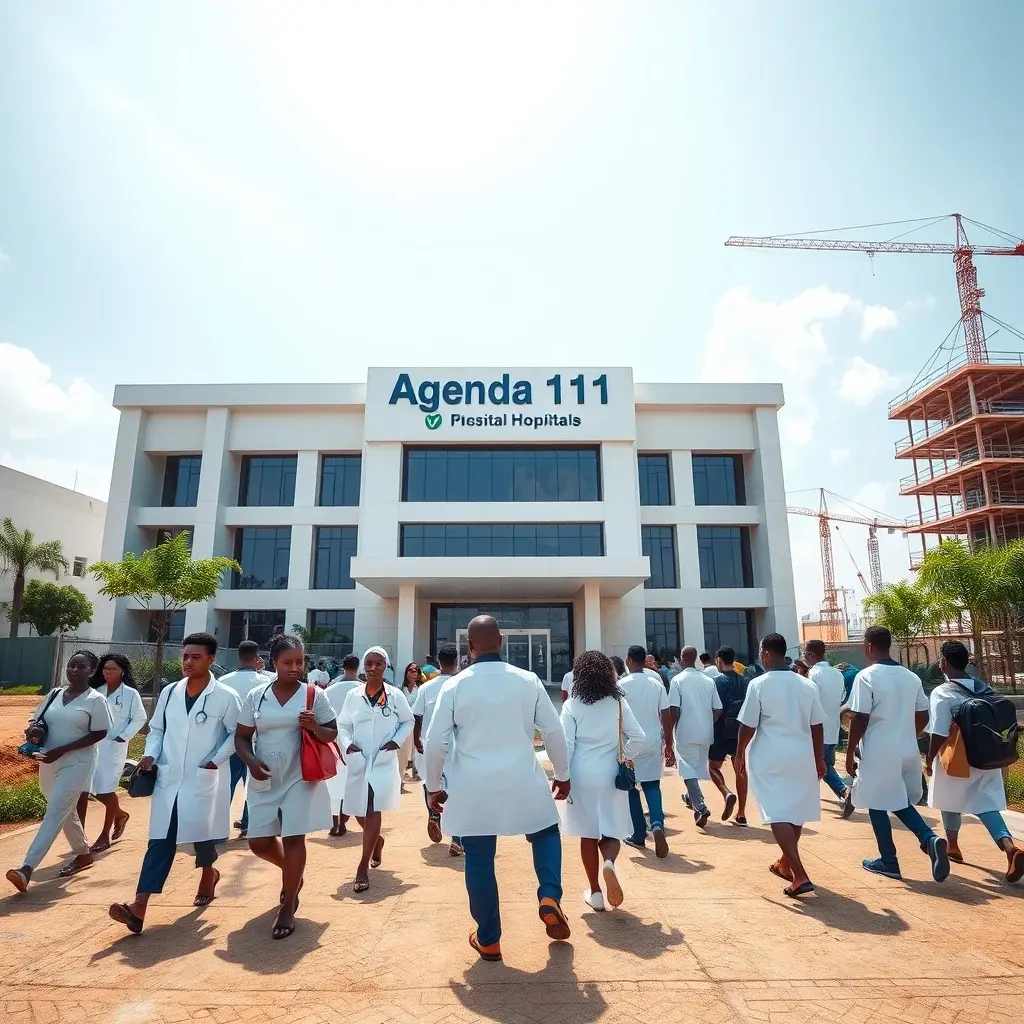
Anthony Nsiah-Asare, former Director-General of the Ghana Health Service and Presidential Advisor on Health, has staunchly defended the Akufo-Addo administration’s Agenda 111 hospital initiative, asserting that it was adequately funded and strategically designed to address critical healthcare deficiencies across Ghana. He made these remarks on May 19th, expressing surprise at claims questioning the project’s financial commitment.
Addressing Healthcare Gaps
Dr. Nsiah-Asare explained that Agenda 111 emerged as a direct response to the systemic weaknesses in Ghana’s healthcare infrastructure, starkly illuminated by the COVID-19 pandemic in 2020. The pandemic highlighted a significant deficit in the number of hospitals nationwide, a problem that persists to this day.
The initiative was conceived to improve access to quality healthcare by establishing district and regional hospitals in underserved areas. This aim was partly driven by tragic instances where patients reportedly died due to the lack of accessible medical facilities, forcing transfers between multiple hospitals. Dr. Nsiah-Asare recalled a case of a 70-year-old man who was transferred to seven different hospitals before succumbing to his condition, illustrating the urgent need for more localized healthcare services.
Broader Health System Strengthening
Agenda 111 is positioned as a crucial component of a wider strategy to fortify Ghana’s healthcare delivery system. This strategy encompasses everything from community-level initiatives like Community-based Health Planning and Services (CHPS) compounds to the establishment of essential district and regional hospitals. The goal is to create a robust referral system, reducing the necessity for citizens to travel extensively for medical care.
Furthermore, the project identified specific gaps in mental healthcare. Consequently, plans were incorporated to construct additional psychiatric hospitals, including facilities intended for the middle belt and northern sectors of the country, to address the existing challenges in this specialized area of healthcare.
Funding and Execution Under Scrutiny
The project has faced criticism, notably from former President John Dramani Mahama, who questioned the planning and financial sustainability of commencing numerous hospital constructions simultaneously. He also raised concerns about the overall execution and management of the Agenda 111 initiative.
Countering these criticisms, Dr. Nsiah-Asare affirmed that Agenda 111 secured funding from diverse sources. These included COVID-19 relief funds, regular budgetary allocations, and revenues derived from the nation’s oil resources. He specifically stated that the project initially received funding equivalent to $100 million from a combination of COVID-19 funds, the District Assemblies Common Fund, and budgetary provisions.
He challenged assertions of a lack of committed funds, directly questioning the fate of the allocated resources. Dr. Nsiah-Asare emphasized that the project was not merely an idea but was backed by tangible financial commitments from its inception.
Looking Ahead
The ongoing debate surrounding Agenda 111 highlights the persistent challenges in healthcare infrastructure development in Ghana. As the nation continues to grapple with improving healthcare access and quality, the success and completion of these hospital projects will be a critical indicator of the government’s commitment and capacity. Future attention will likely focus on the pace of construction, the operationalization of completed facilities, and the overall impact on health outcomes for the Ghanaian populace. The effectiveness of the funding mechanisms and project management will also remain under close observation.







Leave a Reply